Most parents don’t know this: crawling isn’t on the CDC’s developmental checklist anymore. A 2022 review found the skill too hard to measure consistently (Kretch et al., 2022). It echoes Zero to Three’s guidance that babies hit milestones at very different paces.
So if you’re standing there second-guessing an outfit choice — you’re not being paranoid. The research backs you up.
Picture the dad who rented a waistcoat expecting his son to sit still for photos. He crawled through the cake before the shutter clicked.
The right birthday dress for baby boy was never about the cutest picture. It’s about matching clothes to his mobility, the conditions, and his skin. Sizing comes next.
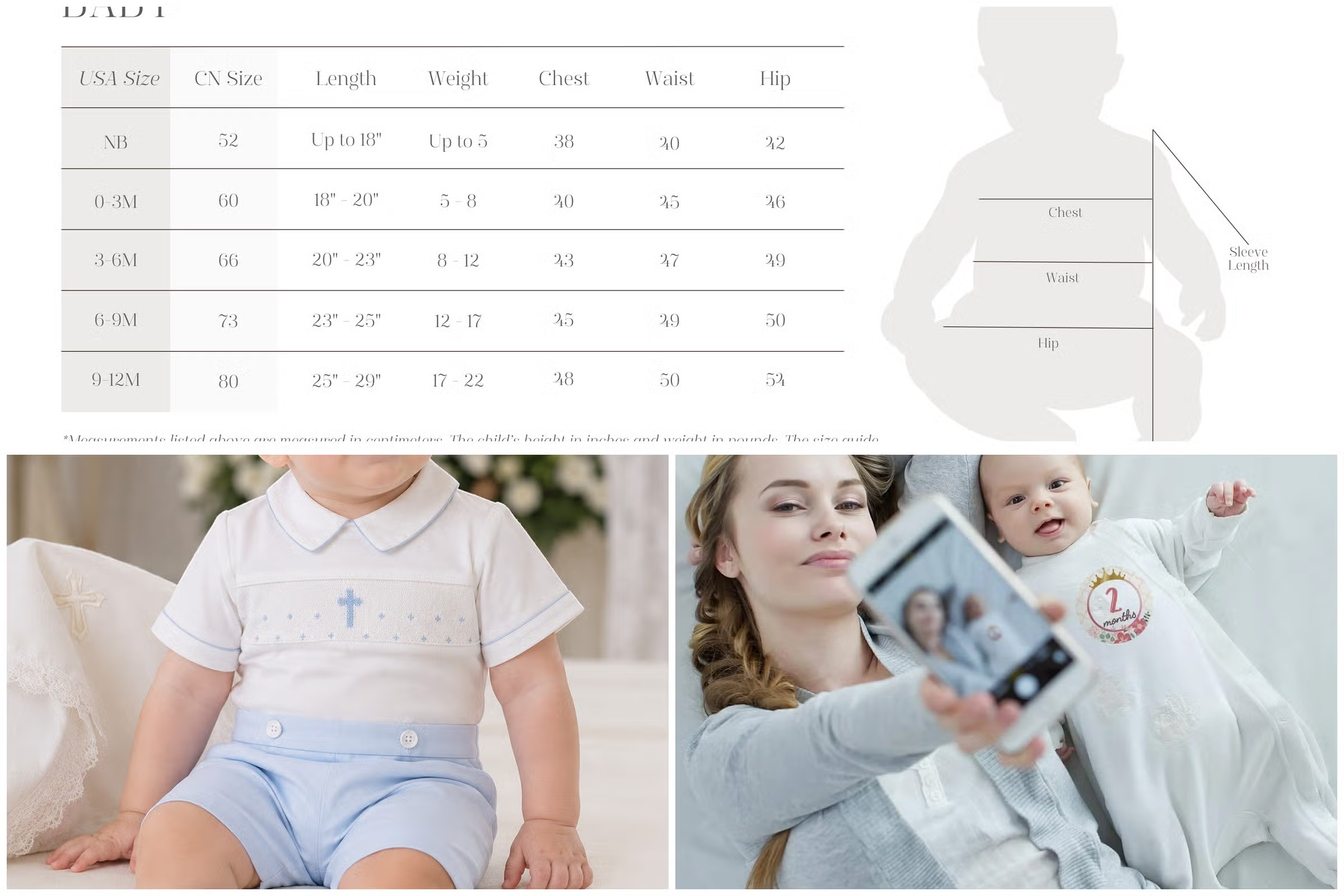
Reading a Baby Boy Sizing Chart: Age vs. Weight for Baby Clothes
Here’s what every “12-18 Months” label hides: two babies born the same week can differ by several pounds. Both can still be perfectly healthy.
Zero to Three’s guidance stresses that children grow at their own pace, not on a fixed schedule. That’s why an age tag alone can’t tell you how any birthday dress for baby boy will actually fit.
Growth charts have used percentile curves since 1977. They exist because babies never grow on a neat schedule.
Yet across six retailers reviewed for this guide, not one listed weight next to its age-range labels. That’s a real, verifiable gap — not a guess.
My own realization came late. I measured my nephew’s “18-month” jacket against his actual 14-month frame. It left a two-inch gap at the shoulders nobody warned me about.
A Better Way to Check the Size
- Compare garment measurements in centimeters against his last checkup number, not the age label
- Size up one notch if ordering weeks ahead
- Focus on fit at the shoulders and diaper area. Tight shoulders limit arm movement. A snug diaper area slows changes. Sleeves and hems are easy to adjust — these two spots aren’t
- No measurements listed? Do what worked for my nephew’s jacket: measure an outfit he already wears comfortably and compare it directly
Stop trusting the tag. Trust the tape measure.
Formal Suit or Comfortable Romper? Let Mobility Decide
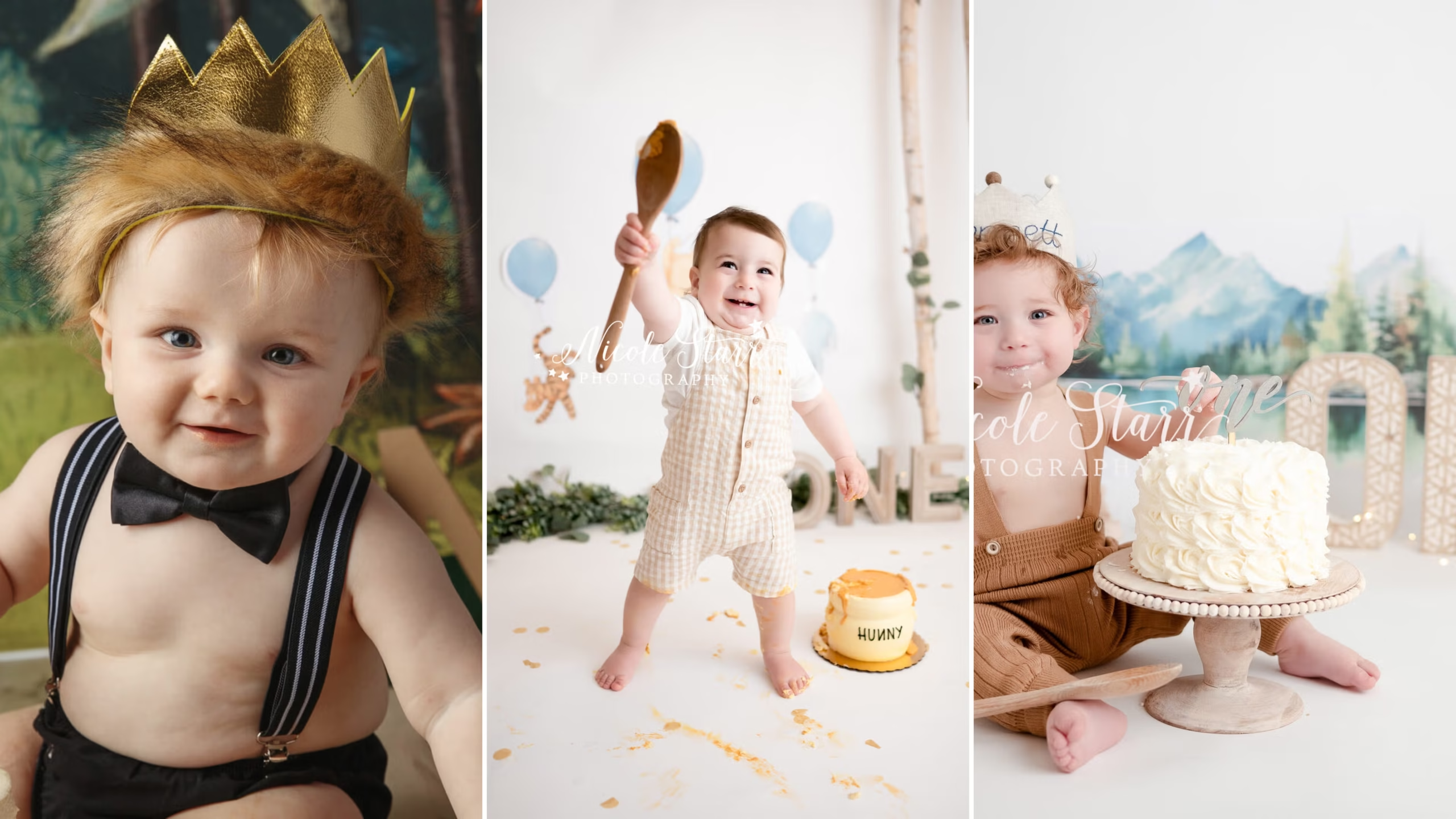
His mobility stage decides the outfit. The number on the invitation doesn’t.
The CDC’s 2022 checklist update dropped crawling entirely. Kretch et al. (2022) explain that crawling is too variable to count as a reliable milestone. Colleen Fogarty of the American Speech-Language-Hearing Association said the change reflects how inconsistently researchers define the skill.
There’s a simpler way to think about it: a baby who can’t move freely can’t explore, and exploring is how he learns at this age. A restrictive outfit works against more than comfort — it works against the point of the day itself, which is watching him discover things.
Match the Outfit to What He’s Actually Doing
- Sitting (6–8 months): soft, unstructured pieces
- Crawling (7–10 months): stretch at the knees
- Walking (9–18 months): structured formal wear finally works
Imagine a boy in a three-piece suit taking his first solo steps at his party, then sitting down hard, arms pinned by the jacket. That’s the outfit failing him, not the milestone.
Comfort isn’t the compromise. It’s the requirement.
Indoor vs. Outdoor Party Outfit — and the First Birthday Photoshoot Outfit
Nobody warns you: the birthday outfit and the “birthday photo” outfit are rarely the same piece of clothing.
Cake smash photographers commonly book shoots two to three weeks before the actual birthday, to leave time for editing. That’s an industry scheduling convention, not a research finding, but it means any first birthday photoshoot outfit often needs to be ready before the party outfit does.
Three Different Days, Three Different Outfits
- Indoor hall party: breathable but slightly dressier, since AC allows more structure
- Outdoor lawn party: lighter, looser — heat and movement both rise outdoors
- Cake smash photoshoot: cheap and dedicated, since stains rarely fully lift from formal fabric
One mother learned this the hard way. She filmed her son’s smash in her own wedding-guest outfit. Frosting never came out — and neither did the matching cousin photos two weeks later.
Themes matter less than fit, and here’s why: nobody looking back at these photos in ten years will remember if the theme was jungle or pastel — they’ll remember whether he looks like he’s actually enjoying himself, which he can’t do in something that pinches. One ruined outfit teaches that faster than any checklist does.
What “Sensitive Skin Baby Clothing” Actually Means
No shopping page will tell you this: the fabric that looks softest is often the riskiest.
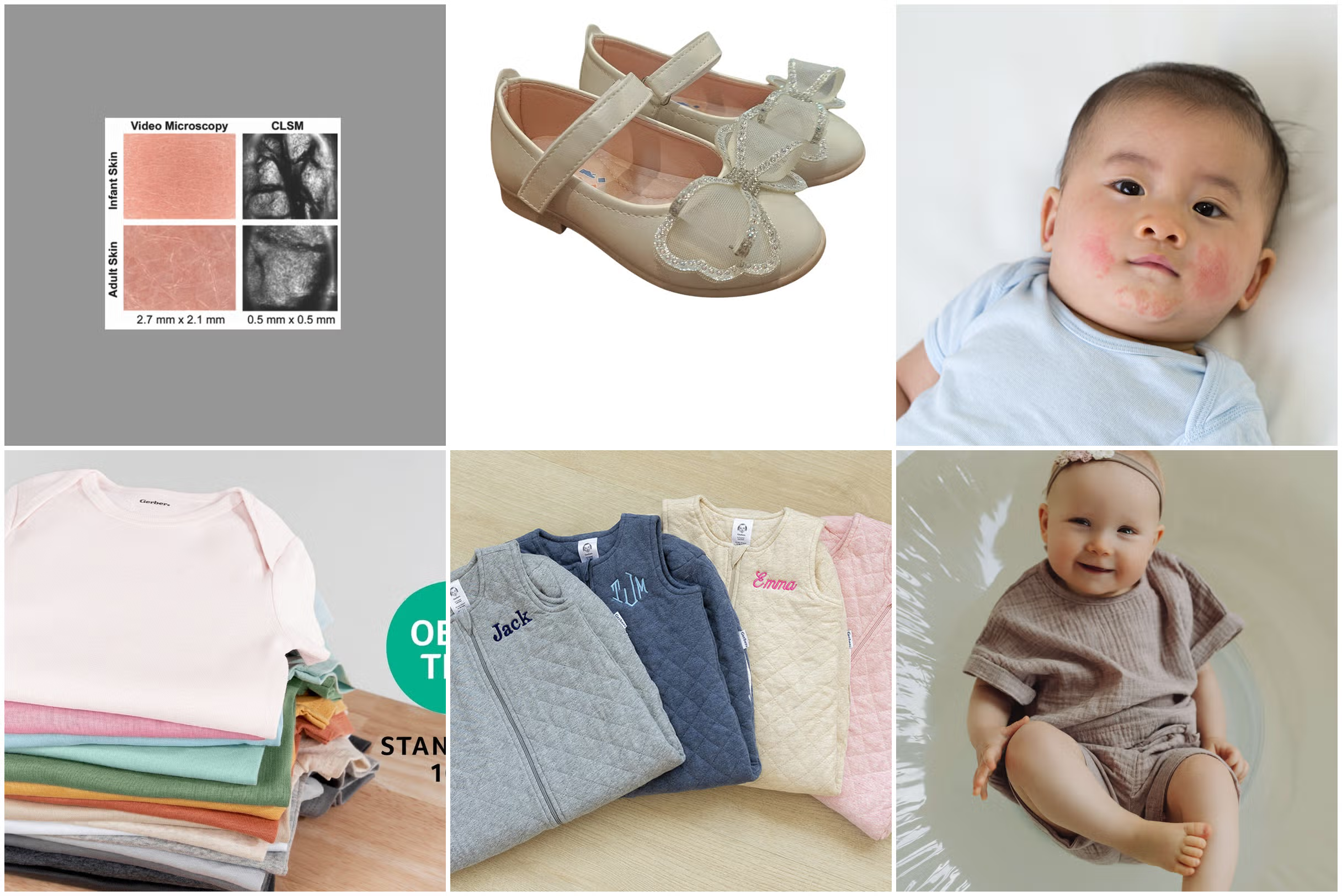
Infant skin has a measurably thinner, less mature structure than adult skin (Stamatas et al., 2010, Pediatric Dermatology). Fabric that feels fine to you can still irritate him. Cotton and cotton-blend knits typically breathe better than the poly-viscose or velvet common in festive formalwear.
Federal safety rules ban loose small parts on kids’ clothing for good reason. Sequins and buttons are a real choking risk. A 2011 CPSC rule on drawstrings cut related deaths by about 75% since 1997.
What to Look For
- OEKO-TEX certification confirms the fabric was tested for harmful residues
- Breathable fabric reduces heat-trapping over hours of wear
- Here’s what most guides skip: heavy embroidery and beading — the very details that make an outfit look expensive — are usually what makes it hand-wash-only, which quietly kills the “wear it again” plan before it starts. Check the care label with resale or reuse in mind, not just cleaning
- A pediatrician can flag trigger fabrics if he’s reacted before
One father skipped the tug-test on a rented waistcoat. A loose button ended up in his son’s mouth mid-party — not the cake.
Ten seconds of tugging beats an entire afternoon of panic. Sensitive skin baby clothing is worth the extra ten seconds, every time.
Budget Baby Birthday Outfit Strategy: Two Outfits, Real Cost-Per-Wear
No retailer will ever tell you this, because it means spending less in their store, not more.
Across six retailers reviewed for this guide, prices ranged widely. Simple sets cost Rs. 500–1,500. Formal suits reached Rs. 6,000–12,000.
That gap isn’t mainly quality — it’s decoration and tailoring, not better fabric safety.
Keepsake Outfit vs. Smash Outfit
- Keepsake piece: for arrival and family photos
- Smash piece: cheap, since mess is guaranteed
A single reusable formal piece can be worn for a birthday, an Aqiqah, and a future wedding, costing less per wear than three single-use outfits. But this only holds if another occasion is realistically coming.
If there isn’t one on the calendar, a cheap, trend-print single-wear outfit isn’t a compromise — it’s the smarter buy, since “reusable” savings never materialize when the piece just sits in a drawer.
One mother learned this the opposite way: three separate “perfect” outfits for three events, each worn once, each now too small.
Check the return policy before he tries anything on — many sellers won’t exchange a visibly worn formal piece.
Quick Checklist Before You Buy
- Size: Match checkup measurements, not the age label
- Mobility: Match structure to sitting, crawling, or walking
- Occasion: One outfit or two — party and cake smash
- Fabric: OEKO-TEX certified, tug-tested
- Budget: Decide if it needs to last beyond one day. Then check the return policy before he ever tries it on
Buy less, or buy smart for once — either way, his memory of the day won’t include the price tag.
Related Reading
If you’re also dressing an older sibling, the same fit-first logic applies to a pink dress for kids. For other milestone-dressing decisions, see Family Halloween Costume Ideas, Dressing My Kids Differently Than My Mom Did, What Age Should Kids Dress Themselves?, and Best Toddler Sneakers.
FAQ
What size should I order for a 1-year-old’s birthday outfit?
Check weight and height against the chart, not the age label. Growth charts exist because babies the same age vary in build. A 12-month-old at the 25th percentile and one at the 75th can differ by several pounds. Both can still be perfectly healthy.
Is a formal suit too much for a baby who’s just learning to crawl or walk?
Not too much — just too soon. Crawling babies need stretch, not a stiff waistcoat that rides up mid-movement.
What should he wear for a cake smash specifically?
A separate, inexpensive outfit — never the keepsake piece. Frosting rarely comes out, no matter what the label promises.
How far in advance should I buy the birthday dress for baby boy?
Two to three weeks, matching typical cake smash scheduling. Running late? Choose simple and comfortable over elaborate — it photographs just as well.
Can this outfit be reused for another event?
Often, yes — but only if another occasion is actually on the calendar. One versatile piece across a birthday, an Aqiqah, and a wedding costs less per wear than three outfits worn once each.
Conclusion
A milestone celebration deserves an outfit that serves the moment, not the other way around.
What actually matters: size by weight and mobility, not the label. Structure matched to what he can do, not what looks sharpest for ten minutes. And fabric safety guiding the final choice, not the prettiest photo. None of this came from someone trying to sell you a collection. That’s exactly why it’s different from everything else you’ve read.
The best birthday dress for baby boy isn’t the one that photographs best. Years from now, no one will remember the outfit. They’ll remember the boy who was too busy laughing to notice what he had on.
That’s the only outfit worth buying.