Gender stereotypes can start before a baby’s born, according to ZERO TO THREE — my daughter had a pink diaper bag waiting before she had a name. So when I dressed her in my son’s old shorts, my family cooed like it finally made sense.
Nearly half of parents clash with grandparents over parenting choices, and clothing is the fight nobody names out loud. Here’s what nobody tells you: the mother judging your choices today was once judged the same way. By her own mother. Dressing my kids differently than my mom did isn’t rebellion — it’s a pattern, backed by research.
Why Grandparents React the Way They Do
It’s Not Really About the Clothes — It’s Generational
My mother has never once argued about fabric. She argues that the outfit proves parenting is being done differently than she did it. Last month she offered, unprompted, to “pick up something more girly” for my daughter — a gift wrapped in concern. That one offer told me everything.
Researchers who study this exact dynamic (Frontiers in Psychology, 2022) found that grandparents lean toward tradition and discipline. Parents lean toward independence instead. Honestly, that tracks with every argument my mom and I have ever had. The C.S. Mott Children’s Hospital National Poll (2020) found 57% of parents disagree with grandparents over discipline, 44% over meals.
No poll tracks clothing conflicts specifically — but it’s the same two-eras standoff over a different daily decision. Here’s what I’ve realized: the outfit is often the last place a grandparent still feels she has a say. It’s one of the last places she gets to shape how her grandchild turns out. Dressing my kids differently than my mom did isn’t rebellion. It’s closer to authoritative parenting — flexible, responsive, a different decade doing its job.

What Child Development Research Actually Says
When Kids Start Noticing Gender in Clothes
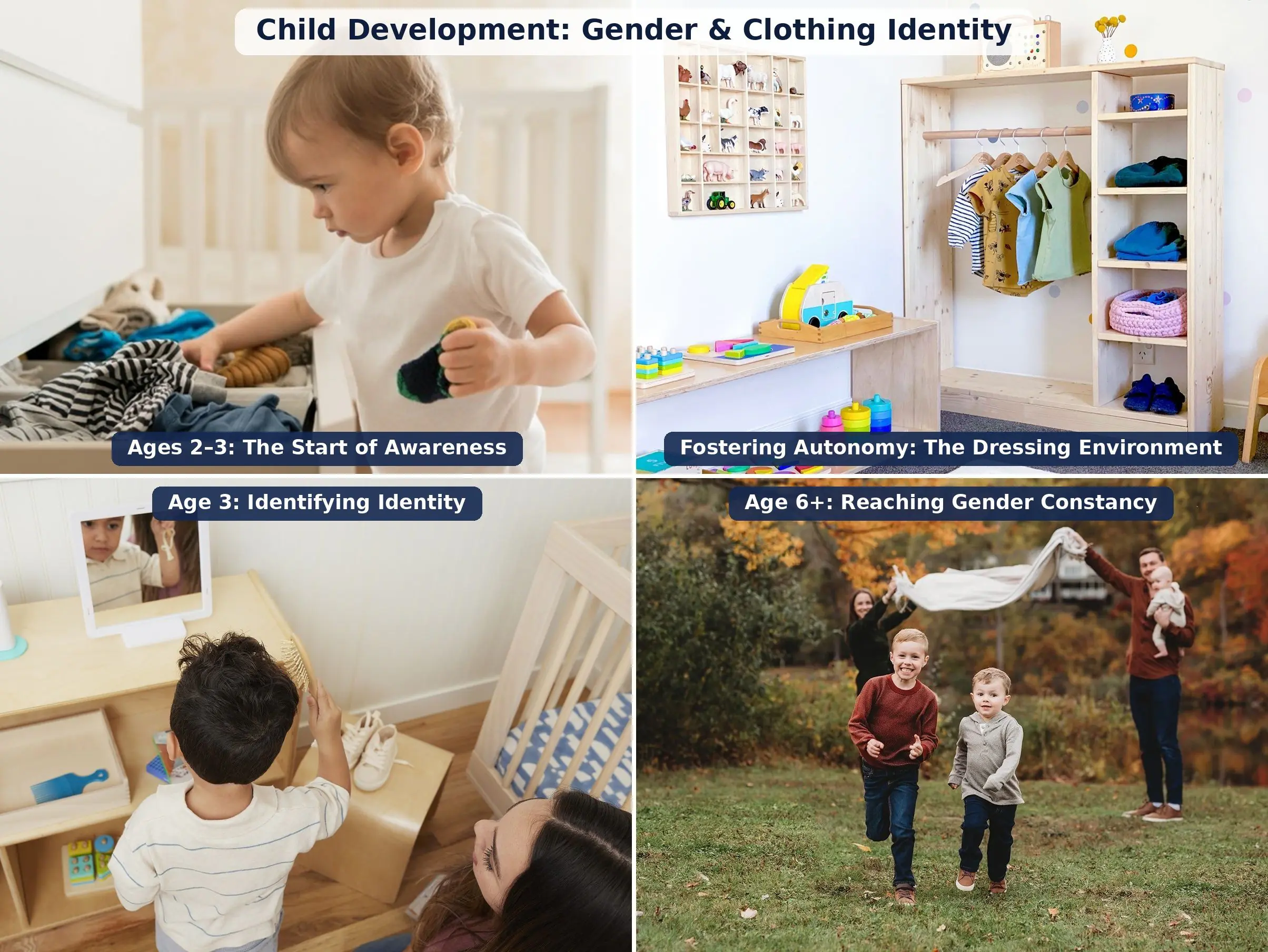
Here’s what almost no parenting article tells you: your child’s brain doesn’t stay confused about gender for long, even if you never correct them. My daughter is two. Last week, she pointed at her brother’s old shorts and called them “boy pants.” Then she wore them anyway without a second thought.
Turns out, she’s right on schedule. Psychologist Sandra Bem showed preschoolers photos of the same toddler dressed three ways in 1981. Most 3-to-5-year-olds believed the clothes had changed the toddler’s actual gender. A meta-analysis of 43 studies (Developmental Psychology, 2002) found barely any link between a parent’s own attitudes and a kid’s. So no, my closet choices aren’t quietly rewiring anyone.
ZERO TO THREE notes that most kids identify with a gender by age 3. By 6, most reach “gender constancy” — understanding that clothes don’t change gender at all (OpenStax, 2024). What shifts with age is flexibility: rigid thinking peaks at 5-6, then loosens by 7-8.
My son once asked if his sister’s shorts made her “part boy” — I said no, and that was the entire conversation. Clothing and identity develop on separate, age-appropriate timelines. The outfit was never the variable that mattered. Curious when kids actually start dressing themselves? Here’s what age kids should dress themselves — it’s earlier than most parents expect.
The Practical Case for Mixing It Up
Comfort, Cost, and a Bigger Cultural Shift
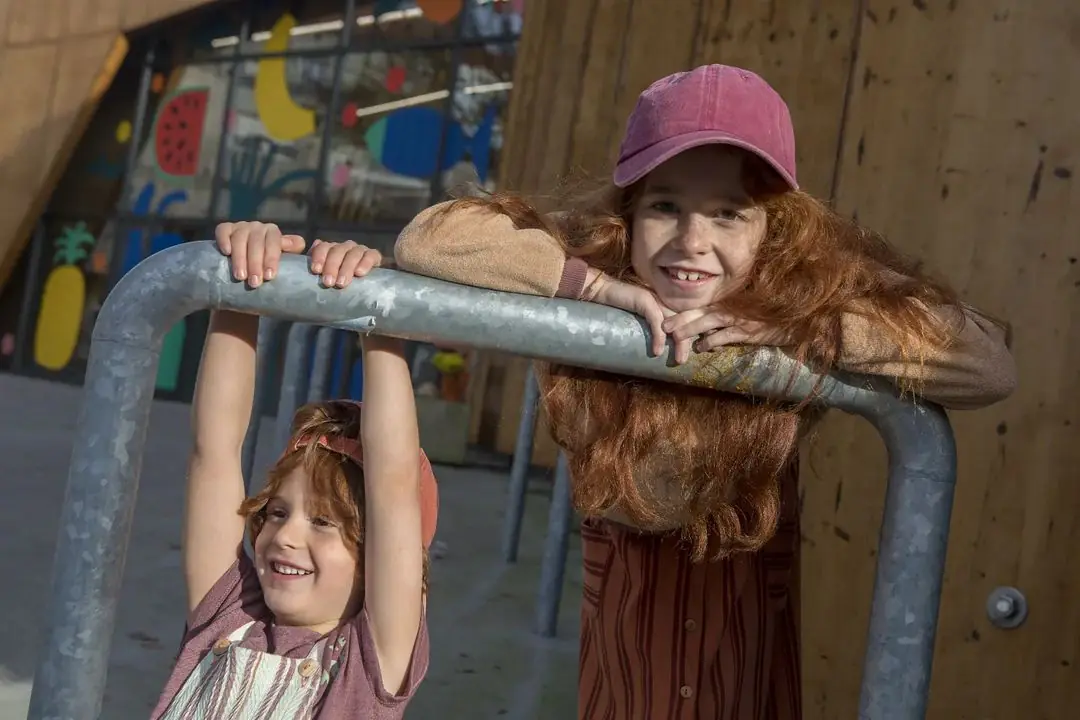
Here’s what my mother doesn’t know: for most of American history, “boy clothes” and “girl clothes” didn’t exist at all. Historian Jo Paoletti’s research shows American children of both sexes wore identical white dresses until around age 6, all the way into the 1920s. Color-coded, gender-specific clothing didn’t become the norm until the 1940s.
So when I hand my son’s shorts down to my daughter, I’m not breaking a rule. I’m returning to one — dressing my kids differently than my mom did just means letting practicality decide instead of tradition. Half the tags are still on my daughter’s dresser drawer — gifts nobody stopped to ask if she needed. Meanwhile, his barely worn shorts got a second life for free.
Kids outgrow clothing every 6 to 9 months (Mordor Intelligence, 2026). That’s exactly why retailers now favor gender-neutral lines over splitting everything by color. One wardrobe instead of two is simpler math. My husband once joked that our daughter was “recycling before recycling was cool.” He wasn’t wrong: less money spent, less waste, more use per garment. The outfit was never a rulebook.
It was always just fabric — which is exactly what I say the next time someone disagrees. Comfort matters as much for shoes as for shirts — see our picks for the best toddler sneakers that survive actual play.
What to Actually Say (and When to Let It Go)
A Simple Family Boundary Script
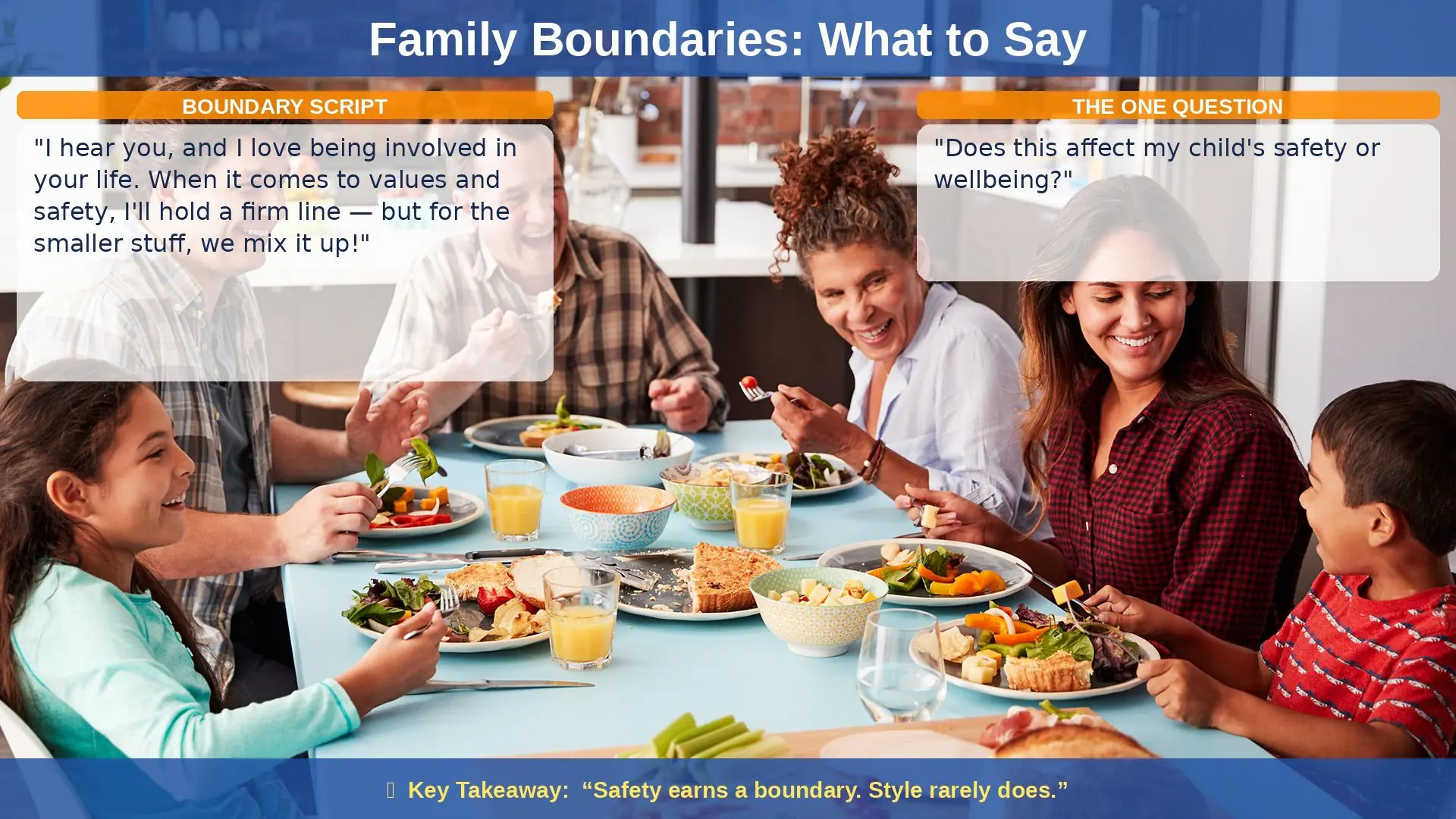
Here’s the sentence that ended a decade of tension in one dinner: “I hear you’d love to see her in dresses more — we mix it up!” No debate. No defensiveness. Just a redirect. Family therapists at the Gottman Institute point out something most people get backwards: the boundary isn’t the risky move — staying quiet and building resentment is.
A clear line is actually the more trusting option, not the colder one. My mother blinked, said “well, she does look happy,” and that was it. If the comment returns on the next visit, I repeat the same script — consistency lands harder than intensity ever did.
The One Question That Ends Most Arguments
Before reacting, I ask one question: does this affect my child’s safety or wellbeing? If no, it’s a preference, not a battle. The Mott Poll (2020) found parents who never raise concerns rarely limit grandparent contact (6%). Among those who refused after speaking up, 42% eventually did. Safety earns a boundary. Style rarely does. The real skill was never winning the argument. It was knowing which ones were never worth having.
FAQ
Why does my mom care what I dress my daughter in?
Pew Research points out that older generations grew up with one accepted “right way” to do things. We’ve got dozens of options now — and to grandma, that can feel less like progress and more like being told she got it wrong.
Is it bad to put girls in boy hand-me-downs?
No. Clothing doesn’t shape gender identity. A well-known 1981 experiment found preschoolers briefly believe clothes change gender — but that belief fades naturally by age
At what age do kids start noticing gendered clothing?
Around 2–3. My own daughter labeled shorts “boy pants” at two, then wore them anyway — noticing a category isn’t the same as believing in it.
How do I set a boundary with family about parenting choices?
Validate, then redirect — skip the debate entirely. Dressing my kids differently than my mom did was never worth a fight; save real boundaries for safety, not style.
Does this conflict get better with time?
Usually. Grandparents soften once they see the child thriving — the relationship adjusts faster than the argument ever does.
The Bottom Line
Someday, my daughter will hand down her own kids’ clothes without a second thought. That’s proof dressing my kids differently than my mom did was never rebellion — just one generation doing it differently than the last. Clothing never shaped identity. Disagreement with grandparents was never personal, just generational. Boundaries work only when saved for what actually counts. Nearly half of parents live this exact standoff, so you’re not the exception — you’re the norm. The shorts my mother once questioned will outlast the argument about them. Answer kindly, keep dressing your kids your way, and let the rest go.