Nine PM, night before Halloween: you’re hot-gluing felt ears while your partner googles whether this costume actually fits her. Sound familiar? Every parent hits this moment with their baby’s first Halloween.
Research on family rituals shows it’s not the costume that sticks; it’s showing up for the tradition (Fiese et al., 2002, APA). Most family Halloween costume ideas skip that truth, handing you another list of characters to copy.
This one’s different: real safety, real costs, a coordinated family costume plan for whatever age your baby is, because done beats perfect.
How to Choose Your Family Costume Approach
Stop scrolling through family Halloween costume ideas for a second. Answer this first: how much time do you actually have? With 52% of dual-parent households now working full-time (Pew Research Center, 2026), that question matters more than any costume theme, and it decides everything that follows.
DIY, Buy, or Both?
Americans will spend a record $13.1 billion on Halloween costume shopping and decor in 2025, averaging $114.45 per person (NRF, 2025). I learned the hard way after three nights of sewing a dinosaur tail, then finding an identical one online for $22. Ask me how I felt about that. Now we split it: buy the baby’s piece, DIY the parents’ accessories. Cheaper, faster, and nobody’s crying over a hot glue gun at midnight.
Matching vs. Coordinated (Not Identical)
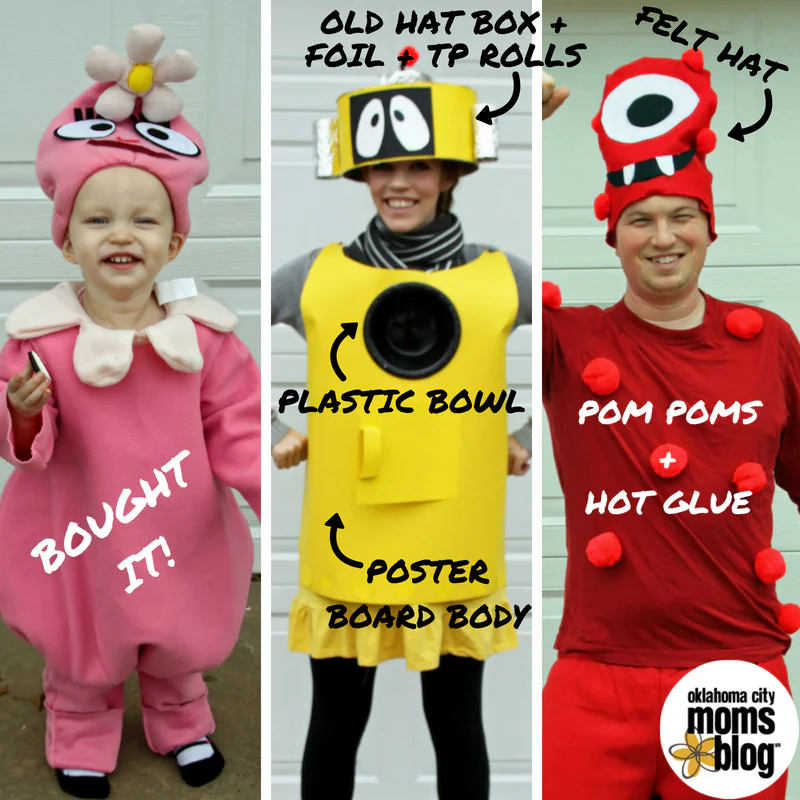
Identical costumes aren’t the goal; cohesion is. A coordinated family costume, different pieces built from one shared idea, works better when someone isn’t thrilled about dressing up.
- Matching: everyone in the same outfit — cute, but only if nobody’s fighting you on it
- Coordinated: same idea, different pieces — the compromise that actually works
- Mixed: baby in full costume, parents in one accent piece — the “I still have a job tomorrow” option
Time decides the theme. The theme decides the budget.
Classic Family Costume Ideas With a Research-Backed Twist
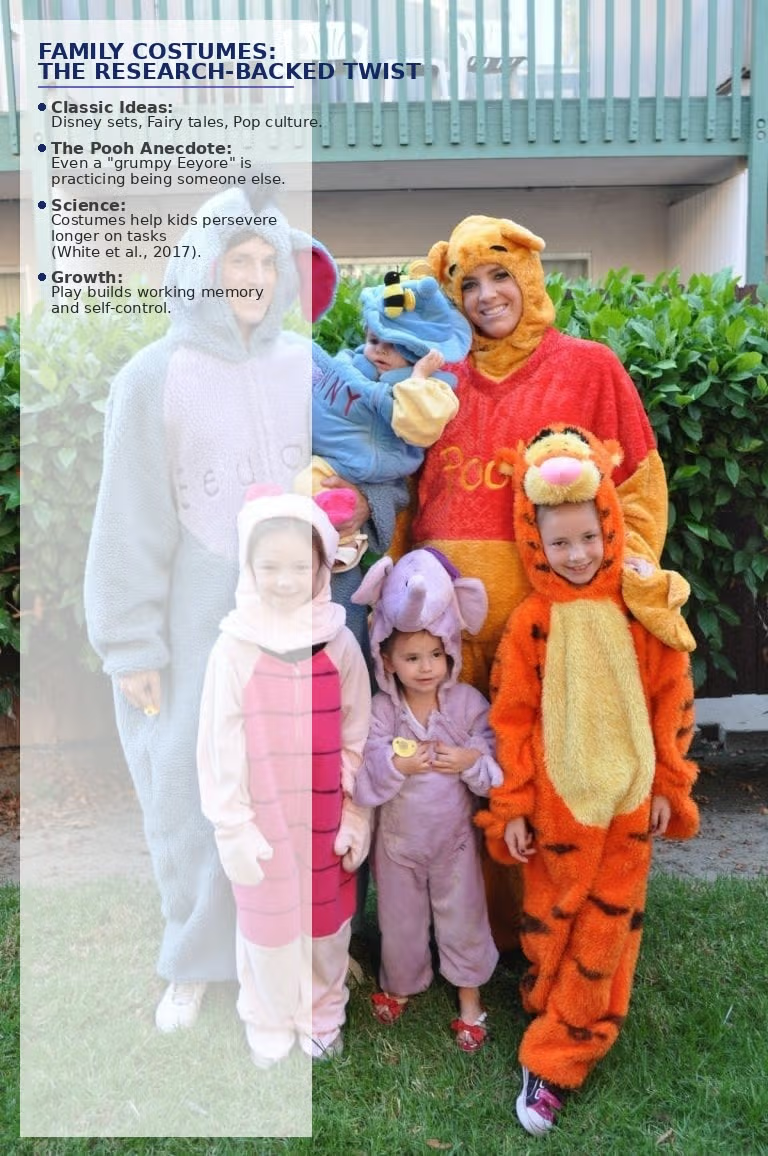
Your kid’s grumpy Eeyore face might be building their brain. Some family Halloween costume ideas never go out of style, and science has found out why.
Character & Movie-Inspired Costumes
Disney family costumes are the easy win: Winnie the Pooh, Toy Story, Moana. We did Winnie the Pooh two years ago. I was Piglet, my husband was Tigger, and our daughter was the world’s grumpiest Eeyore. She hated the ears. Four photos, and we called it a win.
- Disney/Pixar sets (scale easily by family size)
- Fairy tale duos (Goldilocks, Little Red Riding Hood)
- Pop culture groups (flexible, swap-in roles)
- Also popular: Wizard of Oz, Ghostbusters, pumpkin patch, farm family, superheroes, Peter Pan, Sesame Street, skeletons, Star Wars, and Little Mermaid pick whatever your kid’s already obsessed with.
Why Costumes Do More Than Look Cute
Here’s what no other list mentions: costumes help kids stick with hard things. A 2017 study in Child Development found kids in costume persevered longer on a boring task than kids asked to just be themselves (White et al., 2017). Harvard’s Center on the Developing Child adds that play from infancy builds working memory and self-control skills tied to school readiness.
That grumpy Eeyore wasn’t just tolerating a costume. She was practicing being someone else, and that’s real work.
Budget-Friendly and DIY Costume Ideas
That $50 costume tag probably isn’t paying for better fabric. It’s likely paying for a name.
What Costumes Actually Cost
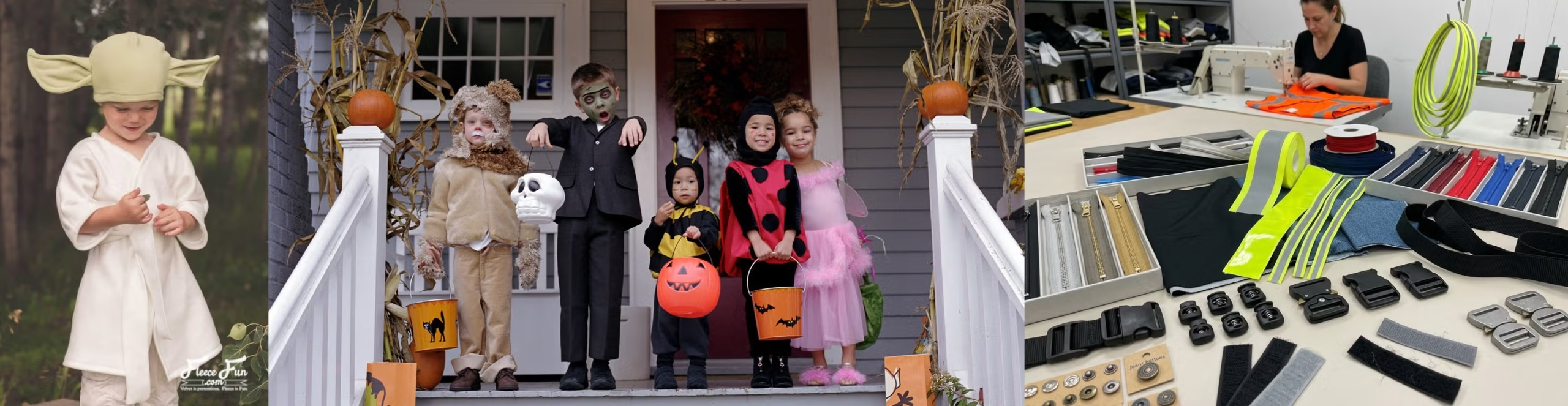
Children’s costume spending hit $1.4 billion in 2025 (NRF, 2025). I almost bought a $50 licensed Baby Yoda costume. Then I made one for $9 with a green onesie and two felt ears, identical in every photo. The $41 difference wasn’t quality. Someone licensed the name.
Easy DIY Ideas That Don’t Sacrifice Cute
A homemade costume doesn’t need to look homemade. Try:
- Onesie + ears/headband (fox, bunny, bear) — hot-glue felt shapes onto a headband, five minutes, zero sewing skills required
- Plain shirt + felt shapes (pumpkin, ladybug) — iron-on adhesive, still no sewing
- Thrifted adult clothes, scaled down — hem with fabric tape; I have never once threaded a needle for Halloween
Cost sorted. Now, the part every costume tag leaves off the label: safety.
Costume Safety Every Parent Should Know
A cape almost took my daughter down a flight of stairs. Every list of family Halloween costume ideas skips this, and it matters more than any character choice.
Fabric, Fit, and Fire Safety
Costume safety starts with the fabric. The Consumer Product Safety Commission reported over 3,500 Halloween-related injuries in one two-month stretch, many tied to costume fit and flammability (CPSC, 2013). Federal law, the Flammable Fabrics Act, requires retail costumes to resist flame.
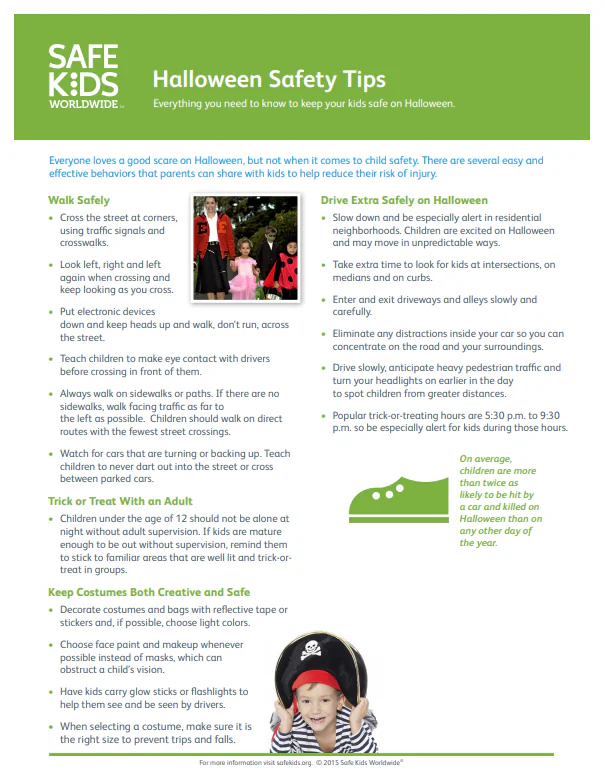
Choose nylon or polyester, and skip billowy sleeves or trailing capes. Mine caught on a porch railing and nearly pulled her down the steps. Fit isn’t cosmetic; it’s the difference between a costume and a hazard.
Visibility and Small-Part Hazards
- Reflective tape so drivers see her after dark
- No small, detachable pieces near a baby’s mouth — choking hazard
- No masks that block peripheral vision while trick-or-treating
Age-by-Age Costume Tips: Newborn, Crawler, and Toddler
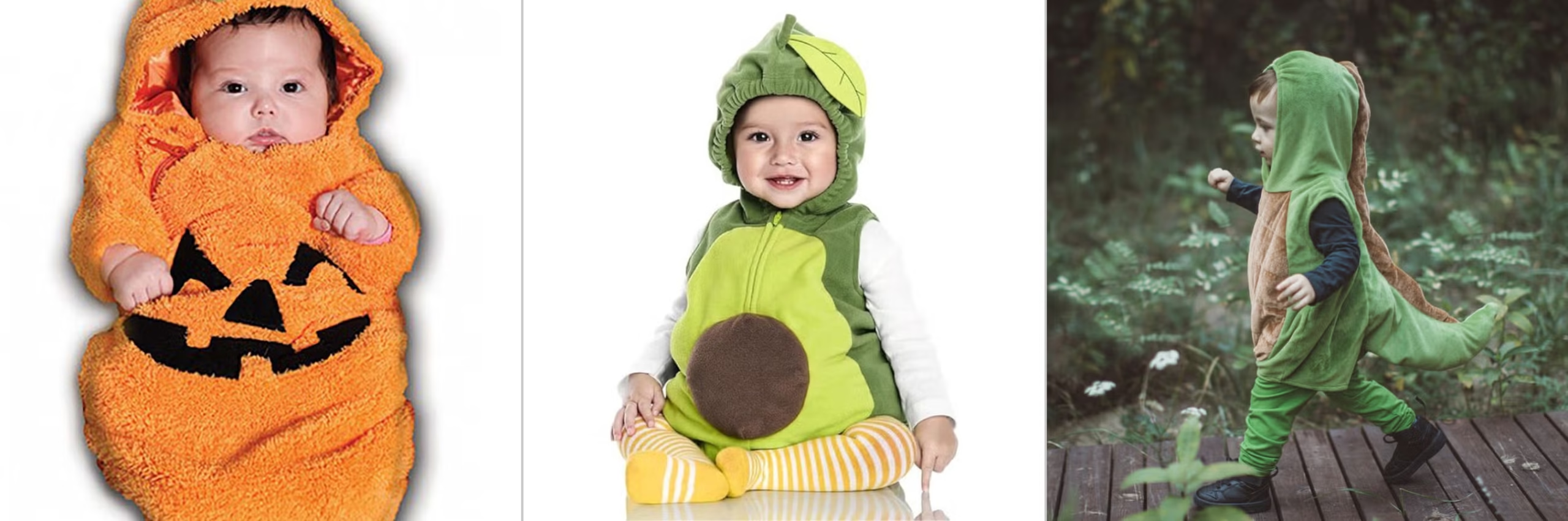
She slept through her entire first Halloween. That was the whole costume, and it was enough. “Baby” isn’t one costume category an age-appropriate costume looks nothing alike for a newborn versus a walking toddler.
Newborns (0–6 Months): Comfort Over Character
A newborn Halloween costume should prioritize comfort, not detail. Ours never opened her eyes in that pumpkin bunting. Skip buttons or snaps that aren’t built for a fast diaper change; you’ll be doing several before the night ends. Nothing tight, nothing restrictive.
Crawlers and Toddlers: Room to Move
A toddler costume has to survive crawling, grabbing, and pulling at its own ears. Ours ripped her bee antennae off in ten minutes flat. Zero to Three, the national early childhood research organization, confirms that infants and toddlers vary widely in sensory sensitivity. One baby’s meltdown over antennae? Completely normal. Test it at home first. (This is also around the age we started figuring out what age kids should start dressing themselves, a related battle entirely.)
- Newborn: bunting, sleep-sack, or simple onesie
- Crawler: soft, snap-front, no small parts
- Toddler: breathable fabric, no scratchy seams (good shoes help too, our pick for the best toddler sneakers)
The best costume is the one your baby forgets they’re wearing.
FAQ Section
What is a good Halloween costume for a baby’s first Halloween?
Comfort beats detail. A soft bunting, sleep-sack, or simple onesie works best; most newborns sleep through much of their first Halloween anyway.
How do you coordinate Halloween costumes for mom, dad, and baby?
Skip matching. A coordinated family costume, related but distinct pieces, works better, especially when someone isn’t thrilled about dressing up.
What Halloween costumes are safest for infants and toddlers?
Flame-resistant fabric, a snug (not baggy) fit, no small detachable parts. Skip any mask that blocks peripheral vision before trick-or-treating.
How much do families typically spend on Halloween costumes?
A record $13.1 billion nationally in 2025, averaging $114.45 per person (NRF, 2025), though a homemade costume can cost a fraction of that.
What if my baby won’t keep their costume on?
Sensory sensitivity to tags, elastic, or masks is real, not defiance. Skip the fight. A plain onesie with simple ears gets the same photo, meltdown-free.
Conclusion
The best family Halloween costume ideas aren’t the fanciest; they’re the ones that fit your budget, your baby’s age, and your actual night. We covered safety, real costs, and age-by-age advice most guides skip. Turns out the research backs that up. Fiese’s team found it’s not the costume that sticks in a child’s memory, it’s showing up for the tradition at all (Fiese et al., 2002). So buy the onesie, skip the DIY if you’re exhausted, and let the photo be imperfect. I’m dressing my kids differently than my mom did in plenty of ways. This is one of the easy ones to let go of. Some Halloweens are simple. That’s still a full one.