It’s 7:40 a.m., one shoe’s on backwards, and your toddler — who dressed herself just fine last week — is melting down over a sock. She’s not behind, and you’re not doing anything wrong. What age should kids dress themselves?. Most guides hand you a chart and stop there.
A 2022 Harvard Graduate School of Education study of over 2,300 children found something reassuring. Early self-regulation skills — the same ones behind getting dressed — dip under stress, then quietly return. My son forgot how to button a shirt the week we brought his sister home. That wasn’t backsliding. That’s how skills actually grow.
Why Dressing Is Harder Than It Looks
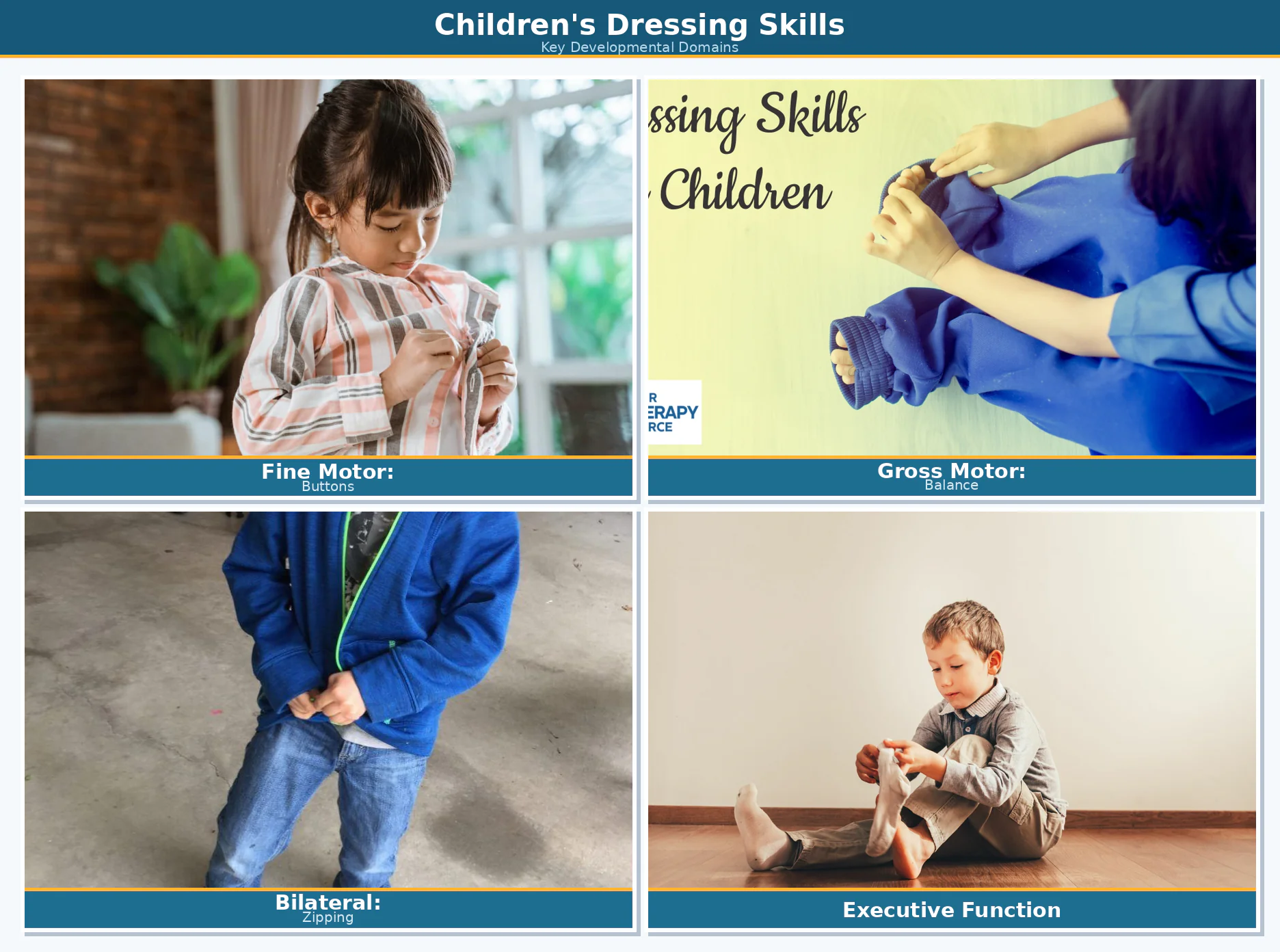
The Three Skills Working at Once
Nobody warns you that a jacket is a test of three skills at once. Watch a toddler wrestle one on and you’re watching motor planning in real time.
Zero to Three’s journal on early cognitive development calls this cluster — attention, planning, impulse control — executive function. It grows fastest through ordinary daily routines, not flashcards.
Dressing just happens to be the routine every toddler practices twice a day, whether they want to or not.
Here’s what’s stacked on top of each other:
- Fine motor skills — a pincer grasp to push a button through its hole
- Gross motor skills — balancing on one leg while stepping into pants
- Bilateral coordination — one hand holding the zipper track while the other pulls
My daughter could zip her own coat at daycare — teacher said so twice. At home, same coat, same zipper, total meltdown. She had the motor part down cold.What she hadn’t practiced was doing it while also negotiating with me about socks.That’s the piece guides answering what age should kids dress themselves usually skip. Dressing isn’t one milestone — it’s several skills running on separate clocks at the same time.
Dressing Milestones by Age
Every chart like this has a hidden number behind it. The CDC’s current framework only lists a skill once 75 percent of children can do it — not the average child, not the earliest one. That’s why this list runs later than the ones you grew up seeing. It’s also why your child isn’t behind just because a cousin hit a skill sooner.
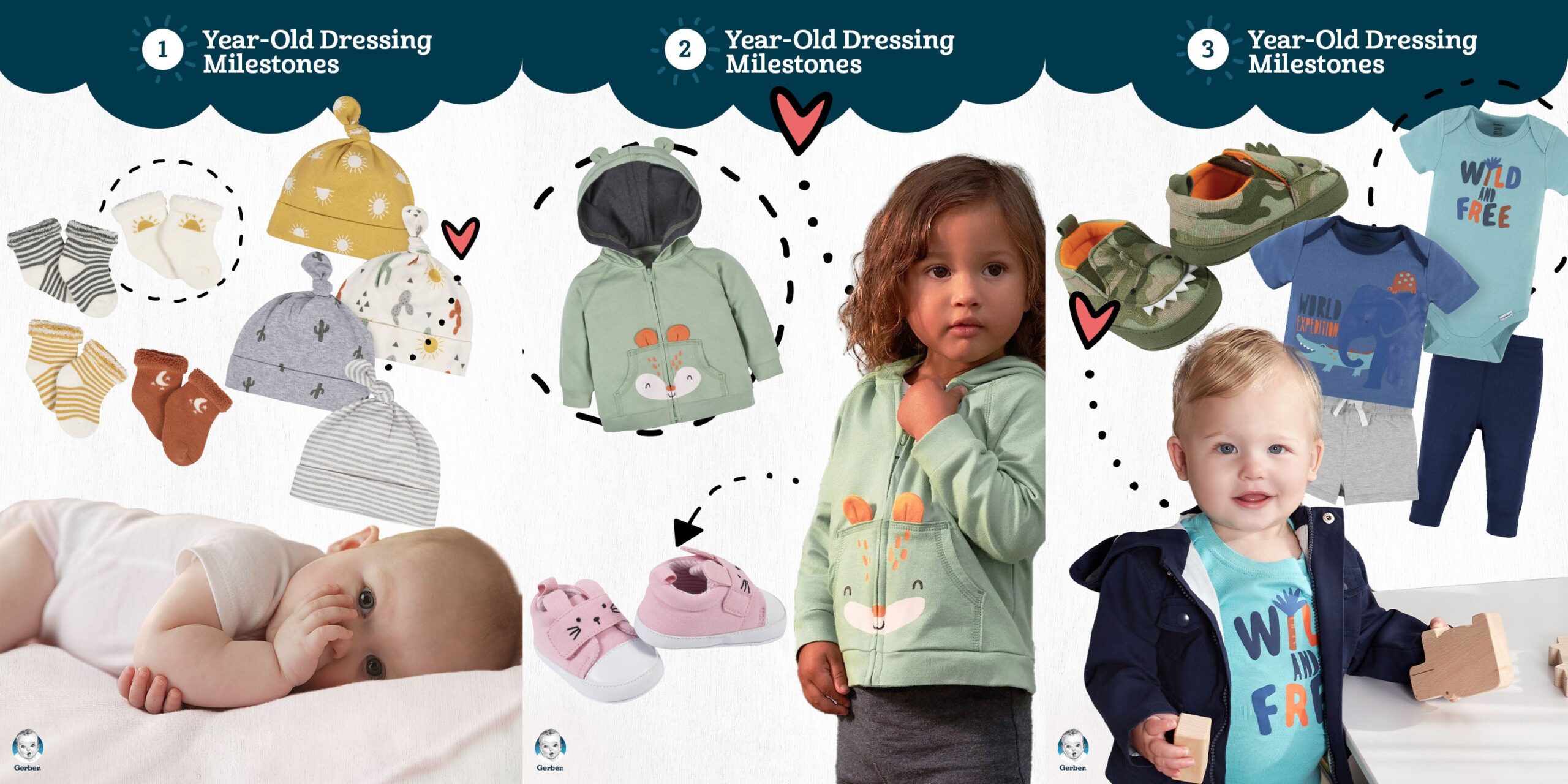
1 to 3 Years: Cooperating and Undressing
- Pushes arms through sleeves, holds out feet for shoes
- Removes loose items first — hats, socks, unfastened shoes
- By age 2-3, pulls pants up and down for toileting
Every guide says undressing comes before dressing. Almost none says why: pulling something off just needs momentum, not aim.
3 to 5 Years: Simple Clothes and Fasteners
- Manages elastic waistband pants independently
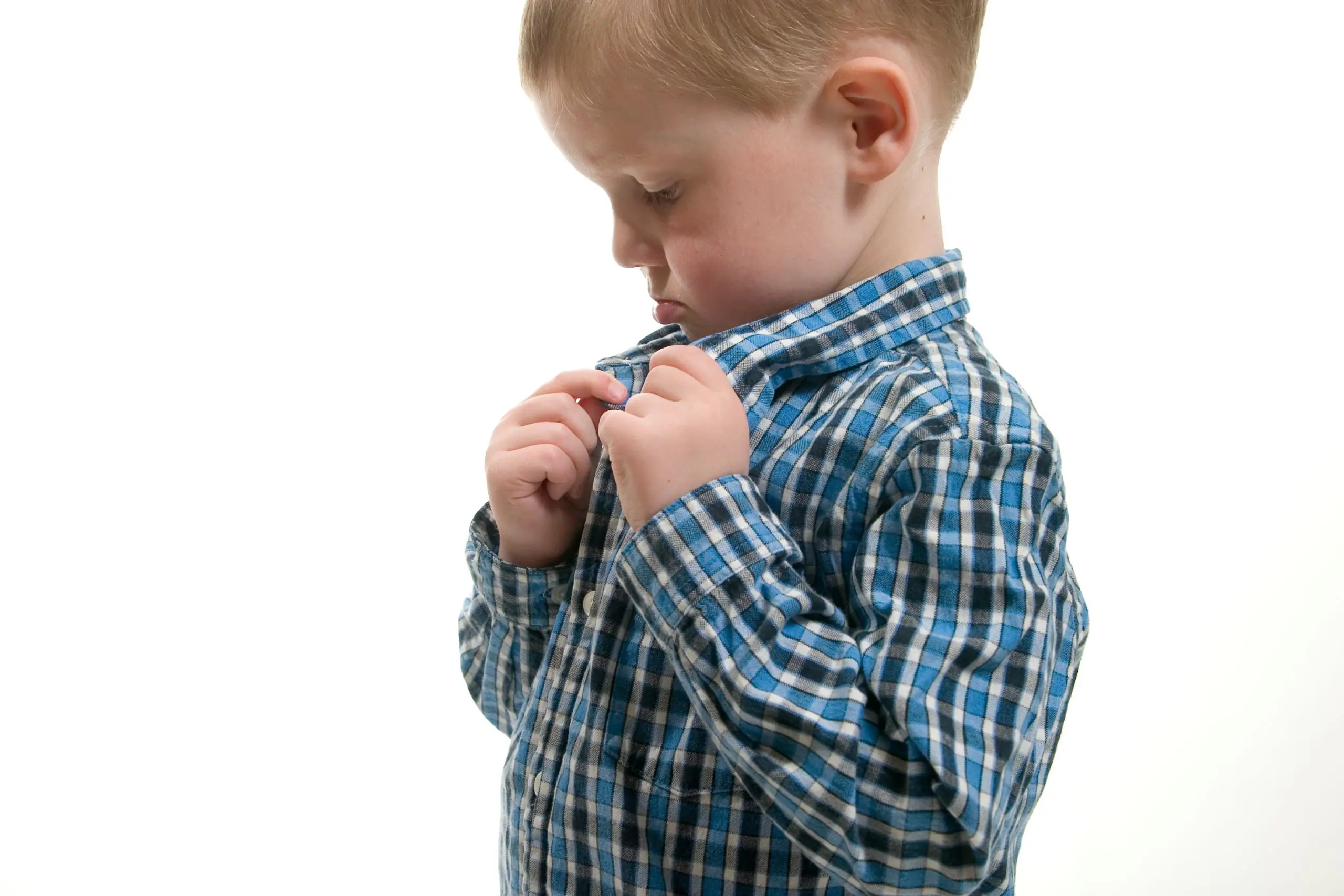
- Attempts Velcro closures and large buttons with a starter tab
- Fasteners lag behind everything else, roughly in this order: no-fastener and Velcro come easiest, zippers next, buttons after that, laces last — expect to help here longest.
My son hit every box on this list by 4, except buttons. He’d get one done, give up, and wear the shirt open for six more months rather than try a second.
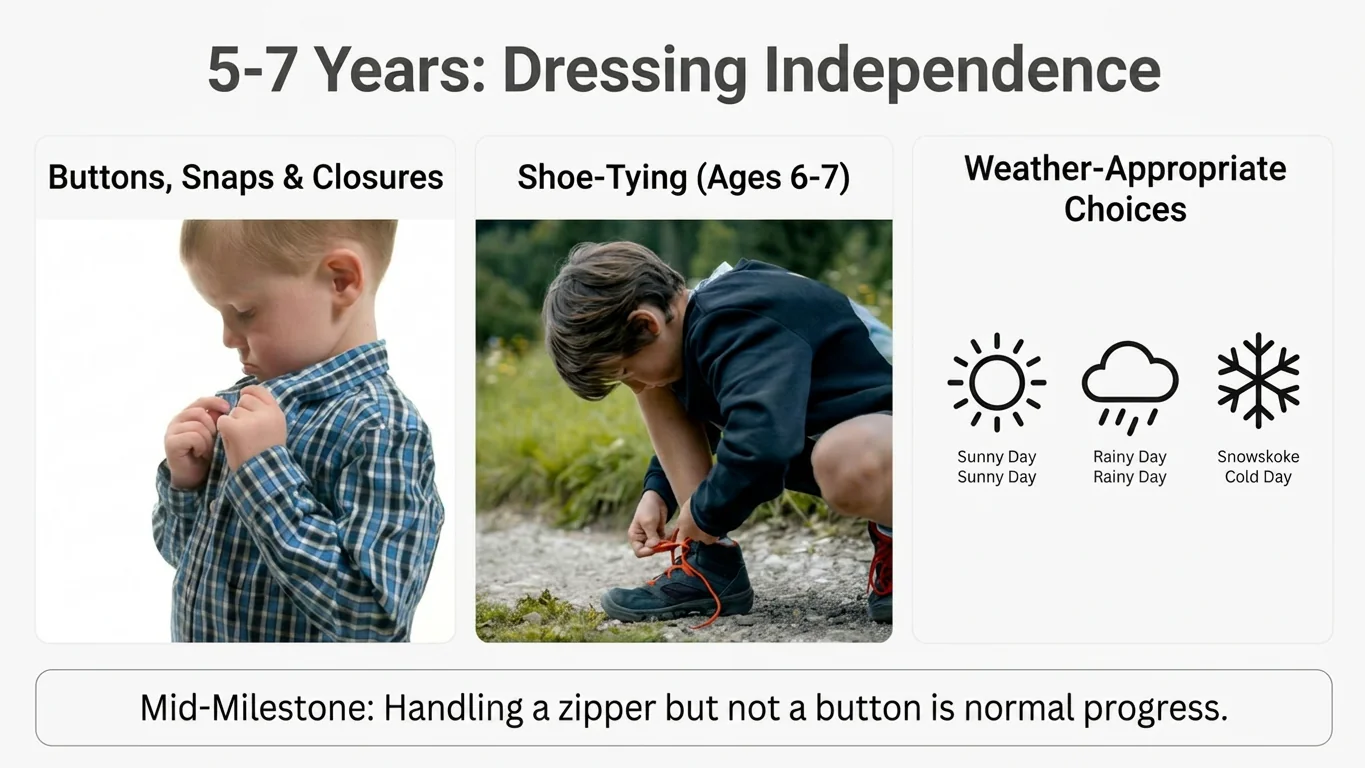
5 to 7 Years: Full Independence
- Handles small buttons, snaps, and back closures
- Chooses weather-appropriate clothing
- Shoe-tying arrives last, usually between 6 and 7
A kid handling a zipper but not a button isn’t behind. They’re mid-milestone, on a chart that was never one column to begin with.
Teaching Methods That Actually Work
Ask five parenting blogs which method is “best” and you’ll get five confident, contradictory answers. None of them can point to research proving they’re right.
Backward Chaining vs. Forward Chaining
Backward chaining has you finish most of the task and let your child do the last step. Pull a shirt over their head — they tug it down. Forward chaining flips it: they start, you finish. Neither reliably beats the other. What matters is which one you’ll repeat on a rushed morning, since consistency teaches faster than technique.
I found this out by accident, honestly. Backward chaining with my son for a week — nothing. Letting him start instead? Same result, if not a little faster. Turns out I was the variable, not the method.
The Montessori Environment Effect
Environment outperforms method. Dr. Angeline Lillard, a developmental psychologist at the University of Virginia, led a randomized study in Frontiers in Psychology. Montessori preschoolers scored higher on executive function by age 4 — tied to structured independence, like a low shelf a toddler can reach alone.
- Low, child-accessible storage
- Limited outfit choices
- No rushing or correcting mid-task, with praise for effort over outcome
Honestly, if you’re wondering what age should kids dress themselves fastest, the system barely matters — what matters is whether you’ll actually stick with one long enough for your kid to stop needing it.
When Skills Disappear: Regression, Fatigue, and Shoe-Tying
A skill your child had yesterday can just vanish today. Nobody tells you that part. It’s not backsliding — it’s how young brains actually work.
Why Kids “Forget” Skills They Already Had
Dressing regression shows up around new siblings, illness, or any big transition. A 2023 study in the Early Childhood Education Journal found something surprising.
Young children build confidence more from emotional and physiological states than from actually mastering a task. Translation: a tired or stressed kid isn’t missing the skill. In that moment, they simply can’t access it.
The week we brought our second home, my toddler — who’d buttoned his own pajamas for months — suddenly couldn’t manage one. I almost called it a fluke.
It wasn’t. Two weeks later, with no practice in between, the buttons came back on their own.
The Two-Minute Fatigue Test
Try the same task twice: once calm, after a nap, once rushed. Works rested but fails rushed? That’s fatigue talking, not a skill gap — and it means the skill is still in there.
Teaching the Bunny-Ears Shoe-Tying Method
- Make two loops (“bunny ears”)
- Cross one over the other
- Tuck one through the gap and pull
Fewer steps than traditional lace-tying, which is why occupational therapists teach it first.
When to Loop In a Pediatrician or OT
If regression hasn’t improved after about two months of regular attempts, or several skills lag at once, mention it to your pediatrician. They can flag a developmental delay if needed.
That’s different from what age should kids dress themselves — it’s about your kid’s specific pattern, not the chart. Everything else here is timing; this is the one thing worth not waiting on.

FAQ
What age should kids dress themselves completely?
Almost never as early as you’d think. Most kids reach full independence between 5 and 7 — buttons and shoe-tying arrive last.
Is it normal for a 5-year-old to still need help?
More than normal — expected. The skills people assume a 5-year-old “should” have are usually the ones that arrive last: small buttons, back closures, laces.
Why did my child suddenly stop dressing themselves?
This is the flip side of what age should kids dress themselves — dressing regression, often triggered by fatigue, illness, or a new sibling. My son lost buttoning entirely for two weeks after his sister was born, then got it back with zero practice. It’s temporary, not lost.
What age do kids learn to tie their shoes?
Usually 6 to 7 — later than almost every other skill on this list, because it’s genuinely the hardest one. The bunny-ears method makes it easier for beginners than the traditional loop.
When should I talk to a doctor?
If it’s been about two months with no real progress, or several skills lag together, mention it to your pediatrician. That’s worth not waiting on.
The Bottom Line
So, what age should kids dress themselves? Somewhere between 3 and 7, in fits and starts — never a straight line.
What matters more than the exact age is knowing fine motor skills develop unevenly, regression is normal, and method matters less than consistency. Most guides stop at a chart. This one gave you the why, a fatigue test, and the one shoe-tying method that actually works for small hands.
Independence isn’t a race. It’s one wobbly, backward-sliding step at a time — the same steps my own kids took — and confidence, as the research bears out, always catches up last. For more parenting and dressing guidance, see our full parenting and dressing guide.