You order two sizes up because last time a “10” barely covered her knees. It arrives — still wrong: tight across the chest, or drowning in ruffles that make an eleven-year-old look eight. You’re not doing something wrong. There’s a reason for that. Psychologists have long pointed to this exact age as when kids start proving what they can do.
Clothes that don’t fit right quietly get in the way. One mom kept count: eleven “wrong” dresses before one finally worked. Finding an age-appropriate dress isn’t about a magic brand — it’s matching floral dresses for tweens to her stage, not the number on the tag.
What Age Actually Counts as “Tween”?
A 9-year-old and a 12-year-old are not the same customer — treating them that way is where most sizing and style mistakes actually start.
Early Tween (Ages 9–10)
Still happy in playful prints, though growth spurts here are unpredictable. The real trap isn’t the print — it’s buying a full size up “for growing room,” which quietly lands her in juniors sizing before she’s ready for what that section actually looks like.
Upper Tween (Ages 11–12)
One mom watched her daughter hold up a floral dress and say flatly, “That’s a little kid dress” — the same daughter who, a year earlier, wore whatever was handed to her without a word. That shift isn’t attitude. Erik Erikson (1950) named this exact age “industry vs. inferiority.” She’s testing competence.
Clothing is one of the first places she gets to prove it herself. A 2010 study on preteen girls found their style preferences tracked with physical maturity, not age (ResearchGate). It’s also why so many parents start wondering what age kids should dress themselves in the first place.
Here’s what most parents miss: the goal isn’t finding a dress she’ll wear. It’s finding one she’ll choose again.
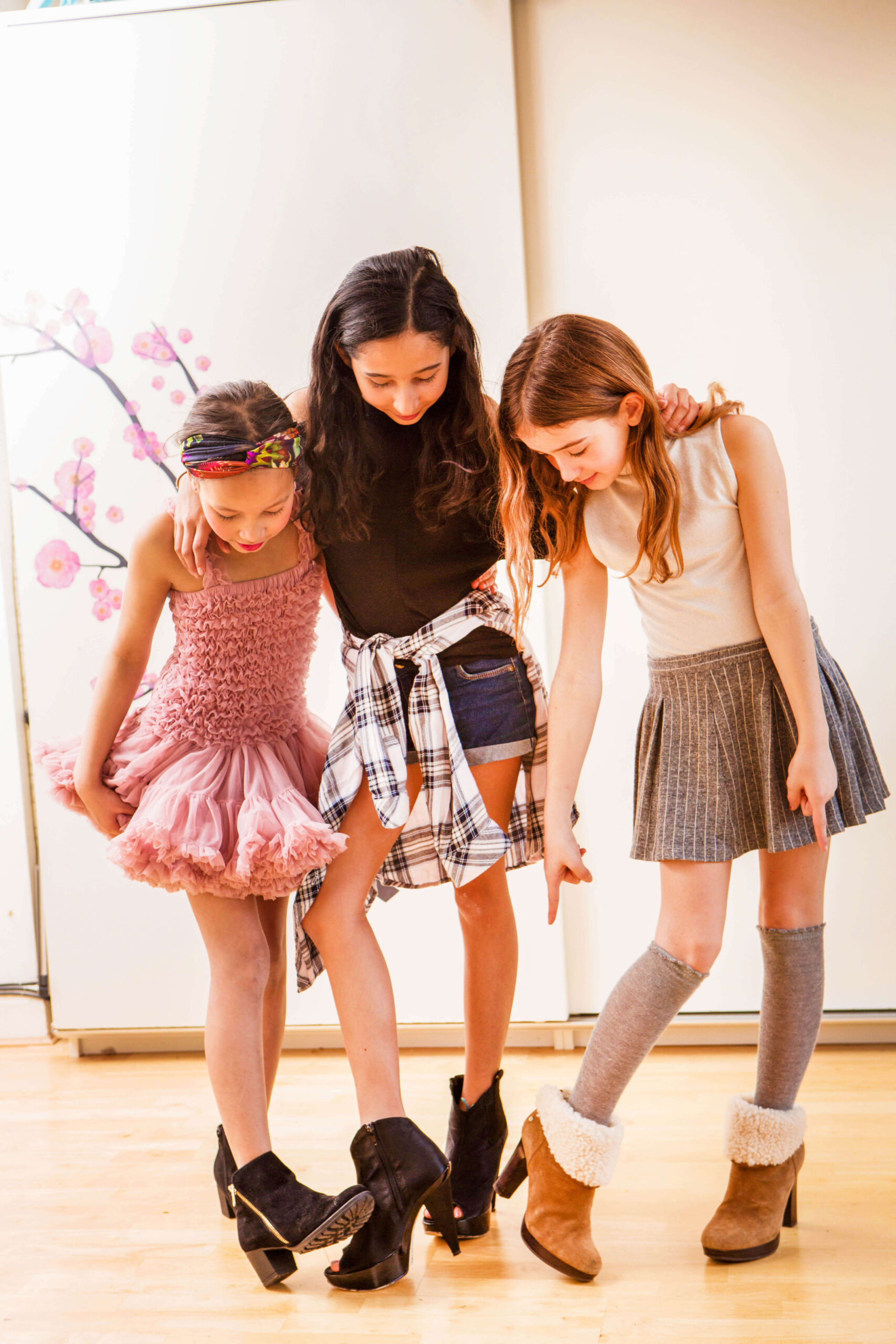
Navigating the Sizing Gap: Girls Sizing Chart vs. Juniors Sizing
No rule says a “10” has to mean the same thing twice — and nobody warns you about that before your first return.
Why Nothing Fits Right
One mom ordered the same size, same day, from two different brands. One dress swam on her daughter. The other wouldn’t zip. She hadn’t misjudged anything — kids’ clothing sizing isn’t standardized, so every brand just does its own thing. A study of tween girls found something striking: almost none could find clothing that was stylish, age-appropriate, and properly fitting — all three at once (ResearchGate, 2009). That’s not bad luck. That’s the industry working as designed.
How to Actually Solve It
This is where floral dresses for tweens get tricky — too big for the girls chart, too mature once you cross into the juniors department.
Measure waist, chest, and torso length — these beat age every time
- Compare size charts before ordering; juniors varies most
- Try on before the event, even labeled “true to size”
Stop trusting the tag. Start trusting the tape measure.
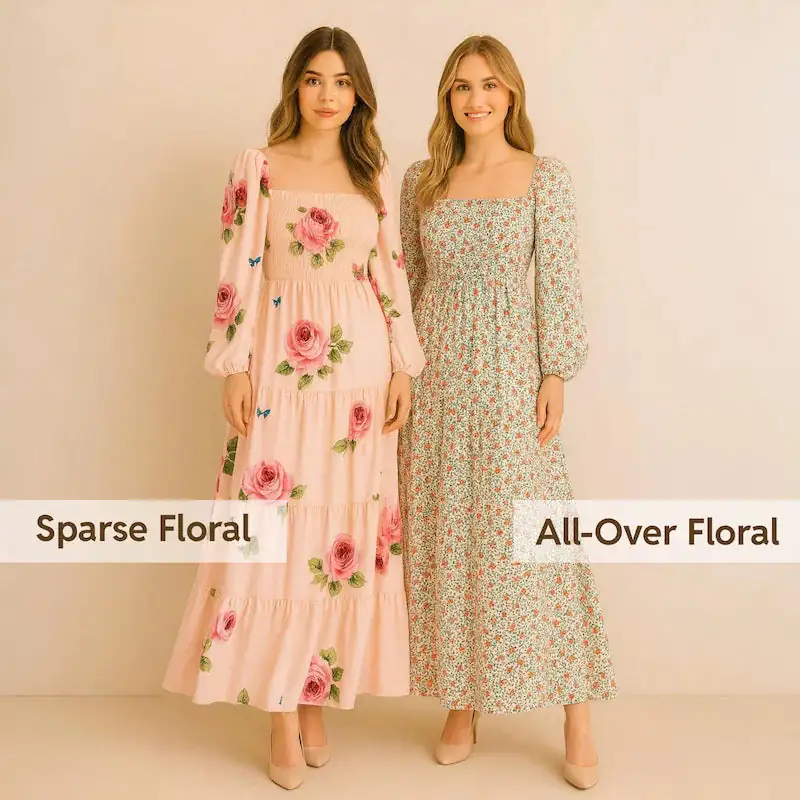
The Mature-vs-Juvenile Floral Print Decoder
Not all florals read the same age — and once you see why, you can’t unsee it.
The Three-Second Test
One mom scrolled forty “girls” dresses, unable to say why some felt right for her 11-year-old and others made her wince. The answer: scale, palette, motif. Tiny, repeated flowers read young. Larger, spaced blooms read older. Bright primaries skew young; muted tones skew mature.
Reading It in Practice
- Small, bright, repeated print → younger
- Larger, muted print → grown-up, not mature
- Cartoon-style motif → skip for upper tweens
Once you see the pattern, you’ll never shop florals blind again.
Matching Floral Dresses for Tweens to the Occasion
She’ll wear one dress five times before you realize you bought for the wrong five occasions.
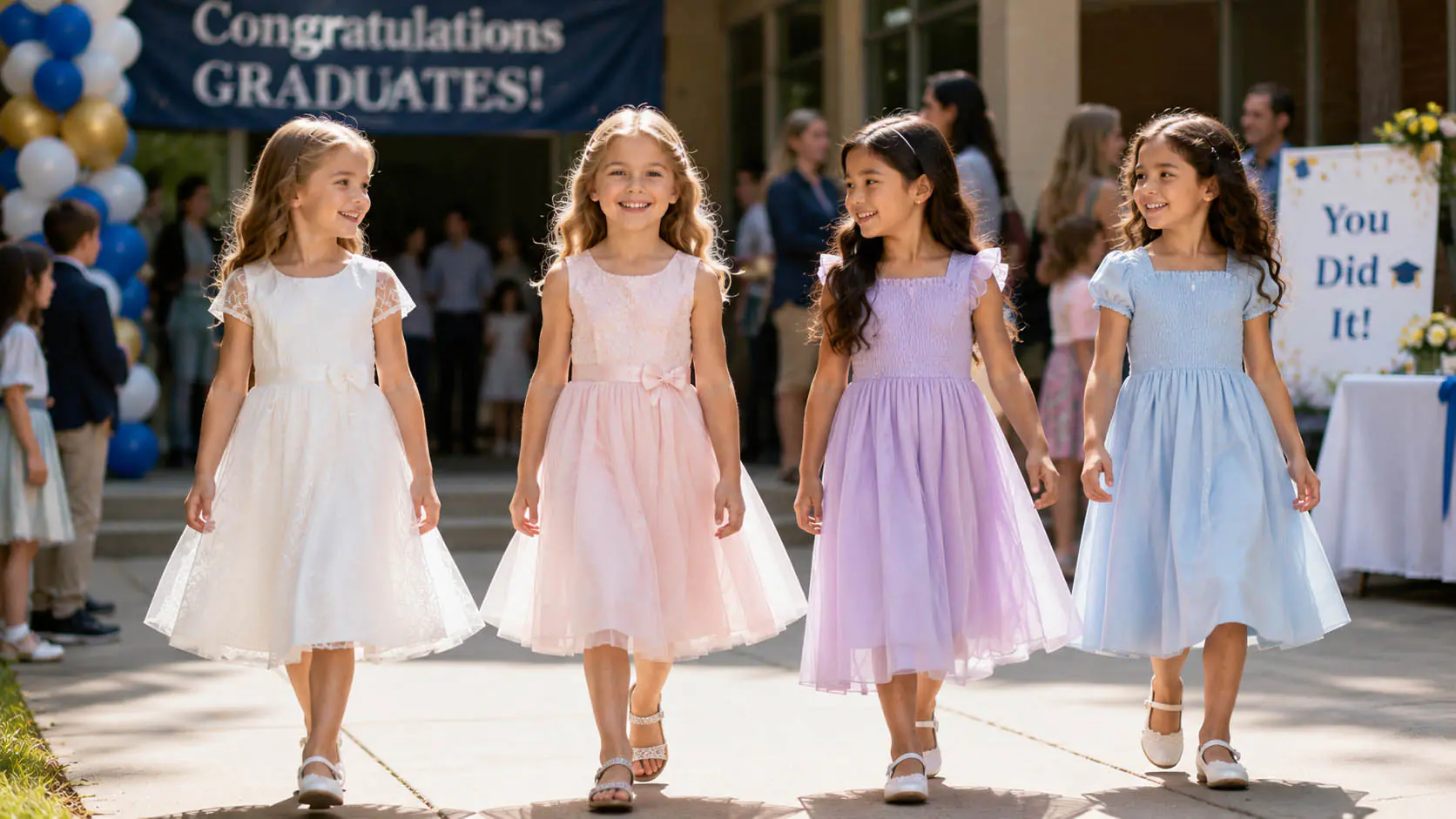
One mom bought a beautiful floral for her daughter’s 6th grade graduation. Then she realized there was nothing floral in the closet for an ordinary Tuesday. The right print means nothing if the style is wrong for the moment.
A Quick Reference by Occasion — including when a long dress for kids makes more sense than a knee-length one
| Occasion | Best Style |
| 6th grade graduation | Midi or maxi, tiered |
| School dance | Knee-length, room to move |
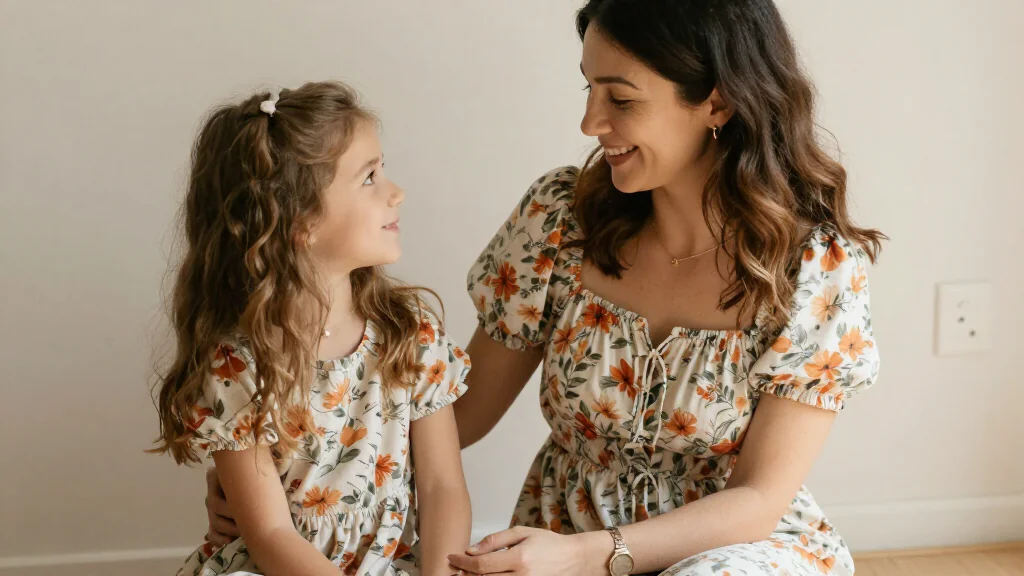
| Family photos | Coordinated, not matching |
| Casual/everyday | Cotton, short florals |
| Flower girl/wedding guest | Softer botanical print, longer hem |
Most parents pick occasion dresses by asking “does she like it?” — the better first question is “does the cut still work in six months?” Tiered and midi styles suit graduation for exactly that reason: room to grow, formal without being fitted. Knee-length works for dances the same way — movement without the modesty risk of anything shorter.
Don’t Skip Casual
“Tween casual wear” searches spiked sharply in early 2026 (Accio, 2026) — parents are finally shopping florals for Tuesdays, not just milestones. Cotton and jersey survive a full school day; chiffon and tulle survive one photo, then the wash pile.
One dress for the moment isn’t a wardrobe. Five moments, five right dresses — that’s the actual goal.
Balancing Modesty With What She Wants to Wear
“Everyone has this.” Four words, and suddenly you’re negotiating with a stranger who used to let you pick her socks.
She wants the trend. You want the coverage. Both of you can be right — this stage is as much about body image and growing independence as it is about fabric.
Finding a Modest Neckline She’ll Still Want to Wear
Clinical psychologist Tasha M. Brown puts it simply: letting a child develop her own style means giving up some control, while still holding a clear line on modesty (HuffPost, 2024). Caroline Fenkel, LCSW, adds that choosing her own clothing builds real confidence and identity.
Finding the Middle Ground
- Modest neckline, puff sleeves instead of straps
- Built-in shorts under a twirl skirt
- She picks the print; you set the coverage line
You’re not losing the negotiation. You’re teaching her how to have it — even if that means dressing your kids differently than your mom did.
Your 60-Second Decision Framework
Two returns. One outgrown dress. A drawer of “almost right.” Here’s the order that would have saved all three.
What most articles never tell you: the “right” dress isn’t about the dress. It’s about answering four questions in order — skip one, and you’re back at checkout, mid-return.
Why Order Matters
FitEz’s 2025 industry report cites fit and sizing as the leading cause of apparel returns. Verified Market Research (2026) shows the tween category growing precisely because these buyers want self-selected, trend-aware pieces — not mismatched ones. The dress was never the problem. The decision process was.
The 4-Step Checklist
- What’s the occasion? Formal, casual, or between
- What age-stage is she? Early or upper tween
- What’s your budget tier? $38–$62 for a rewear; $90+ only for one true event
- Now choose the print and cut
One mom used this exact order after two failed returns — and got it right on the first try. She hadn’t realized occasion comes before browsing, not after.
Guess the order, and you’ll shop again next week.
FAQ
You’ve probably already typed one of these into Google tonight.
What age counts as a tween for dress shopping?
Ages 9–12, split into early tween (9–10) and upper tween (11–12). Treating both the same is the single most common shopping mistake.
How do I know if a print is too young or too mature?
Check scale, palette, motif. Small, bright, repeated prints read younger; larger, muted botanicals read older.
Juniors or girls’ sizing?
There’s no fixed rule because there’s no real industry standard behind either size chart — brands define both categories themselves. Juniors often fits upper tweens better, but expect adult proportions, not just a bigger kids’ cut.
What’s a fair budget?
Most parents budget occasion dresses and everyday dresses separately — but tweens shift between “special” and “ordinary” faster than that split allows. A $38–$62 piece that works for both beats a $90 dress that only works for one Saturday.
How do I get her actually to like my pick?
Give real input, not just final approval. Psychologist Tasha M. Brown and social worker Caroline Fenkel both link this directly to identity-building (HuffPost, 2024).
One good answer here saves you an entire Saturday of returns.
The Bottom Line
Somewhere in her closet right now sits a dress that “should” fit and doesn’t. That’s not your fault — kids’ clothing sizing was never standardized to begin with.
What actually works: match stage, print, and occasion — not a number on a tag. Measure her. Decode the print. Check the occasion. Then let her have real input.
Finding floral dresses for tweens stops being frustrating the moment you stop shopping by age and start shopping by stage. This was never really about a dress. She’s figuring out who she is, one outfit at a time — and you get a front-row seat.
Grab a measuring tape before you open a single browser tab. The next dress will fit the first time.