Before your child said their first word, they had already mastered the swipe. You have handed over your phone for five quiet minutes. You felt guilty. That guilt is worth examining.
You are not failing. A 2025 Pew Research Center survey found 62% of under-twos watch YouTube regularly. Every parent managing this in 2026 is working without current guidance — it just changed.
The American Academy of Pediatrics rewrote screen time recommendations by age in 2026. What replaced fixed limits asks you to know your child — not watch the clock.
Zero to Three (2023) confirms background TV costs toddlers hundreds of caregiver words hourly — digital displacement. The guilt you carry means you already sense what is being lost.
Here is what changed — and what it means for tonight.
Screen Time Recommendations by Age — The 2026 Guidelines
Following screen time recommendations by age was simpler when the rule was two hours. The AAP changed that in 2026 because screens affect every child differently — and what matters is what they displace.
The updated screen time recommendations by age: zero to under 18 months. One hour for ages 2–5 with a caregiver. Two recreational hours for ages 5–12 — school not counted. The 5 Cs framework for teenagers.
Under 18 Months — Screen Time and the Developing Brain
My youngest reached for my phone before her toy. That stopped me. Not because she touched a screen — but because I understood what she was not reaching for.
The World Health Organization recommends zero sedentary screen time under 18 months. Every minute screens occupy is a minute without serve-and-return interaction — the exchanges that wire a baby’s neural circuits.
Harvard’s Center on the Developing Child (2023) found these interactions predict vocabulary at three more reliably than family income — and Zero to Three (2024) confirmed heavy screen exposure slows language milestones by 18 months.
One exception: Video calls with a present caregiver are fine — the interaction is live, responsive, and human.

Ages 2–5 — Co-Viewing Changes Everything
One hour sounds simple — not when you are forty minutes in and your toddler is on their third unboxing video.
Children’s programming at this age is hard to sit through. You do not need to watch the whole hour — ten focused minutes, asking questions, and connecting content to real life, changes the outcome. Common Sense Media (2023) confirms co-viewing produces better comprehension than solo viewing at every age under eight.
Content matters as much as time. Christakis et al. (2011) confirmed that toddlers watching rapid-cut content showed worse attention at five, even at identical viewing durations. Lillard and Peterson (2011) found that nine minutes of fast-paced viewing impaired executive function in four-year-olds. Fast-paced content disrupts toddler brain development and the attention systems later learning depends.
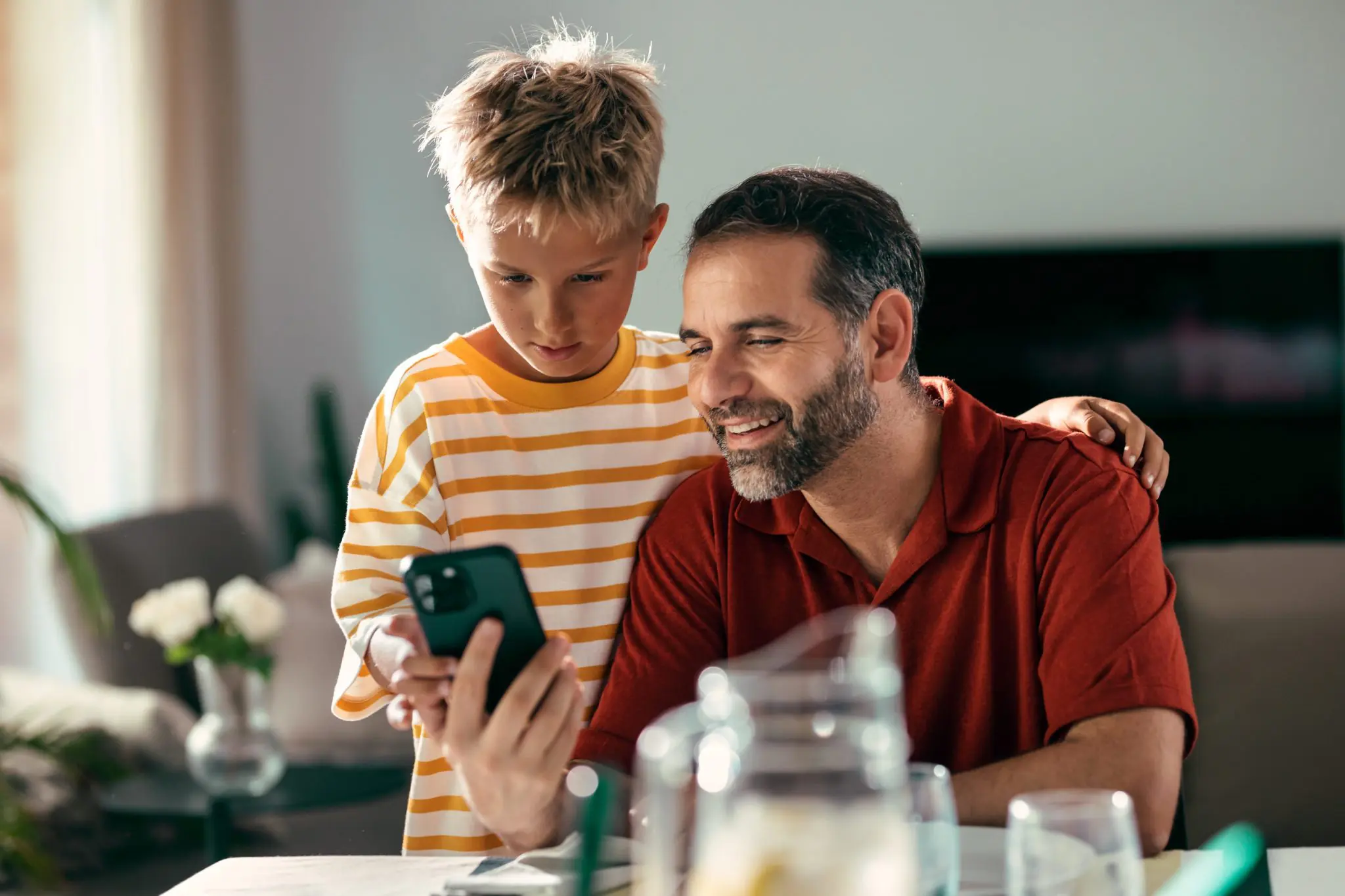
Ages 5–12 — The Hidden Screen Load
Two hours sounds manageable — until you remember your child spent three hours on a school Chromebook. Screen time recommendations by age were written for home use. They cannot count the classroom.
The ABCD Study (NIH, 2023) found that children exceeding two hours per day scored lower on thinking and language tests regardless of content. Twenge and Campbell (2019) found behavior problems, reduced physical activity, and weakened attention compounding over months.
Sleep disruption appears first — lost sleep compounds everything else. Ask your child’s teacher how many hours their class uses tech screens daily. The answer changes how you think about the two hours at home.

Ages 13–18 — Beyond Limits, Toward Digital Wellbeing
Rigid rules rarely survive adolescence. The AAP stopped pretending they do. Their 5 Cs framework asks five questions — not one clock.
Child. Content. Calm. Crowding Out. Communication. One question for every screen decision.
Odgers and Jensen (2020) found that collaborative limits build stronger self-regulation than imposed rules. Twenge et al. (2018) found that girls with five or more daily social media hours were 66% more likely to carry a suicide risk factor — the screen time and mental health link is sharpest here.
Pew (2025) reports 37% of 11–12-year-olds use TikTok despite the age minimum. Your teenager may develop what psychologists call a parasocial relationship with a creator — and grieve when they disappear.
Not all screen time displaces equally. A child video-calling a grandparent or learning a language is building something real — worth distinguishing from mindless scrolling. The goal is a child who understands that difference, not one who performs compliance while you watch.

What These Guidelines Actually Look Like at Home
Last night, screens were off at seven. By seven-oh-two, we were negotiating.
The One Parenting Habit That Shapes Healthy Screen Habits
The most important screen time finding is not about your child’s screen. It is about yours.
Radesky et al. (2014) found that children showed more distress when caregivers were on phones than during any observed screen time. Zero to Three (2023) confirms this reduces responsive caregiving by 20%.
Children learn balance from watching you put your phone down when they start talking. The same dopamine loop tech companies engineered to capture your attention is being engineered for theirs.
Your phone during their playtime is not neutral.

Three Practical Shifts That Work
Willpower is the wrong tool. Duckworth et al. (2016) found self-control fails in high-temptation environments — a parent who moved their charger to the kitchen eliminated ninety minutes of scrolling without discipline. Design beats negotiation.
Three changes:
- Five-minute warning before screens end — advance notice helps children co-regulate emotions through transitions (Ostrov et al., 2020)
- Screen-free zones by location — dining table, bedrooms, pre-bedtime. These are not screen restrictions. They are protection orders for the last human rituals most families still have. Screens do not interrupt these moments. They replace them.
- Family media plan built together — sit down Sunday, let them negotiate, watch them enforce rules they made. Children accept screen-free activities more readily when they helped design them — and parents who model healthy screen habits consistently find the rules require less enforcement over time. Use Screen Time on iOS or Family Link on Android to enforce limits structurally.
What About AI Chatbots and Voice Assistants?
Your child may already be talking to an AI every day. No current screen time recommendations by age guideline cover it. Ten percent use AI chatbots; 40% use voice assistants daily (Pew, 2025).
Dr. Marian Williams, PhD (CHLA, 2026) notes that young people miss serve-and-return interactions whenever a device replaces a caregiver’s conversation. An AI responds. It never adapts, repairs, or genuinely notices.
Ask one question: what is this replacing? That gives you the judgment no guideline can.
What Most Articles Get Wrong
Your Boredom Tolerance Is Their Greatest Screen Defense
The ten minutes after your child says “I’m bored” are the most productive of their day — if you resist filling them. Mann and Cadman (2014) confirmed that boredom directly precedes creative ideation in children.
Handing over a device at the first restlessness interrupts imagination. Discomfort with doing nothing — not bad parenting — drives most screen-reaching.
Today: Let boredom sit ten minutes. Expect protest — then watch what they invent.
Co-Viewing Is Not Supervision — It Is the Lesson Itself
Common Sense Media (2023) confirms co-viewing produces higher comprehension at every age under eight. The screen delivers content. The parent delivers meaning.
Today: Pause once. Ask one question — not a test: what did you think about that?
Frequently Asked Questions
Does educational screen time count toward the daily limit?
Officially no — screen time recommendations by age limits apply to recreational use only. Przybylski and Weinstein (2017) found what matters is not the category but what surrounds it. Educational or recreational: what is it replacing?
How much screen time do kids get at school?
No guideline tracks this. Three hours on a Chromebook exceeds most daily limits before the child arrives home. Total daily exposure matters — not just the hours you control.
Should screens be in children’s bedrooms?
No — most parents already know this. Bedroom screens stay because they buy thirty quiet minutes at day’s end. That is understandable. It is costing your child twenty minutes of sleep onset every night — melatonin suppression from blue light is cumulative and measurable (American Academy of Sleep Medicine, 2023). Move the device to the hallway. The quiet survives. The sleep debt does not.
Does asking Alexa count as screen time?
Not technically — but voice assistants replace serve-and-return interaction that builds language acquisition. Apply the displacement test: what is this replacing?
What if I’m already doing this wrong?
Fifty-eight percent of parents tell Pew they are doing their best. Screen time recommendations by age are a starting point — not a verdict. Pick one change. That is enough.
The Goal Was Never a Perfect Score
No parent gets this right every day. The ones who raise digitally healthy children kept talking after they handed over the phone.
Your habits, your honesty, one conversation at a time — something no chart, no guideline, no timer can measure.
Digital wellbeing for kids is not a destination. It is something you build daily, imperfectly, together.