The research nobody told you: children with zero screen time score lower on wellbeing measures than children with moderate use. Oxford Internet Institute, 120,000 teenagers.
Forty-two percent of parents still feel guilty every time their child picks up a tablet. Last Tuesday, my daughter watched three episodes while I answered emails. I told myself I’d do better. I didn’t.
The American Academy of Pediatrics 2023 guidance abandoned fixed daily limits entirely. Because content quality and developmental outcomes drive results. Understanding the real screen time benefits for kids starts here. Not with headlines. With actual research.
Purposeful, age-appropriate media use builds cognitive development. Guilt does not.The real benefits here are research-backed, significant — and built into every section below.
Screen Time Benefits for Kids: The Educational and Cognitive Case
Most parents assume every study on screen time ends the same way — put it down, limit it, feel bad about it. This one does not.
The 2024 Frontiers in Psychology study of 583 children found that screen learning time on interactive devices improved both math and language ability. Screen entertainment time did not. That distinction changes everything.
My son proved it before I knew the data. He called a caterpillar’s transformation “metamorphosis” at age four. From a nature documentary. Not from me. Not from school. From a screen.
Oxford Internet Institute researcher Dr. Andrew Przybylski confirmed it in landmark research: digital technology is not intrinsically harmful. Used with purpose, it actively supports learning. Active screen time — creating, problem-solving, building — consistently outperforms passive consumption. Educational screen time for children, built around cognitive development and adaptive learning, is not the problem. It is the solution.
The caveat: passive consumption without purpose carries different risks — which is why active always beats passive.
When a Video Game Becomes a Prescription
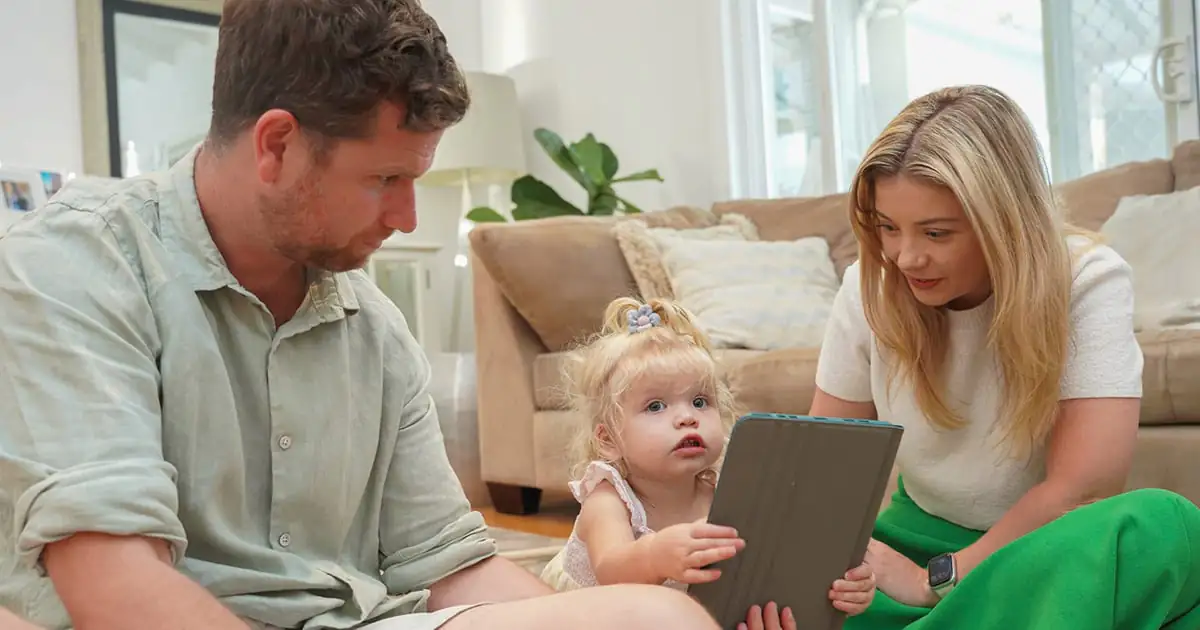
My nephew has ADHD. His pediatrician prescribed him a video game.
Not metaphorically. EndeavorRx — FDA-authorized, tested across five trials and 600+ children — produced a 36% improvement in objective attention measures. By month two, 68% of parents reported meaningful daily improvements. In 2023, the FDA expanded authorization to ages 13 – 17 after 162 adolescents showed significant gains in attentional control.
Here is what that means for every parent who has ever questioned screen time: the world’s most rigorous health regulator looked at it — and prescribed it.

Building Vocabulary and Creativity Through Screens
My daughter built a Roman aqueduct in Minecraft last Thursday. Her teacher called it the best history project in the class. A seven-year-old in Ireland used the same platform to reconstruct the ancient Colosseum — demonstrating spatial understanding his textbook could not show.
A 2025 systematic review of 29 Minecraft studies confirmed positive outcomes across mathematics, science, spatial reasoning, and language. That is why Minecraft Education runs in 40,000 school systems across 140 countries.
Scratch — MIT Media Lab’s platform — has 100 million children building real skills through animation and code. And Sesame Street? Regular viewers entered kindergarten knowing 30% more letters, numbers, and words than children who did not watch.A screen did what years of family conversation could not and that is one of the most overlooked screen time benefits for kids in early education.

The Boredom Myth: Why Removing Screens Doesn’t Spark Creativity
Boredom has its place. But creation builds something daydreaming cannot — a portfolio of real skills with real output.
MIT Media Lab research suggests children who create on screens consistently outperform passive viewers on creative measures. The child who learns to animate at eight carries a creative confidence no amount of screen-free time can manufacture. Restriction does not guarantee creativity — it guarantees a child will eventually find a screen anyway, just a worse one. Purposeful media use fosters creative output through game-based learning. The question was never screens or no screens. It was always which screen and why.
✅ Try this tonight: Open Scratch.mit.edu. Hand them the laptop. Leave the room. Come back in twenty minutes.
Screen Time Benefits That Build Character: Empathy, Connection, and Emotional Growth
Nobody told me a cartoon would teach my son more about feelings than I did. But here we are.
He comforted a crying classmate — word for word, exactly as Daniel Tiger taught him. A Texas Tech University study of 127 preschoolers confirmed it: quality screen content develops empathy, emotional regulation, and social confidence.
A 2024 UCLA Center for Scholars and Storytellers longitudinal study confirmed that these benefits persisted well into the teenage years. Healthy screen time for children, grounded in social-emotional learning and prosocial behavior, does not steal childhood. Sometimes it quietly shapes it.
Why Co-Viewing Changes Everything: The Parental Involvement Advantage
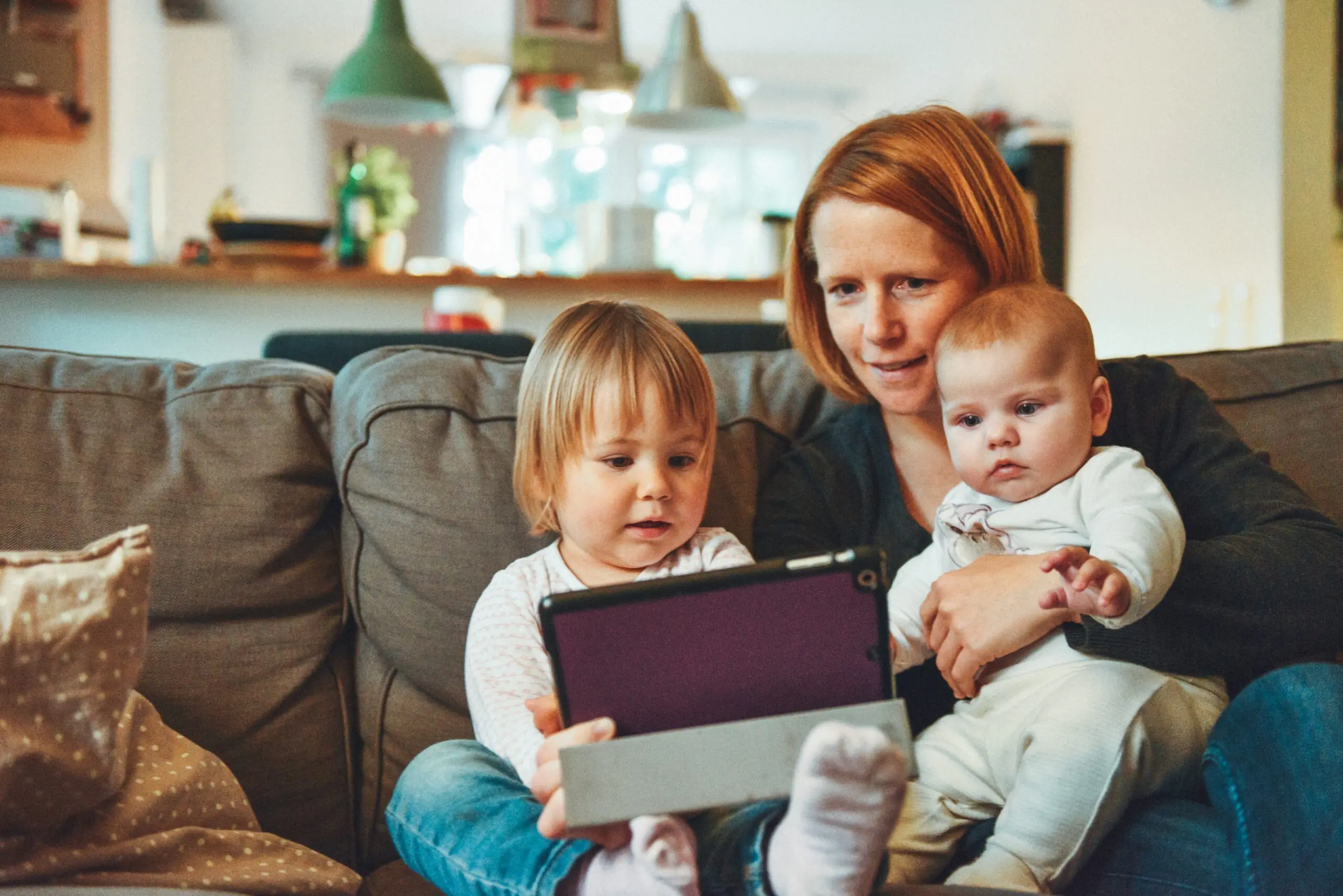
Last Sunday, my husband and I watched Daniel Tiger with our daughter instead of scrolling our phones.
She spent the next hour teaching her stuffed animals how to handle disappointment. Joan Ganz Cooney Center research shows children learn vocabulary from screens at dramatically higher rates when a parent watches alongside them. Watching together is not passive parenting — it is the most powerful thing you can do.
Texas Tech confirmed empathy gains only appeared when families co-viewed together. A 2024 UCLA study reinforced it — 93% of children who retained Daniel Tiger’s lessons had watched with a family member. Self-regulation, emotional vocabulary, prosocial behavior — all measurably stronger. It just requires you to sit down — and it delivers screen time benefits for kids that no solo viewing session ever could.
The Autonomy Paradox: Why Strict Screen Rules Backfire
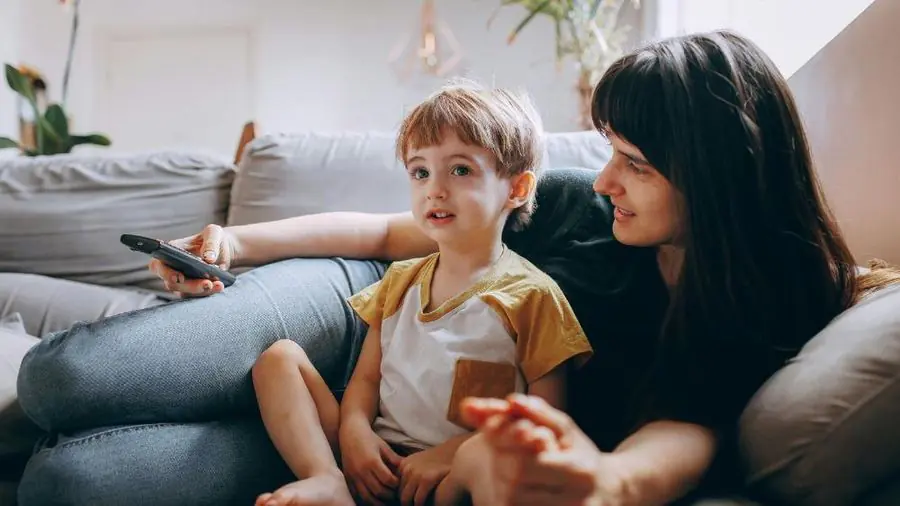
Every screen rule I imposed lasted about a week. The one my daughter helped write? She still follows it — and she is nine.
Rochester University’s Self-Determination Theory confirms it: restrict screens heavily and children develop worse habits in adolescence — not better. One mother in a Pew Research focus group involved her seven-year-old in writing the family screen rules. By nine, her daughter was reminding parents when they broke them. Parental involvement works when it is collaboration — not enforcement.
✅ Today: Let your child write one rule. You might be surprised what they come up with.
Screen Time as an Equalizer: The Children Who Benefit Most
Here is the conversation nobody wants to have: screen time access is not equal — and neither are the benefits of losing it.
My neighbor cannot afford tutors. Her eight-year-old uses Khan Academy every evening. Last spring he tested above grade level in mathematics.
Pew Research 2025 confirms it — lower-income families rely on screens for learning at far higher rates than upper-income families. For these children, the screen time benefits for kids are not theoretical. They are the difference between falling behind and keeping up.
Active screen time recommendations by age content produce the strongest outcomes at every stage.
Sesame Workshop research proved it decades ago — vocabulary and digital literacy gains were strongest in children from the least resourced homes. The screen time debate is a privilege. The screen time benefit is universal.
Frequently Asked Questions
What are the main benefits of screen time for kids?
The core screen time benefits for kids are cognitive development, vocabulary acquisition, empathy, and creativity — when content is purposeful, age-appropriate, and interactive. Oxford research confirms moderate screen use outperforms zero screen time on child wellbeing measures. Creation and connection are active. Consumption alone is passive. Choose active.
How much screen time is healthy for children?
The two-hours-a-day rule? It no longer exists. The American Academy of Pediatrics dropped fixed daily limits in 2023. Content quality and developmental outcomes determine results — not minutes. Under five: co-view and discuss. School-age: prioritize creation over consumption. One exception worth noting: research consistently shows screens in the hour before bed affect sleep quality — timing matters as much as content.
Can screen time help children with ADHD?
A pediatrician can now prescribe it. EndeavorRx — FDA-authorized, tested across 600+ children — improved attention measures by 36% within four weeks. Research now clinically validates this benefit for children with ADHD. This is no longer just parental instinct.
Does watching TV help kids develop empathy?
Yes — with one condition. Texas Tech’s study of 127 preschoolers found Daniel Tiger’s Neighborhood improved empathy and emotion recognition only when parents co-viewed and discussed content together. The screen teaches. The parent activates.
Is screen time good for children from low-income families?
Most. Pew Research 2025 and Common Sense Media confirm lower-income families report the highest rates of screens supporting children’s learning. For millions of children, a tablet is not a distraction. It is the best teacher their family can access.
Conclusion
The question was never whether screens are good or bad. It was always about whether we were using them well.
The screen time benefits for kids include cognitive development, emotional regulation, and creative output. For millions of children without alternatives, screens open doors that nothing else can.
The parent who read this far cared enough to look past the headline. That instinct — to find the research, think harder, choose better — is exactly the skill quality screen time is trying to build in your child.
Choose the screen. Choose it well. That is enough.