My five-year-old used to reach for a phone before she’d said good morning.
YouTube Shorts before breakfast. Cartoons before she’d registered she was hungry. Some mornings she wouldn’t even notice it was time to eat. That’s when I knew something had shifted.
I have three kids, and I watched all of them drift toward screens in a way that genuinely worried me. The negative effects of technology on children are something most of us feel before we can name them — the glazed look, the meltdown when you take the device away, the Shorts and Reels that seem harmless until you glance over at what’s actually playing. The eyes were tired and strained by mid-afternoon. The slow disappearance of a normal childhood.
Three months ago, I decided to change it. Mornings would start with breakfast, then movement, then something real — a walk to the park, a game, a story. The first two weeks were hard. What I found on the other side made me want to understand the why properly.
Because “screens are bad” is something we all know. What nobody explained to me was what was actually happening inside my daughter’s brain — why the meltdowns happen, what short-form video does to a five-year-old’s attention, and whether the damage can be undone. What the research says might surprise you.
It’s Not Just the Hours — It’s What Screens Are Replacing
The conversation about technology and children almost always focuses on time. How many hours? Whether you’re above the recommended limit. But the more important question isn’t how long your child is on a screen — it’s what they’re not doing while they’re on it.
Researchers call this displacement. Every hour on a screen is an hour not spent in free play, physical movement, face-to-face conversation, or even just sitting with nothing to do. Those aren’t fillers between the important activities. They are important activities. Free play builds emotional resilience and social understanding. Boredom — genuinely uncomfortable, apparently purposeless boredom — is when the brain shifts into a creative, self-reflective mode that screens suppress almost entirely.
The World Health Organization recommends zero screen time for children under one — not because screens are uniquely toxic, but because what they displace at that age is irreplaceable. The first two years run almost entirely on responsive, face-to-face interaction with a caregiver. Nothing on a tablet substitutes for that.
Here’s the finding most parents have never heard: paediatrician Dimitri Christakis found that background television — nobody watching, just on in the room — measurably reduced the words young children heard from their caregivers every hour. The TV didn’t need to be aimed at the child to affect the child. It simply had to be audible.
The negative effects of technology on children also shift with age. A screen in front of a fourteen-month-old operates in a completely different developmental context than the same screen in front of a seven-year-old or a thirteen-year-old. What gets displaced changes at each stage — and so does what’s at stake.
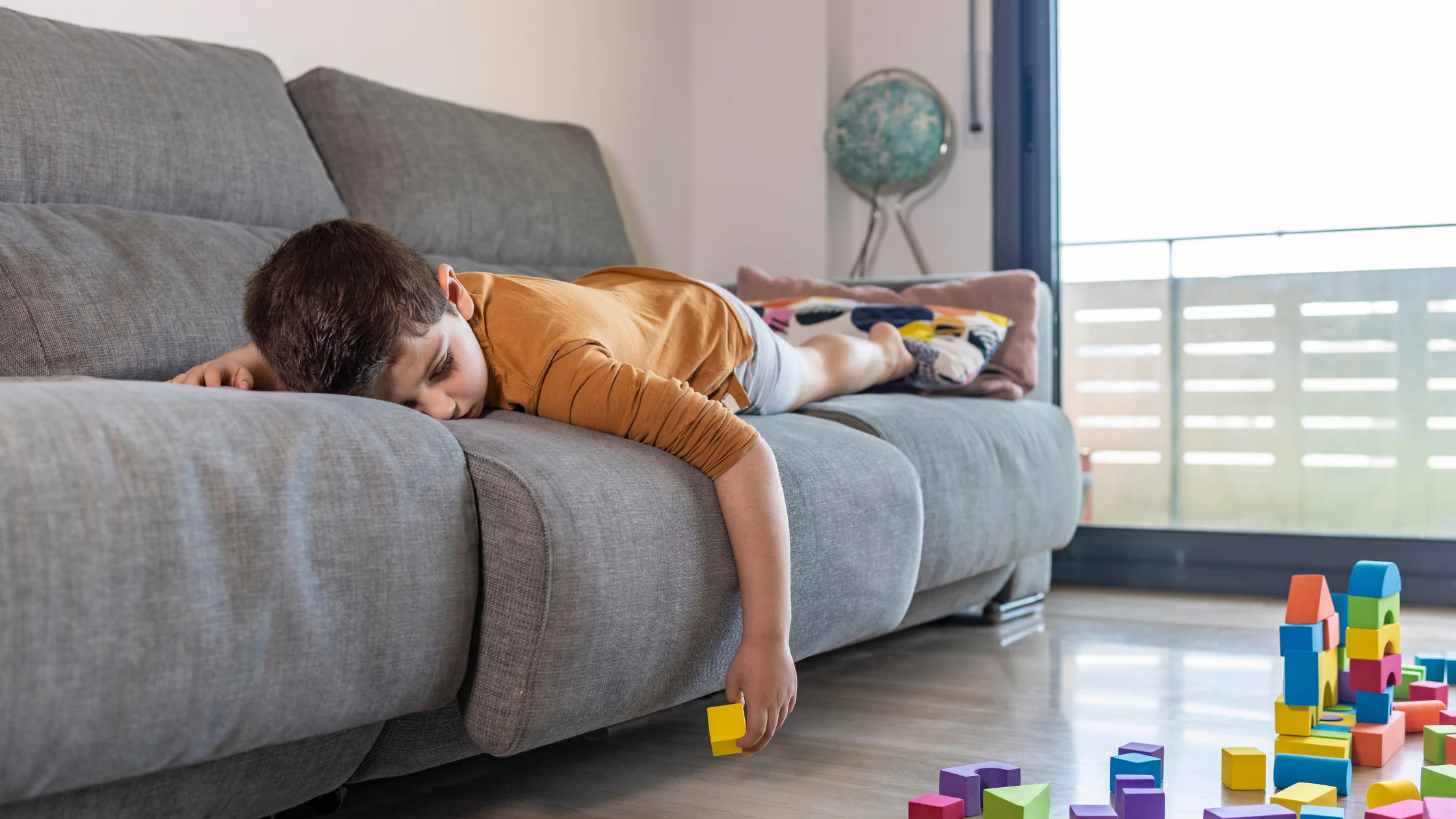
What Screens Are Doing Inside Your Child’s Brain and Body
The Brain Evidence Parents Aren’t Being Told About
A longitudinal study from Tohoku University tracked children over several years using brain imaging and found that frequent internet use was associated with measurable reductions in gray matter volume — in areas governing language, attention, memory and executive function. Verbal intelligence declined. This wasn’t opinion. It was brain structure, changing over time, in response to how children were spending their hours.
Think of it like a muscle that only grows when it’s used. The circuits for language and focused thinking develop through conversation, reading and play. When screens fill those hours instead, those circuits get less practice — and over years, that difference becomes measurable.

Why Taking the Device Away Causes a Meltdown
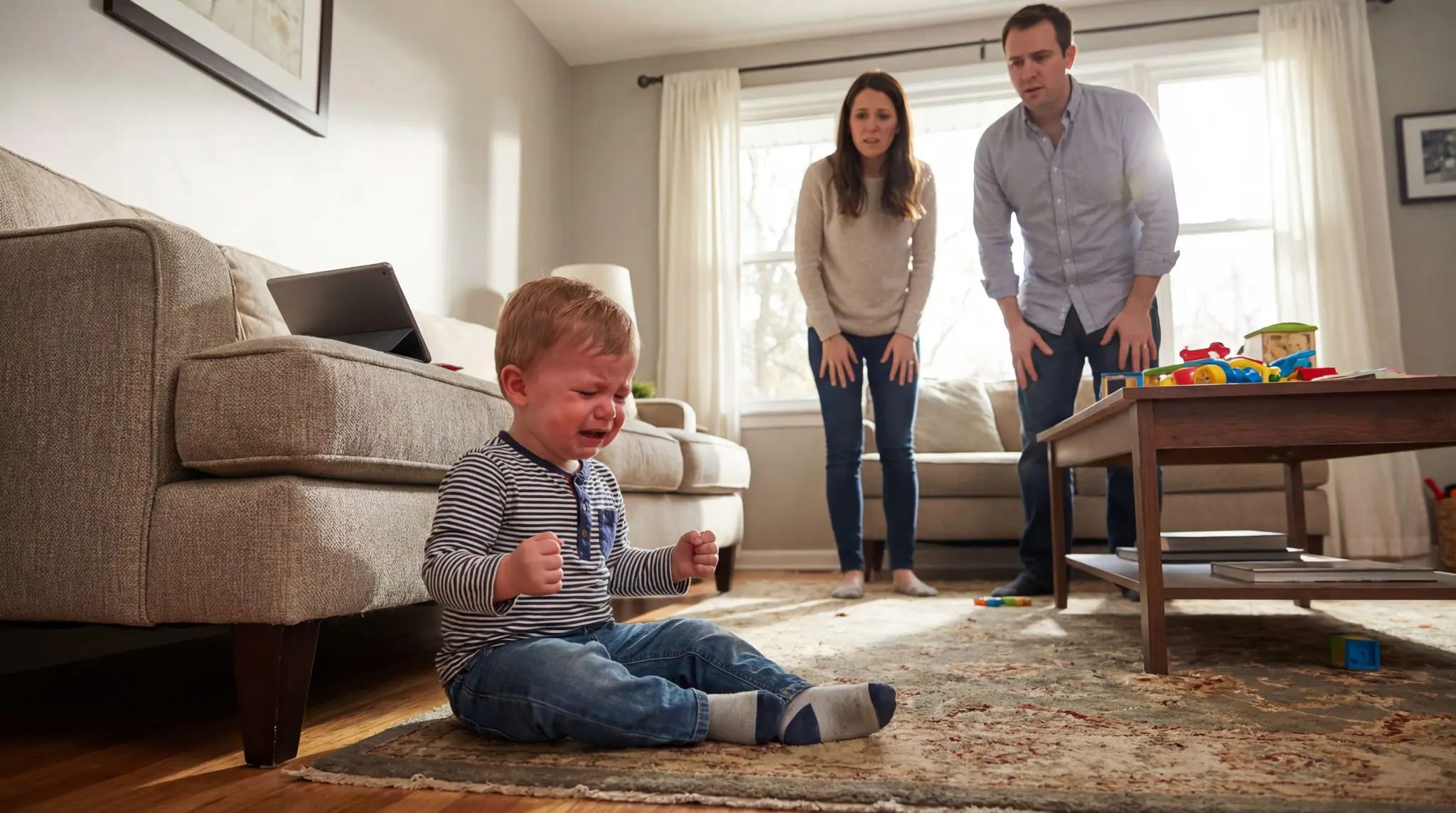
The meltdown when you remove a device isn’t dramatic behaviour. It’s a developmental signal.
Screens are the most efficient exit from emotional discomfort ever invented. Bored? Gone instantly. Frustrated? Immediately escaped. The problem is that moving through those feelings — not escaping them — is exactly how the prefrontal cortex builds its capacity to regulate emotion. That circuitry needs real friction to develop. Screens remove the friction during the exact years the circuitry is forming. So when the device disappears, the child has nothing to fall back on. That’s the meltdown.
A 2023 study in JAMA Pediatrics by Dr Jenny Radesky found that frequently using devices to calm children aged three to five was associated with greater emotional dysregulation over time, particularly in boys. The negative effects of technology on children show up here most visibly — not on a screen, but in the aftermath of one.
Sleep Is Not Just Rest
Blue light suppresses melatonin — but research by Dr Monique LeBourgeois published in Pediatrics found that children’s melatonin suppression from evening screen exposure is almost twice that of adults. Their eyes are more sensitive. The effect lands harder and fades more slowly.
More than 75% of children have screens in their bedrooms, and 60% use them in the hour before bed. That matters because sleep in childhood isn’t simply rest. It’s when memory consolidates, emotions are processed, and growth hormone is released. A chronically underslept child isn’t just tired — they’re missing the nightly biological work underpinning almost everything else.

The Part Nobody Talks About — What Your Phone Is Doing to Your Child
Most articles about the negative effects of technology on children focus entirely on children. This one won’t, because the research doesn’t.
Decades of developmental psychology have established that when a caregiver goes unresponsive — even briefly, even during ordinary play — infants show immediate distress. Less smiling. More fussing. Withdrawal. This is the Still Face effect, documented across hundreds of studies. A young child’s emotional world is organised around the responsiveness of the face in front of them. When that face goes blank, it registers as something wrong.
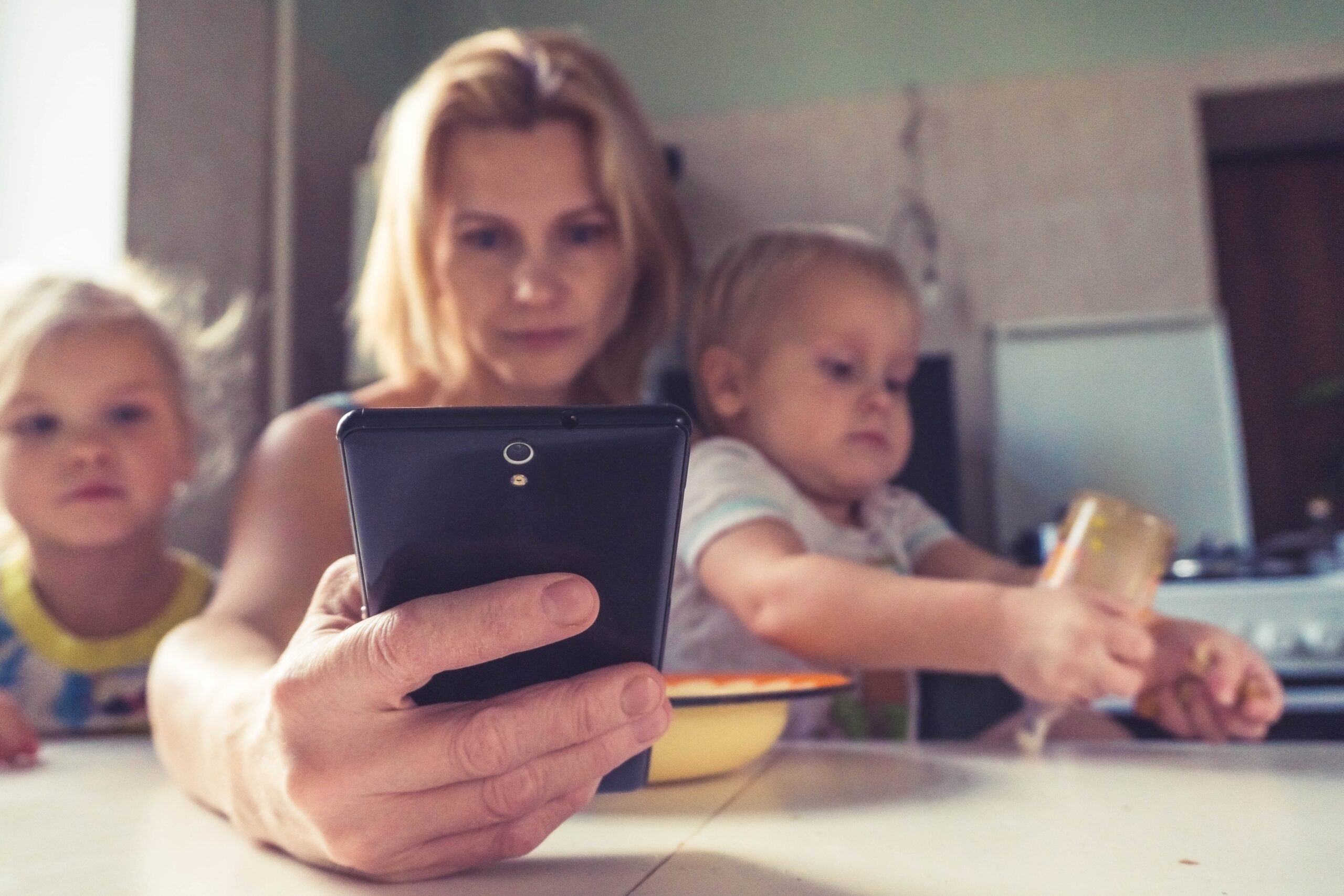
In 2018, researcher Sarah Myruski applied this directly to smartphones. Mothers were asked to use their phone for just two minutes during play with their infant. The babies responded the same way they do when a caregiver goes completely unresponsive — decreased positive affect, increased distress, social withdrawal. Two minutes. A notification check. The same response as being ignored. Nobody told me this either.
Researchers now call this technoference — the repeated, low-level interruptions to caregiver responsiveness caused by device use. Not one dramatic moment. The accumulated effect of hundreds of small disconnections across a day, each brief enough to feel trivial, collectively significant enough to show up in infant emotional regulation and language development.
This is not a blame section. Every parent picks up their phone in front of their child. The point is simply that most of us have never been told this mechanism exists — and knowing it changes things. Not to guilt, but to awareness. Putting the phone face-down during floor play with a toddler is not a small gesture. The research suggests it’s one of the most protective things a caregiver of a young child can do.
Boredom Is Not the Enemy
Most parenting articles treat boredom as a problem screens conveniently solve. The research suggests the opposite.
When a child has nothing to do — genuinely nothing — the brain shifts into a mode associated with creativity, self-reflection and imagination. It’s called the default mode network, and screens suppress it almost entirely. Sandseter and Kennair, writing in Evolutionary Psychology, argue that children who never experience manageable discomfort — physical or emotional — develop less confidence and higher baseline anxiety over time. Their work draws on substantial developmental evidence and is widely cited in early childhood research.
A child who cannot tolerate an unstructured afternoon, who reaches for a device the moment nothing is happening, is not lazy. They have simply never been given the chance to discover what their own mind does in the quiet.

Frequently Asked Questions
How much screen time is too much for children?
The WHO recommends no screen time under one, and no more than one hour daily for ages two to four. For a full breakdown, see our guide to screen time recommended by age. The number matters — but what screen time replaces matters just as much.
Does it matter what my child is watching?
Significantly. Co-viewing with your child and talking about what you’re watching is developmentally different from solo short-form video on a feed. Context and parental involvement change the impact more than hours alone. See also screen time benefits for kids for a balanced look at intentional use.
Why does my child melt down when I take the device away?
Because the device has been doing the emotional regulation work their brain hasn’t yet learned to do independently. The meltdown is a developmental signal — not a behaviour problem.
Can the effects of too much screen time be reversed?
In most cases, yes. The brain remains highly plastic throughout childhood. Earlier is easier, but consistent environmental change produces real developmental shifts at any age.
At what age does social media become genuinely risky?
Roughly eleven to fourteen. The prefrontal cortex is still forming, identity is actively being constructed, and social comparison hits harder neurologically at this age than at any other point in development.
A Note Before You Go
You don’t need to be perfect at this. Nobody is.
What changes things isn’t a stricter rule — it’s understanding what’s actually happening. When you know why the meltdown occurs, you respond differently. When you know what the background TV is doing, you turn it off. When you know what two minutes on your phone looks like to a baby, you put it in another room during playtime.
The negative effects of technology on children are real, well-researched, and in many cases reversible. Start with one change. Watch what your child does with the space. That’s enough for now.
Kashmala Tariq
Founder — ParentingAll.com
Kashmala is an Australian mother of three and the founder of ParentingAll.com. She writes honest, research-backed parenting guidance for real families — covering everything from screen time to child development — with no judgment and no perfection required.