
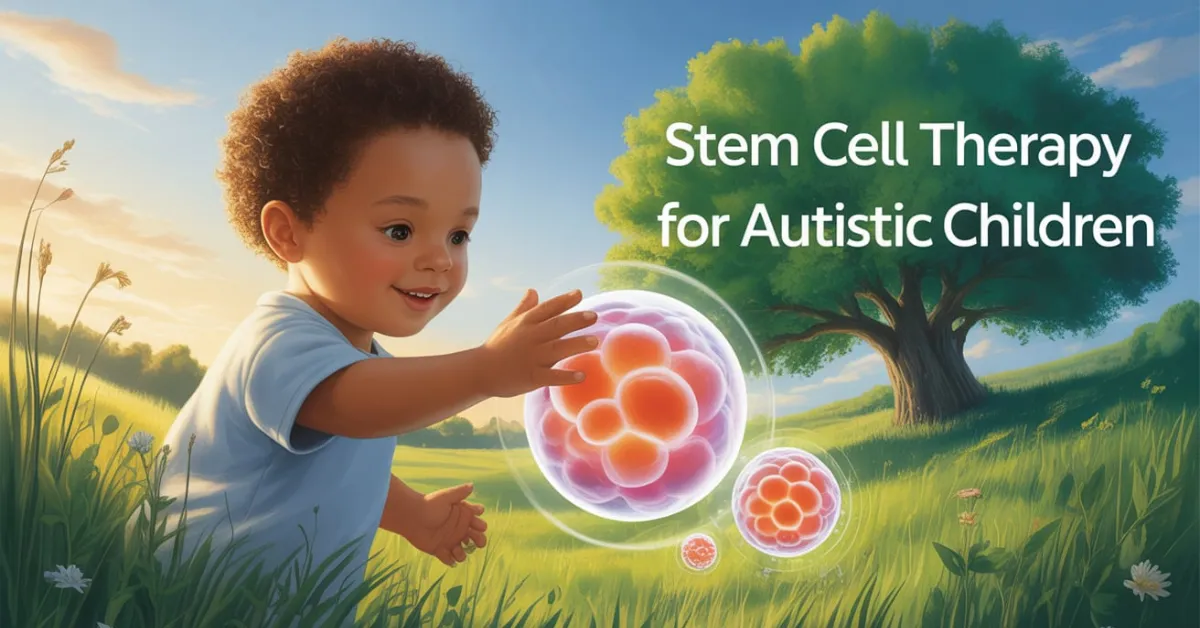
Stem cell therapy for autistic children is a promising new treatment that researchers are exploring. Autism has special effects on children, usually leading to communication and behavior disturbances. There are attempts by doctors to enhance the power of the brain using stem cells. The treatment is in its experimental phases, but it brings new hope to the families struggling with autism. Initial findings indicate that the benefits may be long-term.

What Is Stem Cell Therapy for an Autistic Child?
The treatment of stem cell therapy for Autistic Child is an intervention where damaged or underdeveloped brain cells are repaired or replaced by the stem cells. The therapy attempts to enhance the functioning of the brain through the enhancement of communication and behavior. Research is still being conducted by the scientists, but they have the thought that stem cells can help to fix some of the neurological issues associated with autism. This is not meant to cure autism but to better the lives of children who are afflicted.
How Does Stem Cell Therapy Work?
Stem cell therapy for autistic child implies the insertion of stem cells into the body. These are cells that can transform into various types of cells, such as brain neurons. It is intended that by substituting brain cells, social skills, as well as communication and cognitive capacity, would improve. Research is still being conducted in this, but the initial tests indicate that the stem cells can help in repairing the sections of the brain that are correlated to autism.
Benefits of Stem Cell Therapy for an autistic child
The potential benefits of stem cell therapy for autistic child are considerable. According to some parents, their child communicates better and behaves well after the treatment, as well as maintains improved social contacts. Initial studies indicate that stem cells can be used to make children more conscious of their environments and learn to become more independent. This would enable them to associate with other children better and acquire life skills.
Challenges and Risks of Stem Cell Therapy for an autistic child
There is stem cell therapy that can save an autistic child, but it is not free of risks. It remains under test treatment, thus its long-term side effects are not discernible. Immune rejection and issues related to the given procedure are possible risks. This group of parents is supposed to consider the advantages and disadvantages with the help of a medical professional and be certain that such therapy is really appropriate to their child and that all the necessary precautions are going to be provided. Additionally, parents should explore established treatments like pediatric physical therapy for plagiocephaly, which has proven effectiveness for addressing specific developmental needs in children.
Whole Child Therapy: A Holistic Approach
In addition to stem cell therapy for autistic child, Whole Child Therapy is an adjuvant therapy. This treatment does not only focus on the emotional, social, and physical well-being of a child, but also. In this way, it assists in the development of all segments of children in the quest to provide a better balanced life. The stem cell therapy can be performed with whole child therapy, and thus, children are able to reach full pot proteins comprehensively.
The Future of Stem Cell Therapy for Autism
Looking ahead, stem cell therapy for autistic children continues to show promise. Stem cells are still under research, and there is a little bit of hope that in the future, stem cells will form a significant aspect in the treatment of autism. Recent studies and clinical trials are educating us on how stem cells can be useful to children with autism. Stem-cell therapy may turn out to be an important weapon against autism as we advance our knowledge and expertise in the field.
Is Stem Cell Therapy Right for Your Child?
Stem cell therapy for autistic child offers hope. Some children can also benefit when using stem cell therapy; however, parents need to go into deep thought before settling on this therapy. Discussing with a doctor is the most ideal technique for coming to a conclusion of what is most appropriate for every child. The stem cell therapy alone cannot be sufficient. It can be used along with other treatments and activities, and in most cases gives the best results.
Conclusion: A Step Toward Progress
Stem cell therapy for autistic child is an exciting development in the search for effective autism treatments. According to medical research findings, such treatment does not treat autism, yet it can aid in brain functioning as well as social development. Additional research is required, yet the prognosis is good in children with autism. Parents are encouraged to consider all the available ones, consult their care provider, and settle on the one that fulfills the needs of their child. It’s important to distinguish effective treatments from bad therapy: why the kids aren’t growing up approaches that may hinder rather than help a child’s developmental progress.
FAQS
1-Stem cell therapy on autistic children: Is it safe?
The stem cells could also assist, though the treatment is yet to be explored. In order to obtain the risks and the benefits, families must speak with a healthcare professional.
2-What is the best age for stem cell therapy in autism?
It does not matter at what age, yet the earlier the better. Talk to an expert and determine when it is the right time to do it for your child.
3-What is the timeline of stem cell therapy?
The outcome of stem cell therapy may differ. Other children take time to improve, whereas others improve after a few months. Monitoring should be constant.
4-Is stem cell therapy a treatment for autism?
Autism cannot be cured by stem cell therapy, although it might lessen the symptoms and enhance brain activity, restoration of social interactions, and communication.
5-What is the complementary treatment between the stem cell therapy and the whole child therapy?
Whole child therapy is concerned with emotional, social, and physical growth. Combined with the stem cell therapy, it creates a more complete way of helping the overall well-being of the child