
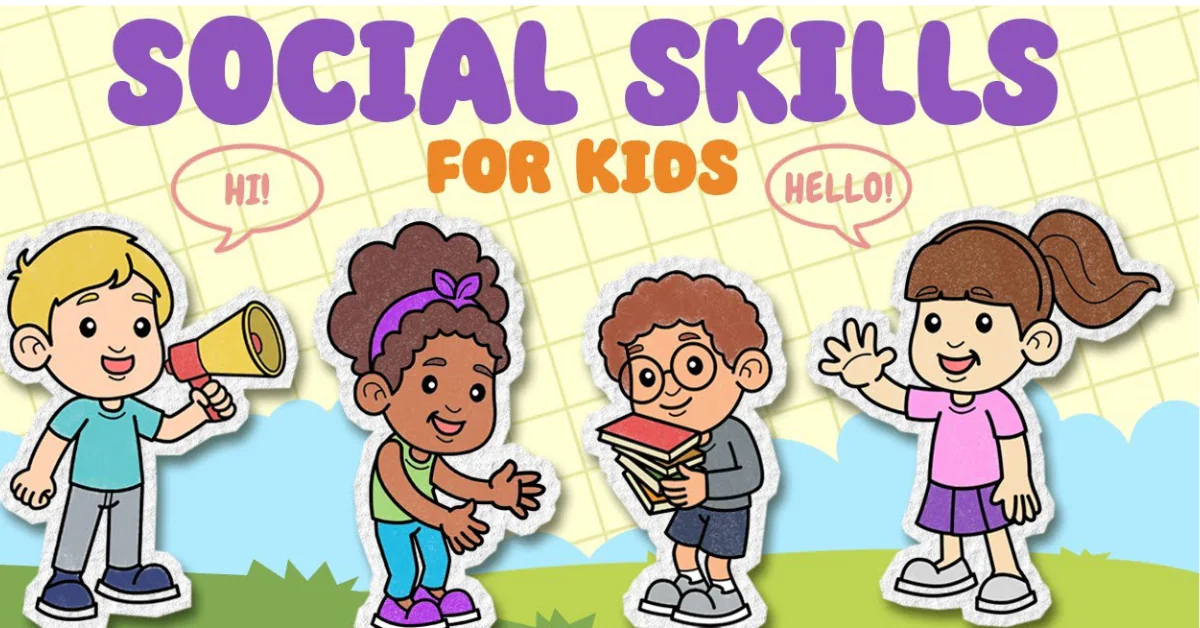
The cornerstone of Kids’ Social Skills Therapy involves teaching children how to interact, communicate, and behave appropriately by mastering both verbal communication and non-verbal communication, encompassing gesture, body language, and facial expression across various social situations.
Understanding the distinction between written rules and implied rules in social contexts, children develop the knowledge to navigate everyday encounters with any person, particularly as they maintain their child’s relationships within their family and through group social activities.
What distinguishes effective Kids’ Social Skills Therapy is recognizing that some children perform well academically yet struggle to behave consistently socially because theycannotidentify emotions, manage impulses, and reflect on how their decisions affect peer dynamics and involvement in extracurricular activities.
The therapeutic approach addresses these difficulties by teaching children to understand social nuances and stress-management strategies, while building strong social skills through deliberate practice, ensuring that fundamental skills become built into their repertoire, enabling them to engage as involved, confident participants in Kids’ Social Skills Therapy activities and beyond.

What Do We Mean by Social Skills?
Kids’ Social Skills Therapy addresses what emerges when children struggle with trouble connecting to peers, the intricate weaving of verbal communication, non-verbal communication, gesture, facial expression, and body language that permits meaningful interaction within social situations. These actions that affect others reflect strong social skills, which develop at vastly different rates, with some children falling behind in recognizing both written rules and the elusive implied rules governing everyday interactions. Positive social behaviors encompass the deeper capacity to communicate, understand, and behave through evidence-based social skills activities that teachers and therapists employ.
The heart of Kids’ Social Skills Therapy centers on recognizing that genuine skills extend beyond surface-level knowledge; they demand the ability to manage emotions during emotional outbursts, read social cues from persons around you, and navigate anxious moments when communicating.
Cooperative social skills games cultivate turn-taking, empathy, and the strength to help others while maintaining independent judgment, collectively shaping healthy relationships that define a child’s entire life. This deeper understanding reveals that social skills deficit doesn’t simply persist; rather, it develops as children encounter diverse social situations where they must simultaneously interact and affect others positively.
Why Do Social Skills Matter?
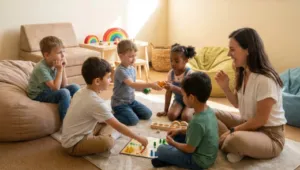
Kids’ Social Skills Therapy fundamentally shifts how we understand children’s capacity to participate fully in everyday life activities that peers navigate intuitively. Without deliberate social skills development, children struggle to get along in school activities, birthday parties, sports, and group settings like Scouts. Theirdeficits in attention, self-regulation, and communication create barriers that affect friendships, peer relationships, and even basic interactions with familiar people like parents and siblings. The inability to interpret facial expressions, recognize body language, or respond appropriately to social stimuli means many children experience recurring failure in contexts where others communicate effectively, seeming almost effortless.
Kids’ Social Skills Therapy addresses the reality that when difficulties persist untreated, children cannot master essential competencies like turn-taking, using appropriate eye contact, understanding figurative language, and adjusting language for different communication situations. Guide to Understanding Play Therapy for Kids demonstrates how occupational therapy and Speech Therapy target perception, interpretation, and response mechanisms, helping children move from struggle toward genuine positive social interactions.
Kids’ Social Skills Therapy intervenes precisely where skills don’t emerge naturally, providing tools so children can feel confident, express themselves through words and gestures, recognize emotions in others, and ultimately develop the social competency required for authentic peer belonging across all settings.

Essential Components for Developing Social Skills
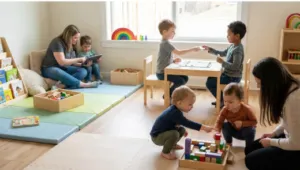
Joint attention and shared interests form the earliest foundation, where toddlers begin learning to focus on what their playmate isdoing rather than monopolizing every activity. Young kids struggling with this often show trouble paying attention to gestures or verbal cues, which means they can’t recognize when someone’s trying to engage them. Pediatric occupational therapy addresses these gaps through cooperative play that teaches turn-taking and self-control essential for any child who finds working together nearly impossible without explicit teaching. Kids’ Social Skills Therapy becomes vital when a child demonstrates difficulty interpreting body language, facial cues, or even tone of voice, making social interactions feel like navigating without a map.
Empathy and emotion management represent deeper layers that require understanding how to put yourself in someone else’s shoes, not just recognize emotions, but actually respond in a caring way that feels genuine. Children’s psychotherapy techniques like social stories and emotion charades help kids identify their own emotions while learning to read people’s reactions, skills that don’t come naturally to those with autism spectrum disorder or those dealing with ADHD.
Kids’ Social Skills Therapyuses role-playand video chats to practice appropriate greetings, asking for assistance, and even conflict resolution in different settings where physical cues might be limited. The ability to maintain eye contact without staring fixedly, start and end conversations without interrupting, and adapt to new situations requires occupational therapists who focus on both communication skills and higher-order reasoning through structured social skill groups.
Does My Child Face Social Skills Difficulties? Key Indicators
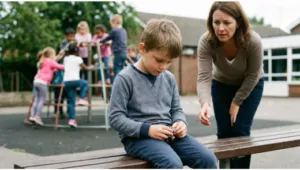
Recognizing when your child might need Kids’ Social Skills Therapy involves noticing whether they experience trouble making and keeping friends, can’t regulate their behavior in challenging situations, or demonstrate poor response skills like blurting out responses and oversharing information. You might observe difficulty with eye contact, trouble listening, anxieties during transitions, or constantly fidgeting patterns, indicating therapy for children’s anxiety could help alongside Kids’ Social Skills Therapy. These signs suggest they may struggle to maintain positive interactions,cannotadapt, and need help developing appropriate social skills.
Additional indicators include trouble attending to verbal instructions or written instructions, misinterpreting social environment signals, and demonstrating inappropriate behavior such as yelling or tugging hair to get attention. Children with these difficulties often show poor interpretation skills, overly literal processing, miss rejection cues, have articulation or clarity issues, or experience sensory processing challenges that affect their ability to interact successfully. When such patterns appear, Kids’ Social Skills Therapy becomes essential for helping them develop the needed tools and strategies to better engage with peers and display socially acceptable responses across different settings.
How Can Social Skills Be Improved?
Kids’ social skills therapy effectively combines foundational skills like pre-language development, gestures, and joint attention with explicit teaching of managing impulses and confidence building through role play and practice activities. Children learn important body cues and develop the ability to articulate thoughts while engaging in school and playground settings, addressing behavioral challenges stemming from developmental disability or neurological differences requiring nuanced, individualized approaches.
Therapeutic intervention employs games, turn-taking, and virtual playtime alongside conflict-resolution skills training to help children engage appropriately with peers, siblings, and unfamiliar adults across in-person and out-of-school activities like sports and community programs. Kids’ social skills therapy ensures youngsters understand how their actions impact specific social situations, helping them adapt responses, become comfortable navigating environmental factors affecting interaction, and recognize that social competencies don’t come naturally without focused kids’ social skills therapy intervention and consistent practice.

Common Social Skills Difficulties
When children struggle with fleeting eye contact or consistently fail to take turns during conversation, it often signals deeper difficulties that require therapeutic intervention through Kids’ Social Skills Therapy. Many young individuals characterized by Autism Spectrum Disorder, ASD, Pervasive Developmental Disorder, or Asperger’s may appear unaware of people’s feelings and non-verbal cues, leading to inappropriate body language like standing too close or too far from their communication partner—issues that occupational therapy and child therapy vestibular sensory activities can address.
Beyond these observable behaviors, some children lack empathy and are unable to imaginesomeone else’s perspective, frequently providing irrelevant comments or discussing topics of their own interest, such as trains or their favorite TV show, without asking appropriate questions. This creates a “talk at you” dynamic, rather thana two-way conversation.
The diagnostic landscape reveals that common developmental disorders affecting social skills development often occur alongside attention deficit hyperactivity disorder, mood disorders, or depression, where children exhibit trouble dealing with change and lack self-confidence in particular situations. Kids’ Social Skills Therapy targets how these individuals disclose excessively personal information to strangers or unfamiliar people, repeat information about specific interests, and show little interest or no interest in understanding sarcasm, idioms, and non-literal information interpreting phrases like “this place is a pig sty” in a literal way or responding to “Can you open the door” with “yes” without movingactually to open the door.
Their speech may feature unusual pitch, rhythm, intonation, and stress patterns, while difficulty with polite forms like saying please, thank-you, hello, and good-bye creates stressful interactions, making Kids’ Social Skills Therapy crucial for helping them master appropriate social response patterns and develop the vital competency needed for sustaining friendships and maintaining meaningful social interaction.
What Causes Social Skills Deficits?
The roots of social skills struggles often trace back to how a child interprets their environment and whether they can demonstrate appropriate responses in various settings. When executive functioning weakens, the ability to plan multi-step interactions crumbles, leaving kids unable to modify their approach when situations shift unexpectedly simply can’t adapt their behavior even when consequences of their actions become clear. Kids’ Social Skills Therapy addresses these core challenges by examining whether attention and concentration remain sustained enough to notice what’s actually happening around them, or if distraction constantly pulls them away from reading social cues that show when it’s time to participate differently.
Poor Response Skills emerge when a person responds without truly understanding what others are saying or doing, while Poor Perception Skills mean they don’t understand the language beneath surface words, both creating a cycle where maintaining friendships becomes nearly impossible since they exhibit little interest in what makes interactions meaningful to their peers. Kids’ Social Skills Therapy targets the foundational gaps where Receptive language and Expressive language fail to bridge what a child wants to communicate versus what they actually manage to convey through spoken language or alternative forms of expression.
When comprehension of verbal social norms remains shallow, kids appear self-centered, not from malice but because they genuinely lack imagination about how their play affects others—they’re stuck in self-motivated activities without recognizing the goal-oriented nature of cooperative engagement. Kids’ Social Skills Therapy explores whether sensory processing issues make social events overwhelming, causing refusal behaviors or tugging at hair when the environment demands exceed their processing speed.
These deficits ripple into academic work since completing assignments requiring social reasoning or imaginative writing depends on the same thinking skills needed for peer connection—without mastering sequential task completion and higher order reasoning, both school performance and friendship building suffer from identical processing breakdowns that therapy must address through targeted activities building Attention, language, and play skills simultaneously.

What Additional Challenges Arise From Social Skills Deficits?
When children face difficulties with social skills, the issue often extends beyond simple trouble making new friends or keeping existing relationships. Kids’ Social Skills Therapy addresses how these deficits create communication barriers that affect their ability to express emotions, articulate feelings, and understand the cues from others during real conversations. Without appropriate intervention, children become unable to negotiate through disagreement, cope with challenges, or respond effectively when they need help or assistance.
Kids’ Social Skills Therapy recognizes that past failures in interacting with people—whether teachers, family, or friends—create a problem where the child doesn’t have the confidence to engage in gatherings or group settings, leading to isolation and lost development opportunities. The difficulties increase when environmental factors and stressors contribute to a child’s limited awareness of social expectations during excursions, visiting places like the park or swimming pool, or even shopping for directions.
Kids’ Social Skills Therapy helps children who can’t read figurative language, struggle with reading and understanding while watching television shows or movies, or have trouble listening and sticking to a topic without moving between different thoughts. These specific challenges lead to an inability to behave in familiar situations, require constant support, and affect performance in activities where cooperation andturn-takingare essential—ultimately creating a cycle where the child feels increasingly disconnected from positive, meaningful experiences.
What Are Proven Social Skills Activities for Children?
Staring contests might seem too simple at first, yet they play an important role in Kids’ Social Skills Therapy by teaching children the difficult task of maintaining eye contact without turning away, which helps develop nonverbal communication cues that are vital for reading emotional expressions and understanding feelings. Unlike games where kids focus on winning or losing, this exercise builds the unique ability to hold attention, manage impulses to look away, and learn patience through voluntary effort—essential traits for future social interactions in Kids’ Social Skills Therapy.
Most people don’t realize that staring contests can assist young children who have trouble with eye contact, helping them adapt their level of comfort while learning to engage appropriately with a playmate’s gaze, which increases their confidence in real conversations and appropriately teaches them to respond to nonverbal cues in Kids’ Social Skills Therapy. This activity requires limited verbal interaction but creates a foundation for understanding how looking at someone directly can articulate interest, respect, and engagement, while the time spent in these playful attempts also improves impulse control and the ability to stay focused during group activities.
What Proven Activities Develop Social Skills in Children? – Roll the Ball
Rolling a ball around a circle teaches children more thanturn-taking. WithinKids’ Social Skills Therapy, this simple game helps kids develop attentiveness while mastering eye contact as they must look at the person receiving the ball, which improves confidence in interacting with group members. The activity allows kids to practice saying the name of their peer before throwing, contributing to smoothly building relationships while simultaneously assisting with speech fluency and articulating wants through active participation.
This exercise increases cooperation as children learn to respond appropriately when making meaningful contributions, and Kids’ Social Skills Therapy practitioners know it nurtures problem-solving abilities when kids adapt if the ball rolls in different directions—they negotiate ways to keep the game going, which enhances their ability to cope better when things don’t happen as planned. Kids’ Social Skills Therapy utilizes this goal-oriented play to teach patience, listening, and understanding sequencing while creating positive expressions that become vital assets for future social interaction development.

Which Research-Backed Games Help Build Social Skills? – Video Chats
Certain platforms using screens teach kids the skill of maintaining eye contact through staring at cameras rather than faces, which creates an uncomfortable challenge for learning nonverbal communication cues. When friends engage through digital talks, they require patience to manage interrupting habits, as people often struggle with turn taking when technology adds a fleeting delay, making real-time response difficult without understanding the smoothness of flow that in-person conversations naturally provide – this builds awareness of listening tasks that assist in developing appropriate reactions to emotional cues while watching someone’s voice and facial sounds simultaneously.
Starting these video sessions early helps young children overcome the trouble of paying attention across screens, as Kids’ Social Skills Therapy specialists recommend that teaching through role play during digital interactions can improve their ability to read others‘ emotions through limited visual information. The purpose behind implementing this activity lies in building foundation skills where children learn to cope better with the stressors of not standing face-to-face, as each comment they contribute during screen time becomes an effort toward achieving better communication skills that carry into their familiar environments like playing with family or teachers – Kids’ Social Skills Therapy sessions utilizing digital formats help children properly socialize when physical engagement isn’t able to happen, assisting them in communicating effectively even when lost in the confusing landscape of virtual engaging that suits today’s increasingly connected world where movies, stories, and sharing moments online has become common, and where issues like difficulty managing attention or controlling attempts at one-way talking need specific interventions through recommended therapeutic approaches beyond traditional face-to-face methods.
Conclusion
Difficulties managing social interaction require appropriate assistance; it is recommendedto consult a Speech Therapist or Occupational Therapy professional who can respond to multiple areas of concern beyond verbal challenges. Therapy provides functional support through play activities—board games, bean bagturn-taking, role play, emotion depicting—helping children cope with related issues, effectively making new connections in groups while achieving the main goal of good social performance.
If left untreated, difficulties lead to struggles with reading social cues, understanding figurative language, negotiating during disagreements, and coping in people-centered settings like excursions to the park or swimming pool. Through appropriate intervention using visuals, masks, sticker games, and acting out scenarios, children obtain the building blocks necessary for important awareness and behavior change.
FAQS
What signs indicate my child needs social skills therapy?
Therapy becomes important when your child is consistently unable to interact appropriately with people, struggles to behave in social settings, shows issues having meaningful relationships, or can’t pick up on cues at their age. Not every awkward moment signals concern, but patterns where they seem overly withdrawn or face difficulty reaching out suggest seeking help from Kid Sense professionals.
How does therapy actually help improve these skills?
Therapy involves structured activities where children practice thoughts and ideas through plays, games, and tasks using toys,storytelling, and role play scenarios like “Hi, my name is…” that feel like pleasure. Therapists encourage natural change through imitation exercises, always suggesting new ways to comment, question, and contribute without interrupting.
What building blocks does therapy focus on developing?
Sessions target voluntary communication needs, helping children express thoughts well-defined enough to be understood while reading others’ signs, with tasks done at each child’s level associated with enjoyment. Results show in how they implement these skills across different places, like school, sport, or when visiting someone’s home, following social rules without feeling like an exception.
What activities might therapists use during sessions?
Common exercises include rolling a ball back and forth (never aiming too hard, keeping it moving at a force the playmate can reach), staring contests (smaller children place focus on forehead), emotion charades where kids draw strips of paper from a hat or bucket to act out through mimicking (similar to Pictionary), and topic games teaching staying on subject while sitting in circles. Turn-taking activities emphasize “whose turn” with “My turn, Your turn” language, mask-making together, and adding comments that increase understanding rather than standing out as inappropriate attempts.