It’s 1:47 on a Friday afternoon, the lesson wrapped up nine minutes early, and twenty-six kids are one whisper from chaos. Last year, a colleague lost four minutes mid-lecture fumbling through a bookmarked list. She gave up and dismissed class early — exactly the moment this guide exists to prevent.
You don’t need ten more tabs open. You need something quiet enough for next door and quick enough that the supply closet never enters the picture. Sorted by time, noise, and what’s already in your hands, the right games to play in class when bored are one filter away. That includes plenty of games for middle schoolers, too.
Pick Your Game in 10 Seconds (Time, Energy & Noise Matrix)
Skip the scrolling. The fastest way to find the right game in class when bored isn’t reading every option — it’s narrowing by what’s actually true about your next few minutes.
A teacher I know once burned through six minutes trying three different games before one finally fit the room. The lesson she learned the hard way: pick the filter first, not the game.
By the time available
- Under 2 minutes: Fizz Buzz, 20 Questions, Apple Pie
- 5 minutes: Hot Seat, Four Corners
- 15+ minutes: Jenga Vocabulary Challenge, full Charades
Competitors sort games by loud versus quiet first. That’s backwards — the real constraint is minutes left, not noise. Check the clock before reaching for a game.
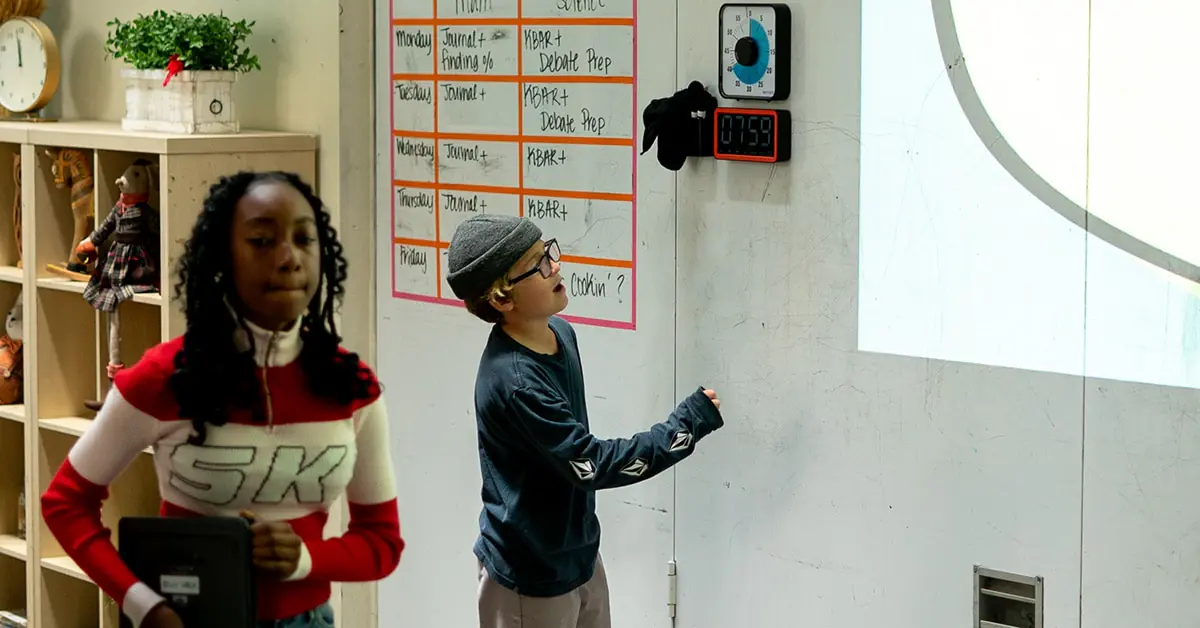
By noise level
A quiet hallway changes everything. Silent Ball and Line-Up work when calm matters; Buzzer Battle needs room to be loud.
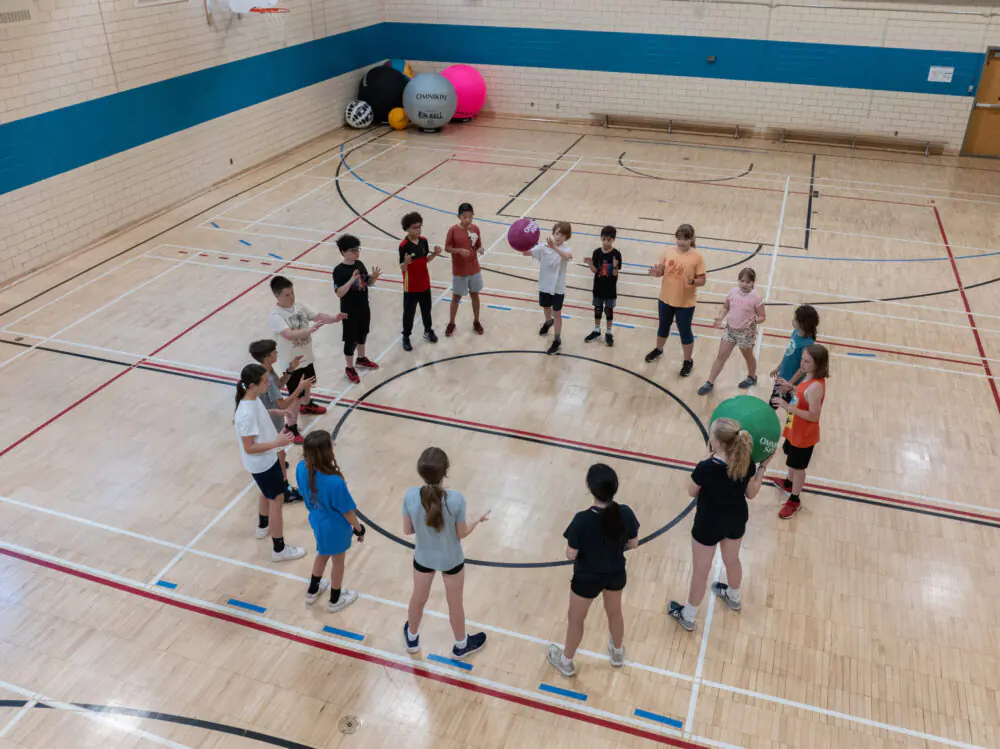
By goal
Some moments call for a pure brain break — restlessness with no academic reason behind it. Others need real review before a quiz, where the content matters as much as the break. The tell: if you’d be just as happy with any random game, it’s a brain break. If you’re already picturing which vocabulary words you’d use, it’s review. Five minutes, quiet, need review? That’s Hot Seat.
Time, noise, and goal rarely line up the way you’d assume. Match all three first — and the right game becomes obvious before the room gets away from you.
Why These Games Actually Work (Not Just “Fun”)
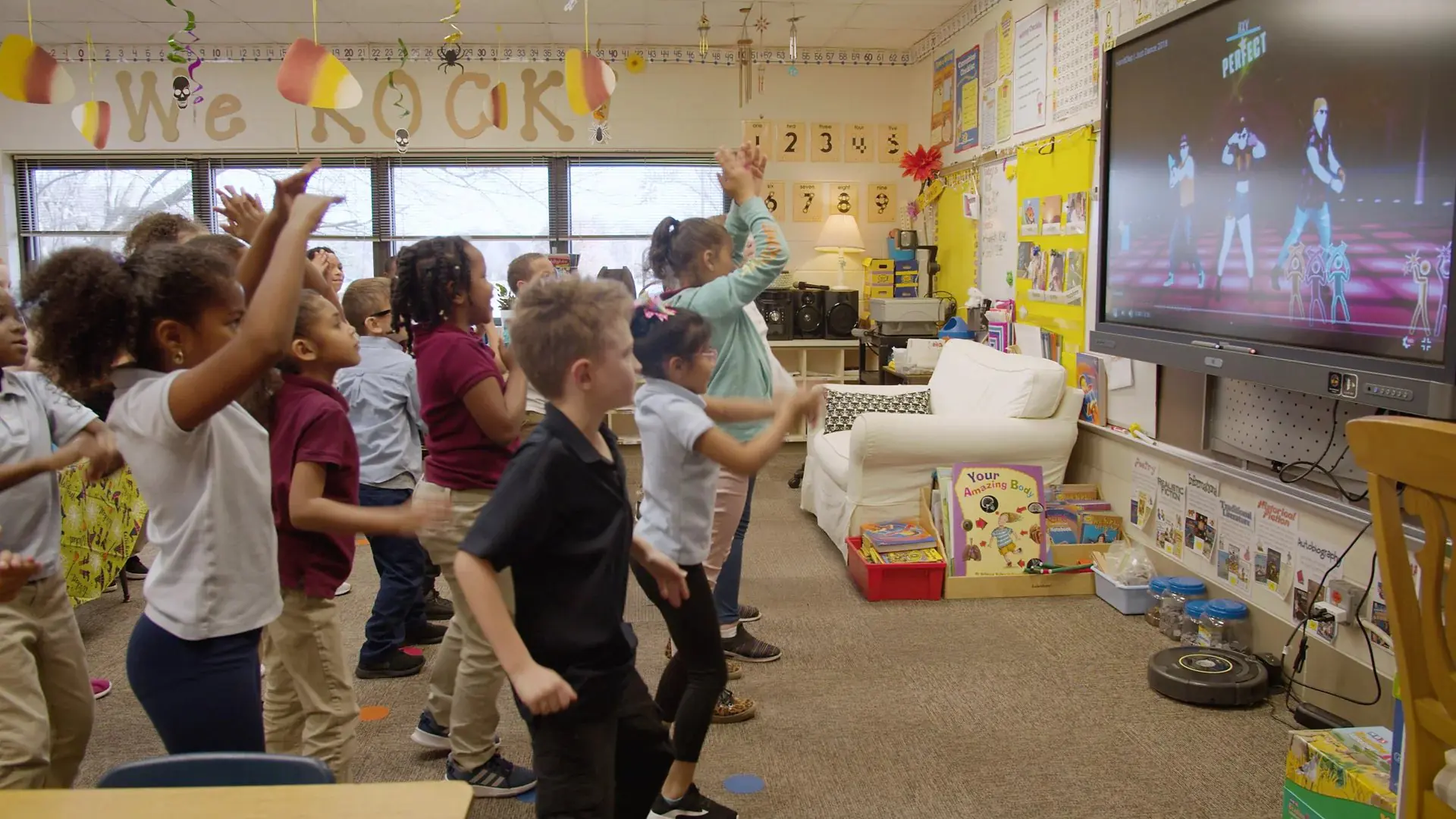
Most lists of games to play in class when bored call them “engaging” and leave it there. Watch a class six minutes after lunch — glassy-eyed, restless — run through one round of Four Corners, and the shift is immediate: shoulders back, eyes up, ready again. That’s not luck. Two distinct mechanisms are doing the work.
Retrieval practice (review-style games) Games like Hot Seat force students to pull an answer from memory, not just re-read it. That act of retrieval is what strengthens long-term recall (Roediger & Karpicke, 2006).
Attention restoration (movement-based games) Brief, structured movement measurably improves children’s attention. A 2018 University of Michigan study found six minutes of daily movement significantly improved elementary students’ focused attention over four weeks (Harris et al., 2018).
A quiet recall game and a loud movement game succeed for different reasons. Knowing which one you’re solving for is the difference between a game that resets the room and one that just delays the inevitable.
6–8 Best Games, Organized by What You Have
There’s no single “best” game to play in class when bored — only the one that matches what’s actually in the room. A teacher I know once spent her free period building an elaborate Jeopardy board. It sat unused for a month — setup always took longer than the bell allowed. That’s the real test: does it work with nothing on hand, or does it quietly assume a closet nobody has time to dig through?
Zero materials
- 20 Questions — One student silently thinks of something; the class asks yes/no questions to guess it within 20 tries. Works for any subject just by limiting the category to vocabulary, historical figures, or science terms. Mechanism: retrieval practice through deduction.
- Fizz Buzz — No timer needed: count around the room, swapping multiples of 5 for “Buzz” and multiples of 7 for “Fizz.” Anyone who slips starts the count over. Mechanism: working memory under light pressure.
- Would You Rather — Pose a question; students move to one side of the room or the other based on their answer — no teams, no prep beyond one good question. Mechanism: quick decision-making, zero stakes.

Just a board or projector
- Hot Seat — One student sits facing the class, back to the board. Classmates feed clues without saying the word itself — which means they’re doing the retrieving too, not just the kid in the chair. Mechanism: retrieval practice via peer cueing, for the whole room at once.
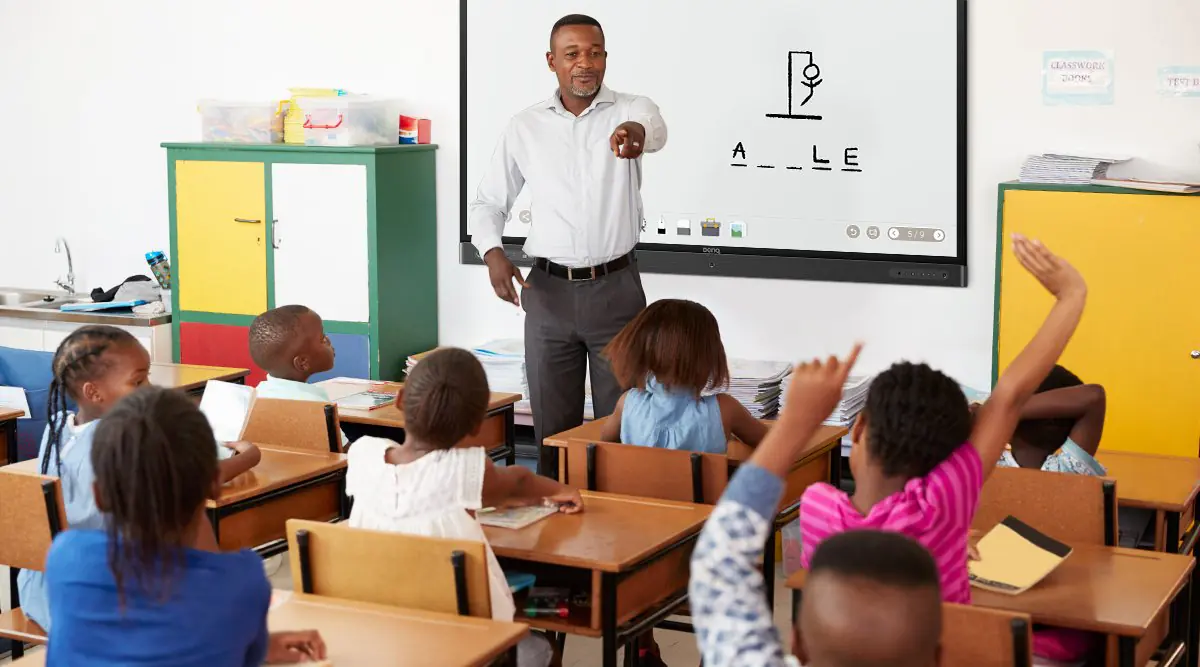
- Hangman-style review — Blank out letters of a vocabulary word, like “p_ot_sy_th_s_s.” Each wrong guess narrows the field, which means the easy words get solved fast and the hard ones force real thinking — built-in difficulty scaling nobody has to plan for. Mechanism: spaced recall under a visible constraint.
One small prop
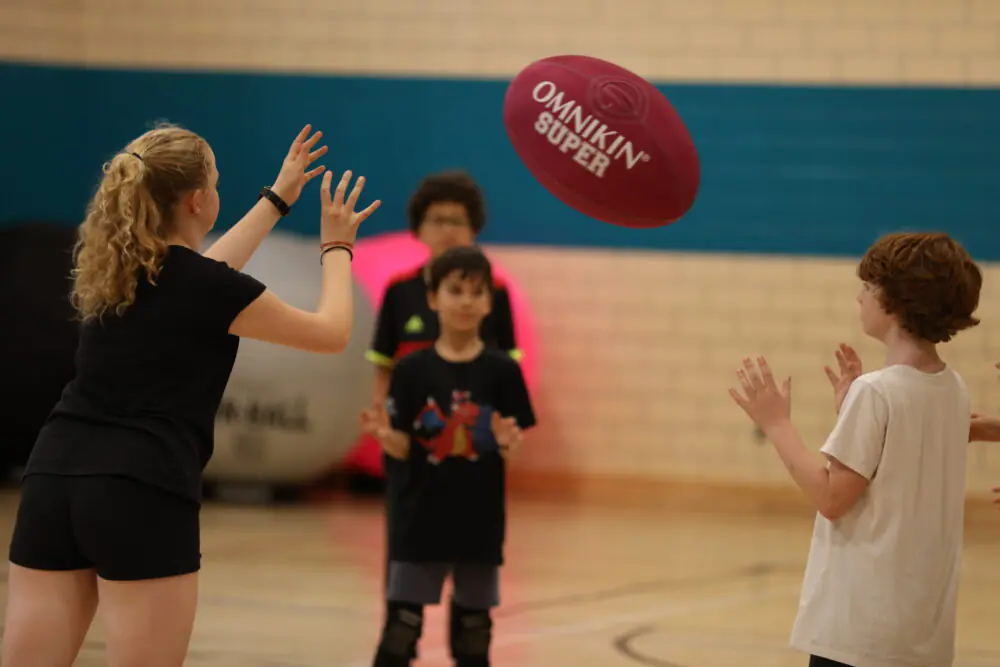
- Silent Ball — Students toss a soft ball in a circle with zero talking; drop it, speak, or throw badly and you’re out until one player remains. The room goes from buzzing to library-quiet in under a minute.
- Four Corners — Label four corners; one student closes their eyes and calls a number while everyone else guesses which corner is safe. Mechanism: brief movement, attention restoration.
Nearly every one of these games to play in class when bored runs in under five minutes, but the prop on hand — nothing, a board, or a ball —narrows the real choice faster than scrolling through twenty options ever will. The same filter works for old standbys too.
Pictionary and Charades fit the board tier; Musical Chairs fits the small-prop tier.If cards are already in the room, the best card games for kids cover the rest.The Jeopardy board never got played again. These eight have run every week since.
Keep It Working: Inclusion & Overuse Tips
Even the best games to play in class when bored stop working if you repeat them too often — not because the kids get bored with the games, but because they get used to these specific ones.
Adapting elimination games for anxious kids
There’s always one kid who goes quiet the moment Silent Ball starts, dreading being out first. Most lists treat that as harmless fun. For anxious kids, it reads as public failure. The fix is small: “eliminated” students become judges instead of just sitting down.
Nobody disappears from the activity, and the game stays age-appropriate for the whole room, not just the confident half. A teacher who tried this once told me the quiet kid asked to be judge on purpose the next time, just to watch the room from that angle.
Why rotating games beats repeating the same one
Novelty drives engagement at first, but that fades with repeated exposure as a game becomes routine. A 2022 longitudinal study found that gamified learning’s engagement effect measurably declined after about four weeks of repeated use (Rodrigues et al., 2022).
Games to play in class when bored work best in a rotating set of four or five. Swap them in every week or two — not one favorite played daily until it goes flat.
The room doesn’t get bored with games. It gets bored with this game. Rotate before that happens, and it never will.
Pick a few, rotate them, and the FAQs below cover what’s left.
FAQ
What’s a good silent game to play in class?
Silent Ball. Students toss a soft ball in a circle without talking — drop it, speak, or throw badly, and you’re out until one player remains.
What can you play with no materials?
For games to play in class when bored with zero supplies, try 20 Questions, Fizz Buzz, or Would You Rather — nothing to dig out of a closet, nothing to set up.
How long should a brain break be?
2–10 minutes. Six minutes of movement alone measurably improves children’s attention (Harris et al., 2018).
How often should you play games in class?
Rotate four or five rather than repeating one daily. A 2022 study found gamified engagement measurably declines after about four weeks of repeated use (Rodrigues et al., 2022) — variety is what keeps a game from going flat.
What’s good for reviewing before a test?
Hot Seat and Hangman-style review turn vocabulary into retrieval practice, which beats re-reading notes (Roediger & Karpicke, 2006).
Conclusion
Skip the scroll. Match the moment — time, noise, goal — and the right game is obvious in seconds, not buried in a list of twenty. That’s the real difference: a decision tool, real research behind why these games work, and honest guidance on keeping them fresh instead of letting them go flat. No other guide on games to play in class when bored covers all three. One teacher told me she stopped Googling mid-class the week she memorized the matrix instead. Pick your filter. Run the brain break. Watch the room come back.