If you’re searching for the best card games for kids, here’s what most lists skip: nearly 8 in 10 kids share a home with a sibling, per U.S. Census data, and almost no advice about ditching the tablet for game night addresses the one moment that actually breaks it — when their skills don’t match.
You hand your four-year-old a deck of cards, expecting Go Fish to buy quiet minutes. Ten minutes later, cards are bent, someone’s crying, and her older brother’s declaring the whole game “boring” anyway.
The problem usually isn’t the kid. It’s that nobody tells you a card game has an actual skill floor — younger than you’d guess, and different for every game.
This guide does.
How to Match a Card Game to Your Child’s Age (Not Just a Number)
A four-year-old isn’t failing at Uno. She’s missing one mental skill most lists of the best card games for kids never bother to name.
My nephew could play Old Maid for hours at four, gleeful every time someone got stuck with the joker. The second we tried Uno, he held his “draw two” up like a flag and announced it to the table. Not a bad sport — he genuinely couldn’t grasp that hiding it was an option.
Wimmer and Perner identified it in 1983. Wellman, Cross, and Watson (2001) confirmed it across dozens of studies. It clicks around age 4. But here’s what almost nobody mentions: a 1998 Developmental Psychology study found kids with older siblings develop it earlier than only children. . Card night with a big sister might matter more than the cards themselves.
Roughly, here’s the order things click: matching first, then turn-taking, then working memory, with deception lagging behind until kindergarten.
| Skill | Age | Example |
| Matching | 3+ | Memory basics |
| Turn-taking | 4+ | Old Maid, War |
| Working memory | 4-6+ | Concentration |
| Deception | 5-6+ | Cheat, Uno |
The AAP calls this executive function.Once you know which skill a game demands, the mystery disappears.
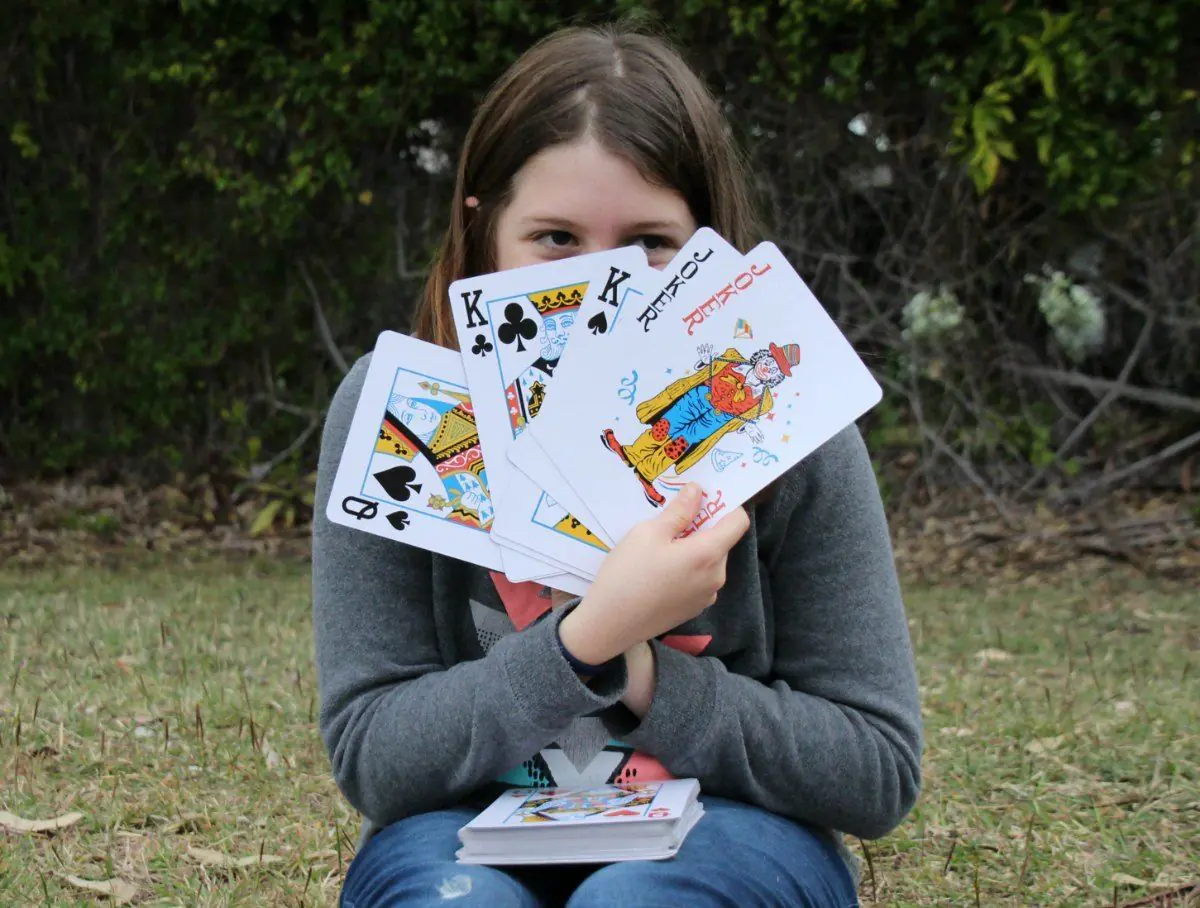
6 Classic Card Games Every Kid Should Learn First
You don’t need six decks or a branded box. One standard deck covers every stage your child will go through. (For outdoor play, see our guide to water games for kids.) You just need to know which game matches which stage.
We started with War in our kitchen during a rainstorm, mostly because it was the only game I remembered without looking up the rules. My son flipped a king, I flipped a four, and he shrieked like he’d won the lottery. No skill involved — and that’s exactly why it worked. Nobody could be blamed for the cards they drew, so nobody melted down. That’s the insight most lists miss entirely: the least skillful game is often the right one to start with, not the last resort.
Pure luck and matching
Old Maid (2-6 players) — Deal the deck minus one queen, match pairs, avoid the odd one out. Builds turn-taking, nothing more — which is why it works before age 4.
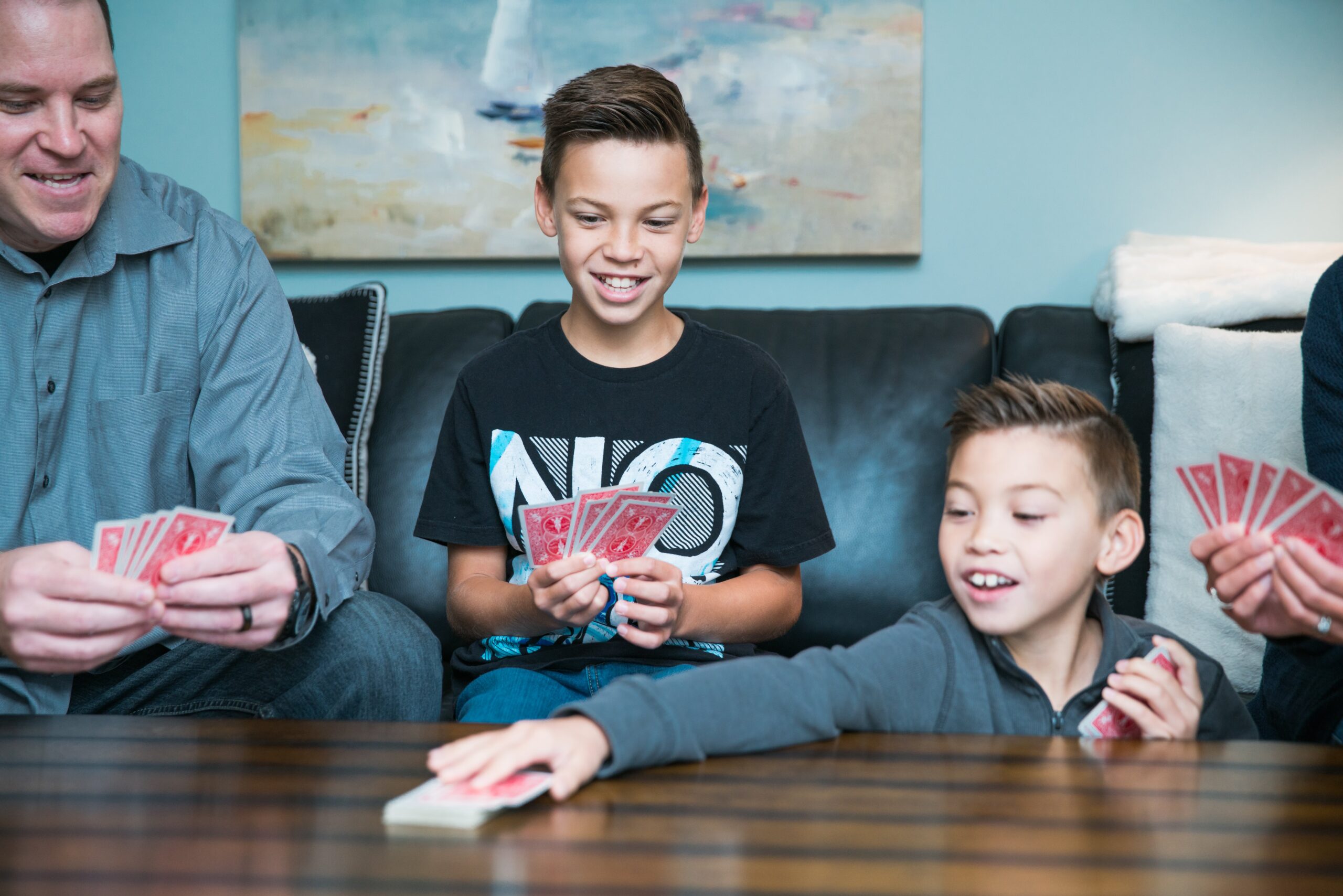
War (2 players) — Flip simultaneously, highest card wins. Pure number recognition, the gentlest game for a kid who hates losing.
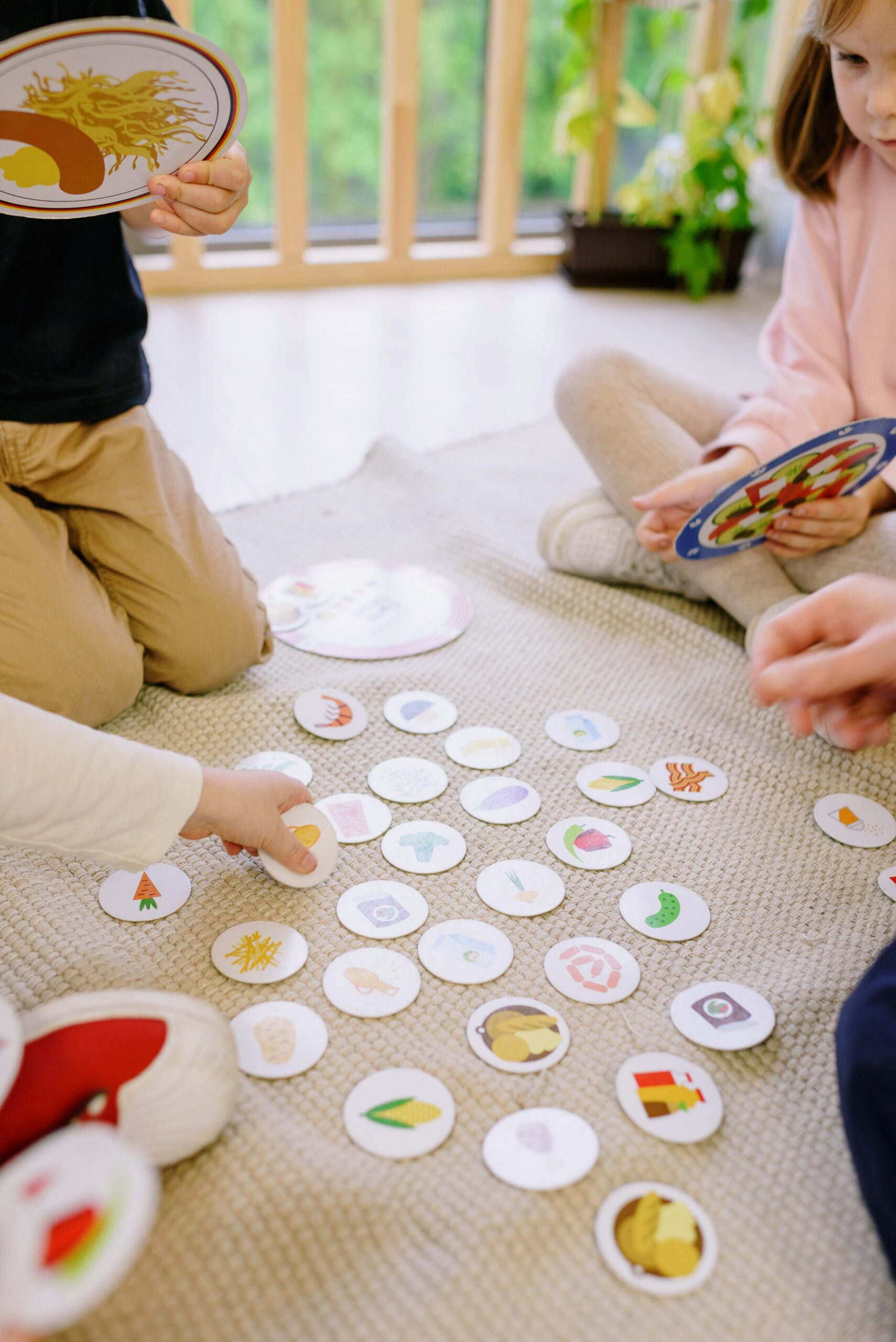
Concentration (2-4 players) — Flip two cards, keep matches. Builds real working memory — ask where they last saw a card and watch that skill develop live.
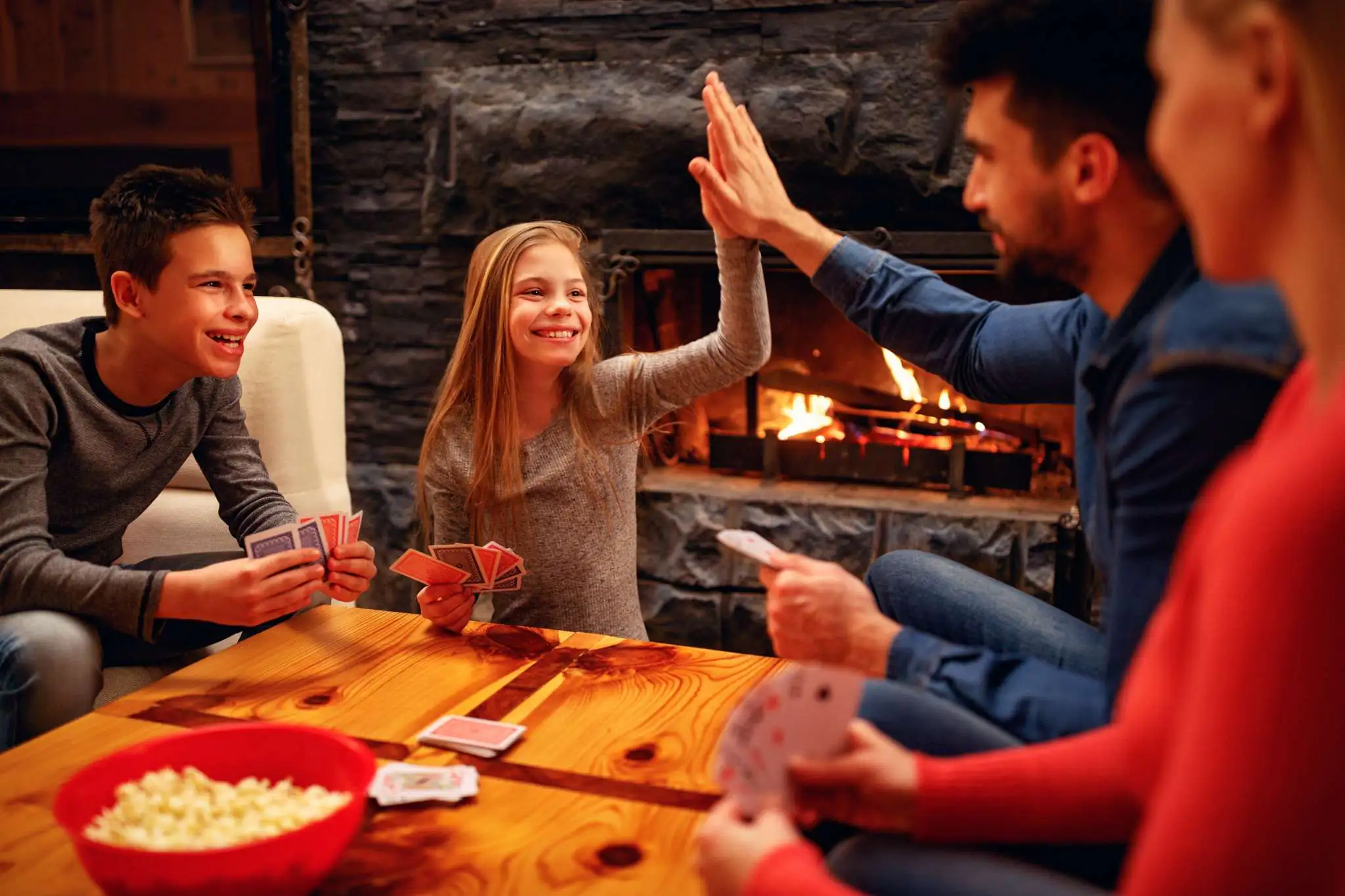
Reaction and rule-following
Snap (2-4 players) — Flip simultaneously, slap matches first. This is the rare game where going too fast actually costs you — a useful first lesson in waiting for the right moment instead of just the fastest one.
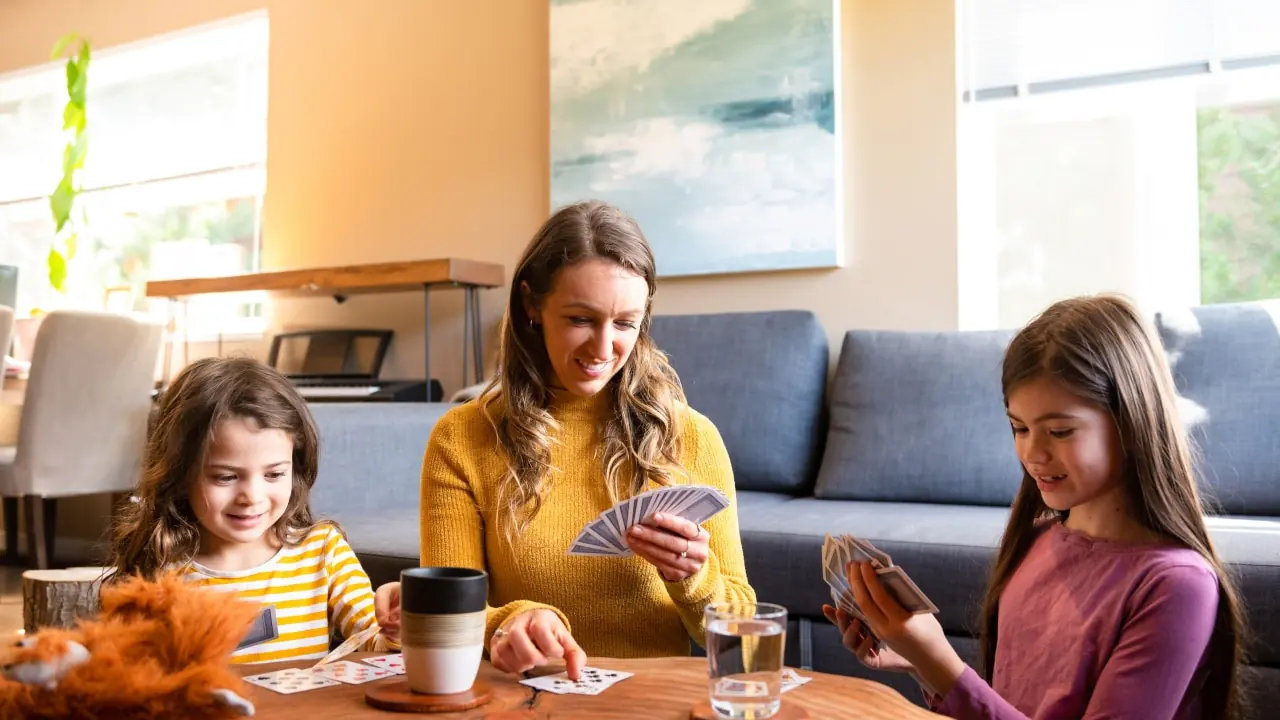
Go Fish (2-6 players) — Ask for cards by rank. The first time a kid has to ask someone else directly for what they want.
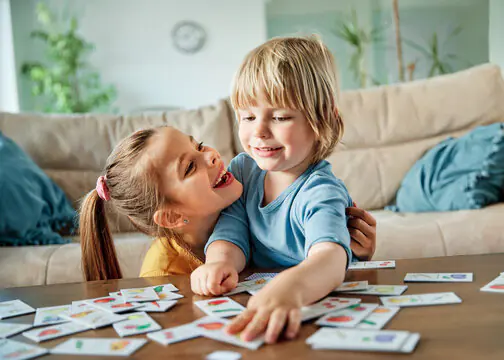
Crazy Eights (2-5 players) — Match suit or rank. The first real glimpse of planning a move ahead.
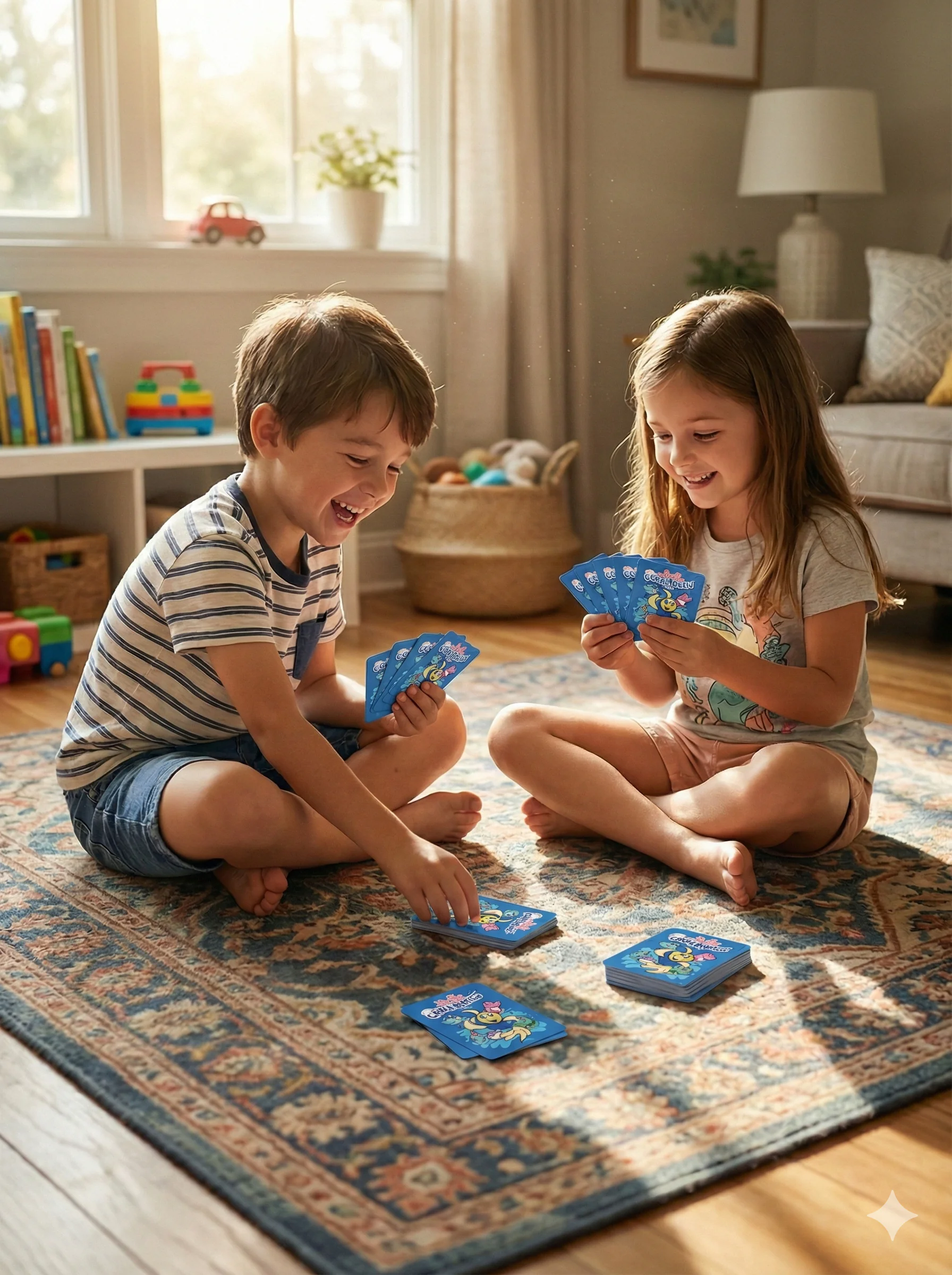
A 2023 randomized trial (Moya-Higueras et al., Children) found that these games build real cognitive skills. One catch: pure-luck games like War showed smaller gains than decision-based ones. Pair them, don’t pick one. Your child needs both kinds of practice, and most lists never say so.
What to Do When Siblings Are Different Ages
The best card game for your family doesn’t exist. The best version of one game does.
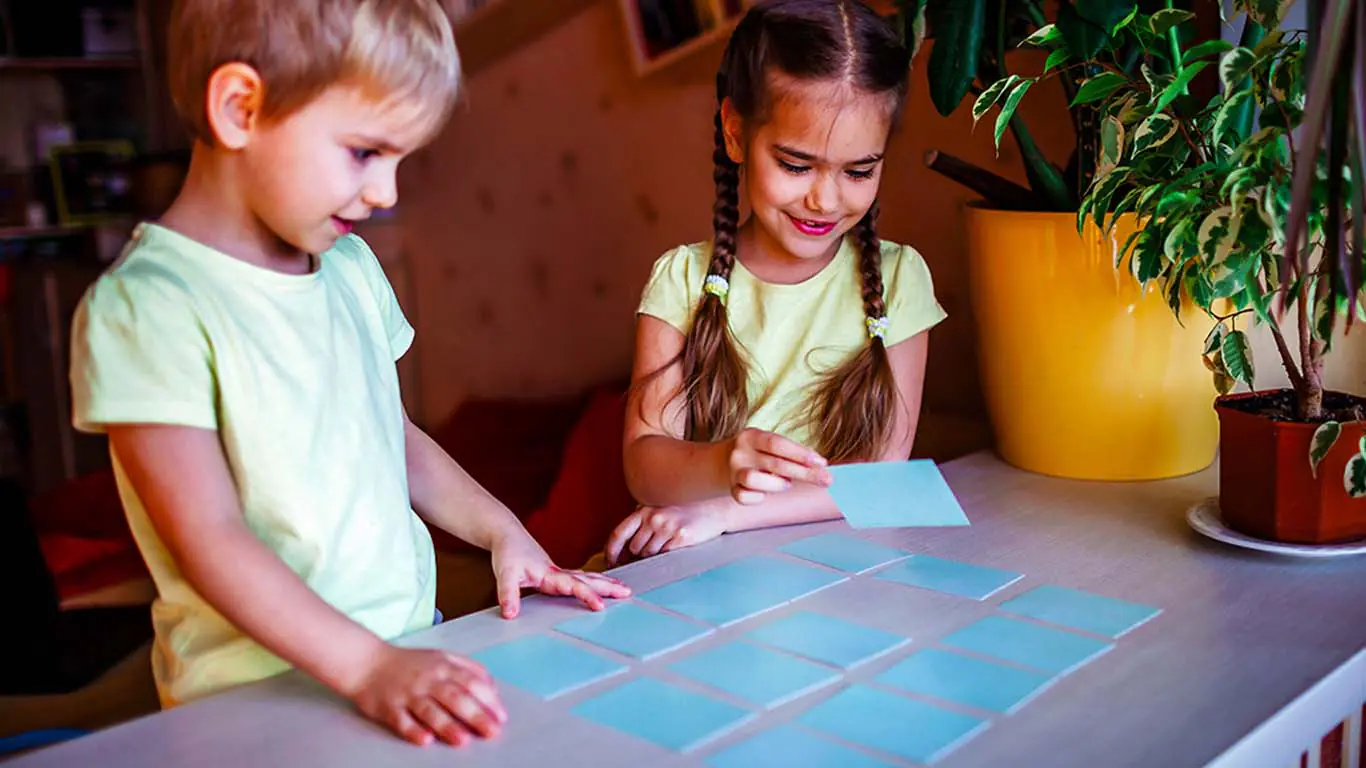
My two used to fight over this constantly. My older one wanted real Concentration, face down, testing her memory. My younger one just wanted to flip cards and shout. So we split it — her cards face down, his face-up — and the fighting stopped overnight. Same game, two difficulty levels, nobody felt babied.
Here’s what nobody tells you: that “compromise” is doing real developmental work for both kids. A 1998 Developmental Psychology study found that children with more older siblings developed theory-of-mind skills earlier than only children.A 2018 Journal of Experimental Child Psychology study found the benefit runs both directions — even the older child’s reasoning sharpens when a younger sibling arrives later in childhood (Paine et al., 2018). Your older one isn’t just being patient with the easier version — she’s quietly getting smarter every time she explains the rules to him.
A few more fixes that travel across ages:
- Can’t fan a hand of cards yet? Lay them face-up in a row — that’s fine-motor and hand-eye coordination development, not a readiness problem.
- Slapjack too chaotic? Concentration tests the same reflexes, minus the slapping.
- War stays the kindest option for a sore loser — nobody’s strategy failed, so nobody has anything to blame.
Mixed ages were never the obstacle. They’re the reason it works at all.
One Popular Game That’s Harder Than Parents Expect
Your kid isn’t bad at Uno. Uno is bad at telling you why.
My daughter had “draw two” and “reverse” memorized by four. Then she’d slap her last card down, grin, and shout “I only have ONE LEFT!” to the entire table — missing that the whole point was not telling us that. I assumed she wasn’t paying attention. She was paying perfect attention. She genuinely couldn’t grasp that hiding it was an option at all.
That’s deception, and most four-year-olds don’t have it yet. Most lists of the best card games for kids call Uno “ages 7+” without explaining why — the real demand is second-order false belief, tracking what someone else thinks you know. It’s a different skill than the basic theory of mind kids develop around age 4. A 2018 Journal of Experimental Child Psychology study found 7-year-olds with younger siblings showed stronger second-order skills than those without (Paine et al., 2018) — proof this keeps developing for years, not weeks.
Here’s the part that should change how you think about it: every “failed” game of Uno is actually a free readiness test. It’s telling you exactly which skill to wait on, for free, without a single flashcard.
So if Uno isn’t clicking, don’t rush it. Circle back to Old Maid or War for now. Most guides won’t tell you that. This one just did.
Frequently Asked Questions
At what age can kids start playing card games?
Around age 3, with simple matching. By 4, most are ready for turn-taking games like Old Maid — years before deception-based games make sense.
What’s the easiest card game to teach a preschooler?
War. No strategy, no memory, no reading — just comparing numbers, which makes it one of the best card games for kids to start with.
How many cards should a young child hold at once?
Three to five — any more and you’ll spend the whole game re-fanning instead of playing. Can’t manage even that? Lay cards face-up in a row. It’s a hand-strength problem, not a readiness one, and it fixes itself faster than you’d think.
What’s a good card game for siblings of different ages?
Concentration, split by difficulty: younger players play face-up, older players play face-down — proves the best card games for kids don’t need two separate games for two separate ages.
Why won’t my child play Uno yet?
It’s rarely the rules. Uno requires hiding information — a skill most kids don’t reliably have until kindergarten, per child development research (Paine et al., 2018).
Conclusion
Every parent has blamed a kid for losing at a game built on a skill that kid doesn’t have yet.
That’s the real failure — not your child’s, not Uno’s. Old Maid works before deception does. Mixed ages just need scaling, not separate games. And the next meltdown over “I only have ONE LEFT” isn’t bad sportsmanship — it’s a brain still under construction, right on schedule.
Pull out that deck tonight. You’ll know exactly which game to start — and finally have a real answer for the best card games for kids, instead of just another list. Once they outgrow Uno, our games for middle schoolers guide picks up right where this one leaves off.