
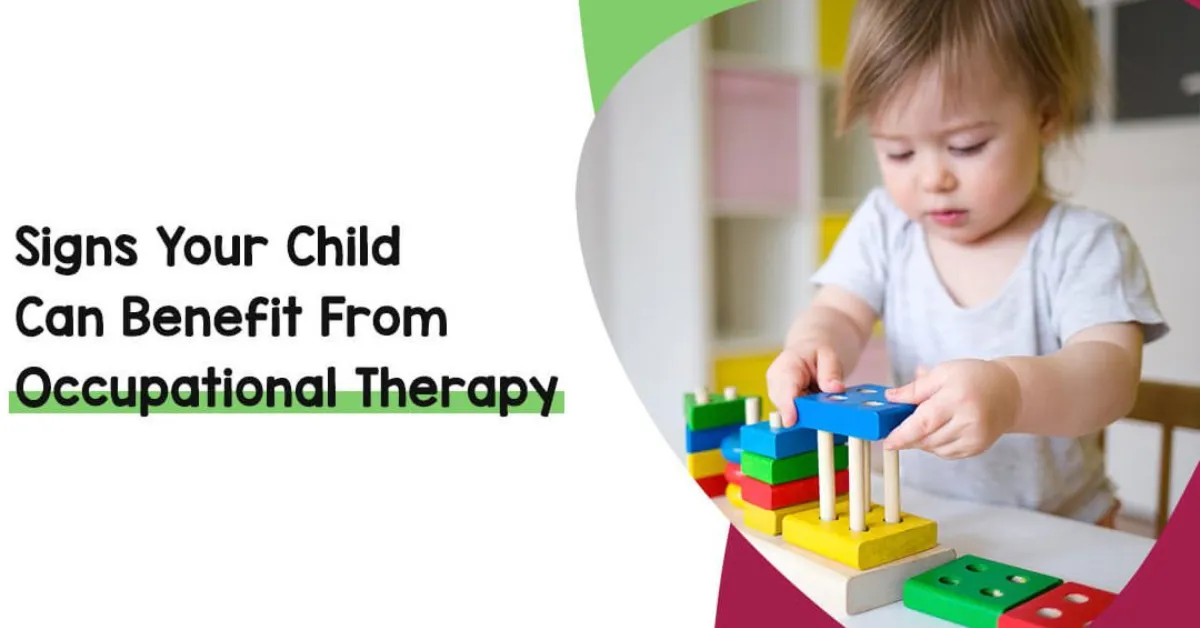
Sometimes parents notice their child isn’t quite keeping up with peers—maybe fine motor skills like holding a pencil lag behind, or gross motor skills involving coordination of arms and legs feel awkward during play. Perhaps sensory processing creates difficulty with everyday textures, or feeding routines become battles over picky eating and chewing.
Occupational therapy addresses these gaps when a child could benefit from occupational therapy through targeted support: an occupational therapist evaluates whether developmental delay in areas like visual processing, oral motor control, or social interaction skills requires intervention.
If your child could benefit from occupational therapy, you’ll see professionals working on everything from self-feeding and getting dressed to copying from a blackboard and mastering age-appropriate play skills that build self-confidence.
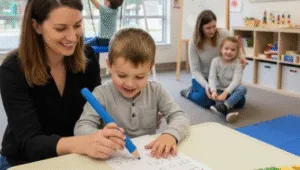
How Occupational Therapy Supports Children /
Occupational therapy serves children who struggle with day-to-day activities across home, school, and community settings. When a child faces challenges that typically developing children navigate easily, an occupational therapist can help through targeted treatment that supports the family’s overall experience with developmental concerns.

Advantages of OT
- OT addresses physical, sensory, and cognitive problems while helping kids regain independence in critical areas of their lives.
- Occupational therapists identify barriers that affect emotional, social, and physical needs during everyday activities.
- Through specialized exercises and therapies, play becomes therapeutic and improves school performance significantly.
- This branch of health care aids people of all ages in daily activities.
- Provides boosts to self-esteem and creates a profound sense of accomplishment.

Developmental Lag
When a child appears to be behind in reaching appropriate developmental milestone markers, parents often think their little one might require specialized support, and this is where occupational therapy can become transformative. Developmental delay isn’t always immediately obvious—sometimes it shows through subtle signs, like when a toddler doesn’t develop hand dominance at an age-appropriate stage, or when fine motor skills like using scissors or manipulating toys lag noticeably behind peers.
An OT assessment must examine whether the child struggles with basic life skills such as bathing or brushing teeth, and must evaluate if there’s difficulty with play skills that help children make sense of their world through exploration.
You might notice your child needs extended adult guidance to initiate play or moves quickly from one activity to the next without purposeful play, which can signal processing challenges that occupational therapists address through targeted intervention, helping young ones master the building blocks of independence while supporting development across multiple domains.

Small Muscle Skills
When observing whether a child could benefit from occupational therapy, watch for struggles with precise hand movements that demand finger dexterity—the kind needed when manipulating small objects like buttons, zippers, or attempting to tie shoelaces. These tasks aren’t just about hand strength; they involve intricate coordination where fingers must work independently while using scissors or achieving pencil grip stability for coloring within boundaries.
A child could benefit from occupational therapy if writing becomes laborious, self-care activities like fastening clothes feel impossible, or fine motor skills crossing the body midline create confusion during activities requiring both hands to collaborate, such as cutting paper while one hand stabilizes and the other maneuvers.
The control needed for age-appropriate independence in everyday tasks develops through practice, yet some children need structured intervention to master what peers accomplish effortlessly, transforming frustration into functional capability.

Large Muscle Development: Movement, Strength, and Balance
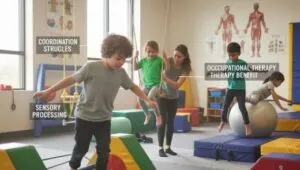
- When children struggle with coordination during physical activities, you may notice them constantly moving yet unable to control their body positioning. Their muscle tone may appear either too loose or overly rigid, which affects how they navigate spaces and maintain stability during jumping or balance tasks.
- Kids who experience developmental delay in gross motor skills often develop an oversensitive response to movement, becoming emotionally reactive when asked to participate in activities, while others demonstrate under-responsive patterns with high pain tolerance even after bumping into furniture or crashing during play.
- A child could benefit from occupational therapy when you observe signs like difficulty crossing midline, tiredness after brief physical exertion, or hyperactivity that masks underlying weakness in core stability, since these challenges interfere with age-appropriate actions and spatial awareness.
- Watch for poor body control during games or classroom work that requires sustained posture, as addressing motor planning issues early can prevent learning challenges later when tasks demand more complex coordination and body awareness.
- These observations matter because a child could benefit from occupational therapy when sensory processing disorder or motor difficulties affect their ability to manage body positioning effectively during everyday activities.
How the Brain Interprets What We See
When kids struggle with interpreting what their eyes perceive, learning becomes an uphill battle, even when vision tests come back perfect. Schoolassignments like copying from the board, reading without losing their place, or distinguishing between similar letters and numbers turn into exhausting challenges that affect concentration and focus.
Children who experience these difficulties might reverse letter and number formations well beyond age seven, avoid tasks requiring visual discrimination, or become easily distracted by visual clutter in their environment, which often leads teachers and parents to wonder why such bright child performers tire easily during work that seems straightforward.
From my years observing these patterns, I’ve noticed that visual processing problems help explain why some learners can’t complete puzzles appropriately, struggle with hand coordination despite having adequate motor control, or fail to develop skills for organizing information on a page—and while a child could benefit from occupational therapy to address these foundational sensory integration issues, many families don’t realize that what appears as behavioral resistance is actually their brain’s inability to make sense of spatial relationships, causing them to wander through developmental milestones they should be meeting at a particular age.
Nutrition and Feeding Issues
When a child struggles with eating or feeding, it often signals delayed oral motor and oral sensory skills affecting the face, lips, jaw, tongue, and soft palate. You might notice excessive drool during meals, observe how they chew food only at the front of the mouth rather than using molars, or see difficulty using a cup for drinking without a straw.
Lengthy bottle or breastfeeding as a baby may have been early signs, where the child loses excessive liquid during breastfeeding or becomes excessively picky about certain types of food. Beyond typical preferences, some children excessively mouths toys and objects, revealing sensory integration challenges in the oral area that OT addresses through targeted interventions—a child could benefit from occupational therapy when these patterns persist, and a child could benefit from occupational therapy, particularly if autism affects motor skill development in conjunction with feeding challenges.
Interpersonal Communication Skills
When children struggle with understanding the concepts of sharing and turn-taking, it often signals deeper challenges in how they participate with peers and siblings during collaborative play. Some kids wander through social situations, unable to join group activities, while others engage in repetitive behaviors for hours, essentially avoiding meaningful connection—these patterns suggest your child could benefit from occupational therapy to develop crucial engagement abilities.
Appropriately navigating imitative play requires recognizing social cues, which becomes particularly difficult for those who seem developmentally delayed in reading others’ intentions, leading them to miss opportunities for natural interaction and growth.
Educational Challenges
- When visual tracking becomes difficult and a student starts to lose place while reading, these struggles often signal deeper processing obstacles that affect academic performance, particularly when copying shapes proves frustrating or recognizing letters takes an unusually long time.
- A child could benefit from occupational therapy when poor handwriting emerges alongside letter formation inconsistencies that make school tasks overwhelming, especially if developmental delays manifest through not learning concepts at an age-appropriate level.
- Observable patterns include easily distracted behavior when visual or auditory stimuli compete for attention, where the brain struggles to interpret visual information efficiently, making finding objects among objects on a desk or board nearly impossible without significant effort.
- These challenges frequently overlap with fine motor skills weaknesses, where small movements required for using silverware, zippers, buttons, or shoelaces remain underdeveloped, causing the student to fall behind peers in daily activities.
- Students may struggle to master essential basic life skills like bathing or brushing teeth independently, revealing how processing difficulties extend beyond classroom settings into personal care routines that peers manage effortlessly.
Skills for Play
- Must observe how children naturally bond through unstructured games – those who consistently avoid tasks requiring coordinating both sides of their body often reveal underlying challenges that impact quality of life.
- When new material involves spacing or sizes during drawing, some kids show poor eye contact while attempting prewriting shapes, which might signal processing gaps affecting how the brain interprets visual information.
- Watch for patterns where a child tires easily during activities needing resistance or muscle tension, particularly if they’re fearful about their feet leaving the ground – this makes playground interaction challenging since peers naturally engage through climbing and going up structures.
- The workload of typical play demands simultaneous movement and social awareness, so when someone seems easily distracted or shows an inability to maintain relationships during group activities, consider whether sensory reactivity to certain sensations creates barriers to spontaneous use of larger muscles.
- A child avoiding puzzles or coloring at age seven, showing low energy for sustained engagement, or displaying clumsy behaviors when picking up small object pieces often needs evaluation – these aren’t just preferences but potential indicators that delayed social skills stem from physical-sensory disconnections affecting how they process experiences and understand the things happening around them.
Physical Therapy and Occupational Therapy: What’s the Difference?
While physical therapy predominantly targets gross motor rehabilitation involving control, strength, and balance through structured exercise regimens, occupational therapy uniquely approaches movement challenges by determining how muscle tone—whether higher or lower than typical ranges—impacts functional independence across skill areas that children could benefit from occupational therapy addressing.
An OT might observe a child struggling to cross midline during drawing tasks or exhibiting poor ball skills when attempting to bat a ball, recognizing these aren’t isolated deficits but interconnected challenges requiring intervention that addresses fine motor skills like grasp and release toys, alongside broader competencies, including handwriting, computer skills, and eye-hand coordination.
The distinction becomes clearer when considering that PTs work on building foundational movement capacity—teaching a child to navigate stairs with confidence using right and left alternation—whereas occupational therapists focus on translating physical abilities into meaningful participation, helping kids who appear uncoordinated during playground activities gain confidence through therapeutic play that simultaneously develops problem solving abilities and social competence, ultimately enabling them to improve performance in contexts that matter for daily life participation.
About Occupational Therapists
Occupational therapists are specialists who possess unique skill sets to help children navigate challenges that traditional approaches might overlook—from social interaction skills involving people to developmental delays, where a child could benefit from occupational therapy when they’re a little behind in reaching developmental milestones at a particular age.
Unlike physical therapy that primarily targets movement limitations, these practitioners focus on how kids adapt to daily routines through appropriate interventions, whether addressing eating challenges with using utensils like a spoon, managing sensory responses to touch, sound, or smell, or supporting learning disabilities where children struggle with completing work, following instructions, or experiencing letter and number reversals in school work.
Their expertise extends beyond observable symptoms—they view each child’s development through multiple lenses, considering everything from fine motor skills involving fingers, wrists, and actions like tracing to gross motor skills where poor balance affects stability when moving up and down, while simultaneously addressing visual processing difficulties where children see distorted images or struggle transferring letters to another paper.
FAQs
Q: When should I consider seeking help for my child?
A: If your child is avoiding tasks, experiencing trouble eating or drinking from a cup, showing heightened sensitivity to cuts and bruises, or not meeting developmental milestones at a particular time period, consult a professional.
Q: What credentials should the practitioner have?
A: Verify they hold a 4-year bachelor’s degree in biology, psychology, or health science, a master’s degree from an accredited occupational therapy program, completed supervised fieldwork programs, passed a national certification exam, and have a valid license to practice (mandatory in most states).
Q: How do I locate qualified therapists?
A: Ask your doctor to refer you, talk to your school nurse or guidance counselor, contact a nearby hospital or rehabilitation center, or visit The American Occupational Therapy Association website to find practitioners in schools, hospitals, mental health facilities, or private practices.
Q: What’s the difference between OTs and OTAs?
A: OTs do comprehensive patient evaluations and develop treatment plans, while occupational therapist assistants with an associate’s degree from an OTA program carry out these plans but can’t do independent assessments.
Q: Which signs indicate my child needs intervention?
A: Watch for does not explore environments, struggles making sense of information from their senses, has difficulty with balance, crawling, sitting, or walking, shows choking concerns (requiring a swallow study prior to being seen), not developing coordination, not reaching expected milestones between two months and five years, or has learning challenges with following instructions, concentration at school, number formation, pocketing food, regulation of emotions to calm self when upset, adapting to change, or achieving needed school skills.