Every Mother’s Day, greeting card aisles sell the same five lines “World’s Best Mom,” “Thanks for Everything.” Turns out I’m not the only one hunting for better words. People are looking for something cards just don’t give them.
I learned firsthand the year my mother-in-law became my son’s real mother-figure. No card had words for that mother-child bond. Poems about motherhood go further than any card — into identity shifts, complicated bonds, grief, organized here by what you’re actually going through, not by which poet is most famous.
This isn’t another list of the same five quotes. It’s the poems that say it.
Classic Poems About a Mother’s Love
Why Classic Poems About Motherhood Became the Genre’s Foundation
An editor once told poet Sharon Olds to send her poems about her children to a ladies’ magazine instead. “We are a literary magazine,” the editor said. That single line explains why so many “classic” mother poems sound the same: only the safest, most sentimental ones survived.
Rudyard Kipling’s “Mother o’ Mine” is one that did. It repeats its devotion in every stanza until it reads almost like a chant.
Why Maya Angelou’s Poem Still Works
Maya Angelou’s “Mother, A Cradle to Hold Me” broke that mold differently. I read it aloud to my own mother once, at her kitchen table. We both went quiet by line four — not from sentiment, but recognition.
It’s written in free verse, and it tracks the mother-child bond as it actually changes: dependence, then hard-won gratitude. Older “classics” often freeze love into one grand gesture instead.
The lesson most lists miss: a poem earns its place by tracking how love changes, not by declaring it once and stopping there.
Poems About Becoming a Mother
Some of the truest poems about motherhood were written before a woman fully recognized herself as a mother at all.
What “Matrescence” Means and Why It Matters
You went through puberty once. Nobody warned you that becoming a mother triggers something just as disorienting. In 1973, anthropologist Dana Raphael named that shift matrescence — a developmental passage into motherhood, not just a physical one (Raphael, 1973).
Psychiatrist Dr. Alexandra Sacks later compared it directly to adolescence. It’s a stage everyone expects to be hard — except this one arrives with a newborn depending on you.
A 2023 study in Trends in Cognitive Sciences found measurable, lasting changes in the maternal brain. This isn’t metaphor — it’s documented identity transition (Orchard et al., 2023).
A Poem That Captures the Identity Shift
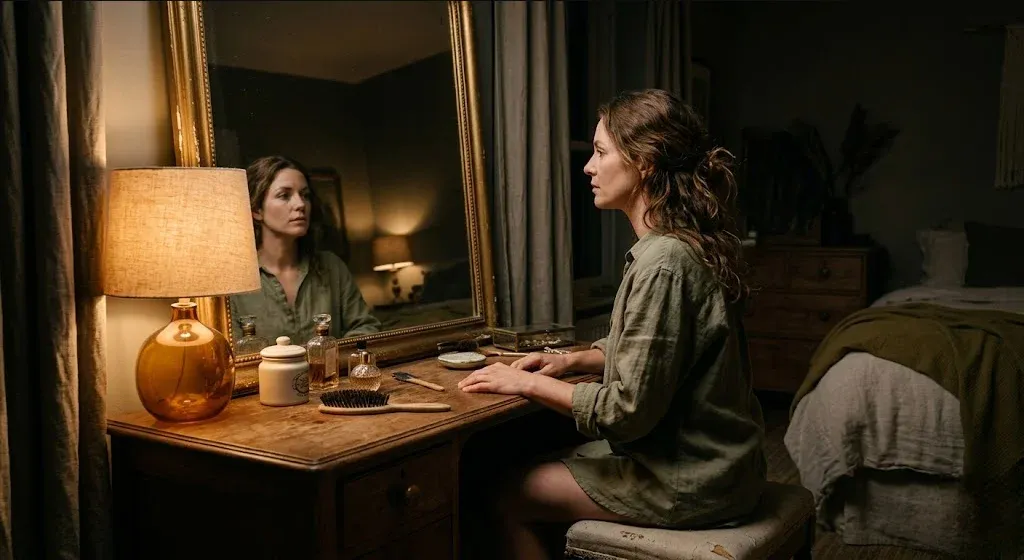
I stood in my kitchen at 3am with my first baby. I caught my reflection in the microwave door and thought: I don’t recognize this person. No one had given me a word for that — until I found one, in a poem.
Sylvia Plath’s “Morning Song” names it exactly: “I’m no more your mother / Than the cloud that distills a mirror.” That’s not detachment. It’s a woman losing her old self mid-poem, same as I was losing mine at that counter.
Some of that disorientation, unresolved, becomes something harder: grief.
Expert Insight 1: Motherhood Has a Name for Its Own Adolescence
Most poems sell new motherhood as pure joy — misleading, like ads for one-star hotels. Raphael’s 1973 concept of matrescence names the real disorientation, comparable to adolescence (Raphael, 1973). My own first week home felt exactly like being 13 again. Reread one new-motherhood poem expecting both.
Poems for Grief and Loss
Grief poems are the one place every competitor list gets right — but almost none explain why they help.
Why Poetry Helps People Process Loss
Every grief list includes a poem “for your loss.” Almost none explain why it helps. There’s a name for what you’re doing when a poem helps more than a sympathy card ever did: bibliotherapy.
Bibliotherapy means using reading and writing to work through hard emotions, and grief counselors take it seriously. Grief educator Tom Bowman argues loss requires “re-storying” your experience. Poetry gives you a way to do that (Bowman, Family Relations, 2021).
A 2025 systematic review found bibliotherapy may ease grief and anxiety, though evidence is still developing (ScienceDirect, 2025).
A Poem for Grieving a Mother
The year my mother-in-law died, I threw a sympathy card across the room — too neat, too easy. Sylvia Plath and Anne Sexton’s confessional poems didn’t smooth grief into something tidy. They read almost like modern elegies, unflinching instead of formal.
For anyone grieving a mother, or a pregnancy that ended too soon, that honesty helps more than comfort ever did. Grief doesn’t wait for a tidy relationship to end first.
Expert Insight 2: Grief Poems Aren’t Just Comforting — They’re a Method
Stop picking grief poems for prettiness. Grief educator Tom Bowman argues loss requires “re-storying” your experience. Poetry is a bibliotherapy tool for reconstructing meaning, not passive comfort (Bowman, Family Relations, 2021). Choose deliberately, and write one line back today.

Poems for Complicated and Non-Traditional Motherhood
Becoming a mother reshapes you, as Section 2 showed — but so does the mother who raised you, and that relationship isn’t always simple. Most motherhood poetry pretends otherwise, and that pretending helps no one.
When Your Relationship With Your Mother Isn’t Simple
If your relationship with your mom was never simple, most lists leave you out entirely. Philip Larkin’s “This Be the Verse” opens with a line most lists won’t touch. Parents pass down their own damage, intentionally or not.
Langston Hughes takes a different kind of honesty in “Mother to Son,” where love comes wrapped in hard-won survival, not ease. Neither poem is comfortable. But for a genuinely complicated relationship, that honesty feels truer than another poem about unconditional love.
Poems for Adoptive Mothers, Stepmothers, and Chosen Family
Seventeen percent of U.S. children live in a blended family — stepparent, stepsiblings, or half-siblings (Pew Research Center, 2026). My son’s stepmother cried through his entire first day of kindergarten. It wasn’t because she wasn’t his “real” mom — she was terrified of getting it wrong.
No one had ever written her a poem. Consider one for:
- An adoptive mother raising a child she didn’t carry, but built a life around anyway
- A stepmother stepping into a role no one prepared her for
- A grandmother, aunt, or family friend who became “mom” out of necessity, not title
These relationships deserve their own poems, not a footnote under someone else’s. Motherhood was never one shape — the poems shouldn’t be either.

Short and Modern Poems for Cards and Sharing
Somewhere along the way, “real poetry” started meaning “old poetry” — but not every moment calls for a full poem, and not every good line needs a dead poet behind it.
Quick Lines for a Card or Text
You don’t always need a full poem. Sometimes one true line, like these words of encouragement for mothers, beats a paragraph of platitudes. Short lines that hold up alone:
- “You are her soft miracle.” — Nikita Gill
- “A mother’s heart is never her own.” — A. Shea Writer
- “Wings take shape / and it’s time / for the soul / to take flight.” — Christy Anne Martine
I texted my mom the Nikita Gill line last Mother’s Day, too rushed to write my own words. She screenshotted it as her phone background. That’s the real test: it didn’t need to be long to land.
Why Modern Poems About Motherhood Count Too
Poems about motherhood aren’t stuck in the past. Poetry reading rose from 6.7% to 11.7% of U.S. adults between 2012 and 2017. The NEA credited poets like Rupi Kaur as a real driver (NEA, 2018).
Dismissing that as “not real poetry” misses where the genre is alive.

FAQ
What is the most famous poem about motherhood?
Ask ten people and most say Maya Angelou’s “Mother, A Cradle to Hold Me.” It’s drawn over 5,000 shares and a 4.51-star rating on FamilyFriendPoems, among the highest engagement of any poem in its category.
What are some short poems about motherhood?
Short poems work best as single striking lines, like Nikita Gill’s “You are her soft miracle.” They’re perfect for a card, text, or quick tribute when a full poem feels like too much.
What is a good poem for someone grieving their mother?
Confessional poets like Sylvia Plath and Anne Sexton wrote honestly about loss without smoothing it over. Research on bibliotherapy suggests that honesty, not comfort, is often what helps grief move (Bowman, Family Relations, 2021).
Can I legally print and frame a poem as a gift?
It depends on the poem’s age. U.S. works enter the public domain 70 years after the author’s death. Poe’s poems are free to print; Rupi Kaur’s are not. When in doubt, check current U.S. Copyright Office guidance.
What is “matrescence”?
Matrescence is the psychological transition into motherhood, coined by anthropologist Dana Raphael in 1973. It’s a real identity shift, not a diagnosis, and it can begin through birth, adoption, or surrogacy. Often, it goes unnamed until someone finally gives it a word.
Conclusion
Poems about motherhood were never one story. They’re love and grief, identity shifts and complicated bonds, classics and quick lines for a text. That’s what most lists miss: motherhood doesn’t fit one tone, so its poems shouldn’t either.
Whether you found the classic that finally said it right, or a short line for tonight’s card, you now have the actual words for your situation. If none fit exactly, the truest tribute is simple: write your mother one yourself. Love that old always finds its way into words eventually — yours can too.